Heterodontus francisci
Horn Shark
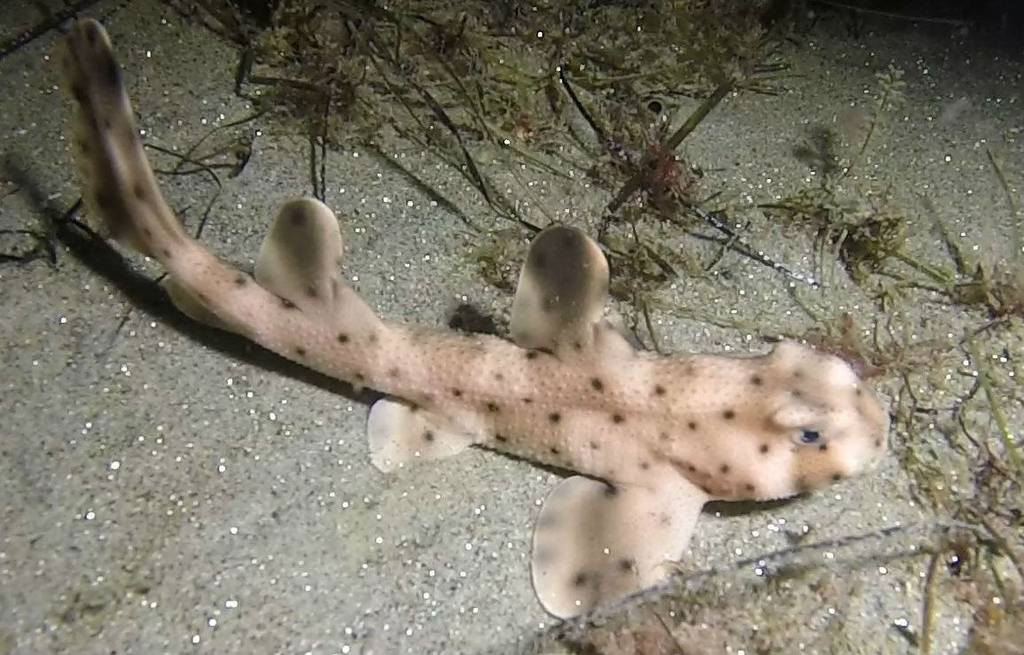
(c) Michael Bear, some rights reserved (CC BY) · licence
Family: Heterodontidae · Class: Chondrichthyes · Order: Heterodontiformes
Heterodontus francisci (Horn Shark) is a California animal in the Heterodontidae family.
The horn shark is a small, distinctive elasmobranch species endemic to the eastern Pacific Ocean. Adults typically measure 60 to 97 centimeters (24 to 38 inches) in total length, with females generally larger than males. The species is characterized by two prominent dorsal fins, each preceded by a sharp spine, and distinctive brown or gray coloration with dark spots and saddle-like markings across the body. The head is blunt with prominent ridges above the eyes, giving the species its common name. Horn sharks possess heterodont dentition, with sharp pointed teeth in the front for grasping prey and flat, molar-like teeth in the back for crushing hard-shelled organisms. The horn shark's range extends from central California to the Gulf of California, Mexico. In California waters, the species occurs from Monterey Bay southward, with populations documented around the Channel Islands including Santa Catalina Island. The species is commonly found in California's marine protected areas, including Casino Point State Marine Conservation Area, Lover's Cove State Marine Conservation Area, Long Point State Marine Reserve, and Laguna Beach State Marine Reserve, where it contributes to the biodiversity of kelp forest ecosystems. Horn sharks inhabit rocky reefs, kelp forests, and sandy bottom areas from the intertidal zone to depths of approximately 152 meters (500 feet). They prefer areas with caves, crevices, and ledges that provide shelter during daylight hours. The species shows a preference for temperate and subtropical waters with temperatures ranging from 11 to 21 degrees Celsius (52 to 70 degrees Fahrenheit). Juveniles often occupy shallower waters and may be found in tide pools, while adults typically inhabit deeper reef areas. Horn sharks are nocturnal predators that feed primarily on bottom-dwelling invertebrates including sea urchins, crabs, mollusks, polychaete worms, and small fish. Their powerful jaws and specialized dentition allow them to crush hard-shelled prey effectively. The species exhibits oviparous reproduction, with females depositing spiral-shaped egg cases, often called "mermaid's purses," in crevices or among algae. These egg cases require 6 to 10 months to hatch, depending on water temperature. Horn sharks are generally sedentary, showing strong site fidelity and often returning to the same resting spots during daylight hours. They are known to form aggregations, particularly during breeding season. The horn shark is not currently listed under federal or state endangered species legislation. The species is considered relatively stable throughout its range, though it faces potential threats from habitat degradation, fishing pressure, and climate change effects on marine ecosystems. In California, horn sharks are protected within marine protected areas where take is prohibited. The species serves as an important predator in rocky reef ecosystems and contributes to the ecological balance of kelp forest communities. Commercial and recreational fishing occurs throughout the species' range, though it is not specifically targeted and is often taken as bycatch in other fisheries.
Classification
Class: Chondrichthyes · Order: Heterodontiformes · Family: Heterodontidae
Frequently asked questions
How is Heterodontus francisci classified?
Heterodontus francisci belongs to class Chondrichthyes, order Heterodontiformes, family Heterodontidae.
What family does Heterodontus francisci belong to?
Heterodontus francisci is in the Heterodontidae family.
What is Heterodontus francisci?
The horn shark is a small, distinctive elasmobranch species endemic to the eastern Pacific Ocean.
Is Heterodontus francisci found in California?
Yes. Heterodontus francisci is recorded in California in The California Species Project's catalogue.
More California species
This species has no close relatives in our California data — here are other species to explore.
Data from The California Species Project — 14,000+ California species with verified data from CNPS, CDFW, USFWS, and more.