Heteroecus flavens
Round Leaf Gall Wasp
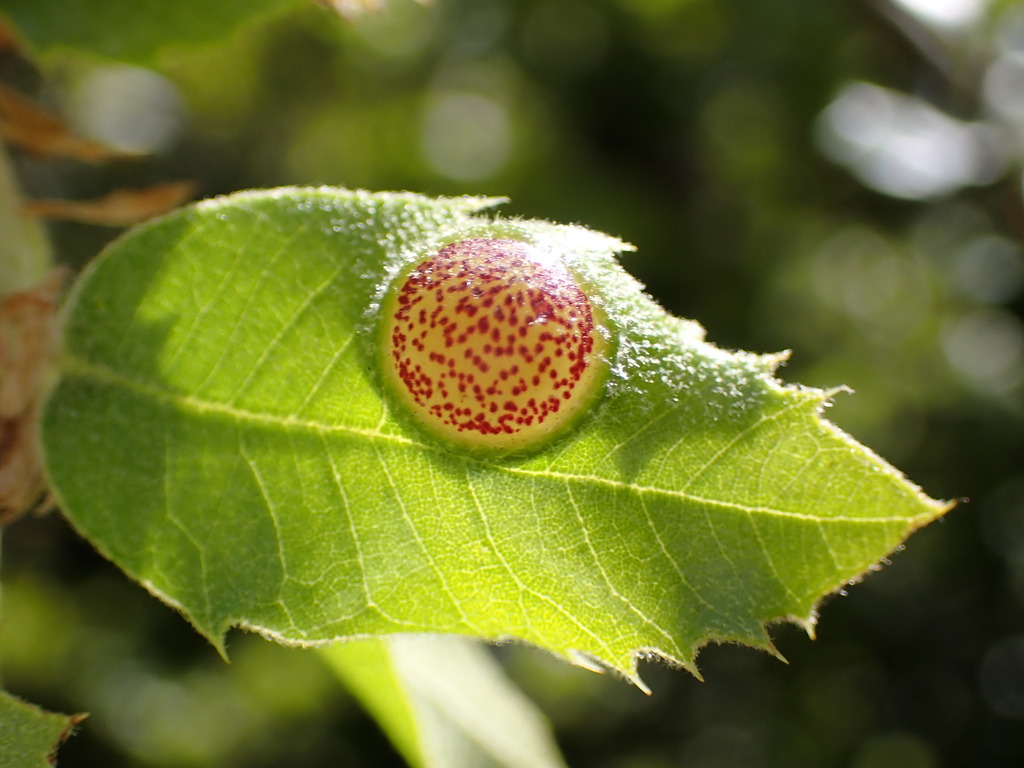
(c) Cricket Raspet, some rights reserved (CC BY) · licence
Family: Cynipidae · Class: Insecta · Order: Hymenoptera
Heteroecus flavens (Round Leaf Gall Wasp) is a California animal in the Cynipidae family.
The Round Leaf Gall Wasp (Heteroecus flavens) is a small parasitic wasp in the family Cynipidae, a group specialized in forming plant galls. Like other cynipid wasps, adults are typically 2-4 mm in length with dark coloration and modified wing venation characteristic of the family. Sexual dimorphism is common in gall wasps, with females often larger and equipped with specialized ovipositors for egg-laying within host plant tissues. The current distribution of H. flavens in California has not been comprehensively documented in recent literature. Cynipid wasps generally have restricted ranges tied to their specific host plants, and many species remain poorly studied despite their ecological importance as gall-formers on native vegetation. Habitat requirements for this species remain largely undocumented. Cynipid gall wasps typically inhabit areas where their host plants occur, ranging from coastal scrub to montane forests depending on the host species. The specific elevation range and microhabitat preferences of H. flavens have not been well characterized in available scientific literature. As a member of the Cynipidae, H. flavens likely exhibits the complex life cycle typical of gall wasps. Most cynipids are univoltine, completing one generation per year, though some species have alternating sexual and asexual generations on different host plants. Females use their specialized ovipositor to insert eggs into plant tissue, triggering the formation of characteristic galls through chemical manipulation of plant growth hormones. The developing larvae feed within these galls, which provide both nutrition and protection from predators and environmental conditions. Adult emergence typically occurs through exit holes chewed in the gall wall. The specific host plant relationships, gall morphology, and seasonal timing for H. flavens remain poorly documented. Like many gall wasps, H. flavens likely serves important ecological functions as both herbivore and prey species. Gall wasps support diverse communities of parasitoids, inquilines, and predators, contributing to food web complexity. The galls themselves may provide microhabitats for other arthropods and influence plant physiology. No federal or state conservation status has been assigned to H. flavens, reflecting the general lack of systematic surveys for most cynipid wasp species. The conservation needs of this species cannot be adequately assessed without basic distributional and ecological data. Many California gall wasps face potential threats from habitat loss, altered fire regimes, and climate change impacts on host plant distributions, but species-specific vulnerability assessments are lacking. Scientific documentation for this species remains extremely limited. The information presented here synthesizes general knowledge of cynipid wasp biology with available taxonomic records. Detailed studies of H. flavens distribution, host relationships, life history, and ecological role are needed to support conservation planning and management decisions. Field biologists encountering this species are encouraged to document observations with voucher specimens and habitat data to advance our understanding of California's diverse gall wasp fauna.
Classification
Class: Insecta · Order: Hymenoptera · Family: Cynipidae
Frequently asked questions
How is Heteroecus flavens classified?
Heteroecus flavens belongs to class Insecta, order Hymenoptera, family Cynipidae.
What family does Heteroecus flavens belong to?
Heteroecus flavens is in the Cynipidae family.
What is Heteroecus flavens?
The Round Leaf Gall Wasp (Heteroecus flavens) is a small parasitic wasp in the family Cynipidae, a group specialized in forming plant galls.
Is Heteroecus flavens found in California?
Yes. Heteroecus flavens is recorded in California in The California Species Project's catalogue.
Related species
Other California species in the same genus, family, or bioregion.
Data from The California Species Project — 14,000+ California species with verified data from CNPS, CDFW, USFWS, and more.