Heteroecus sanctaeclarae
Mushroom Gall Wasp
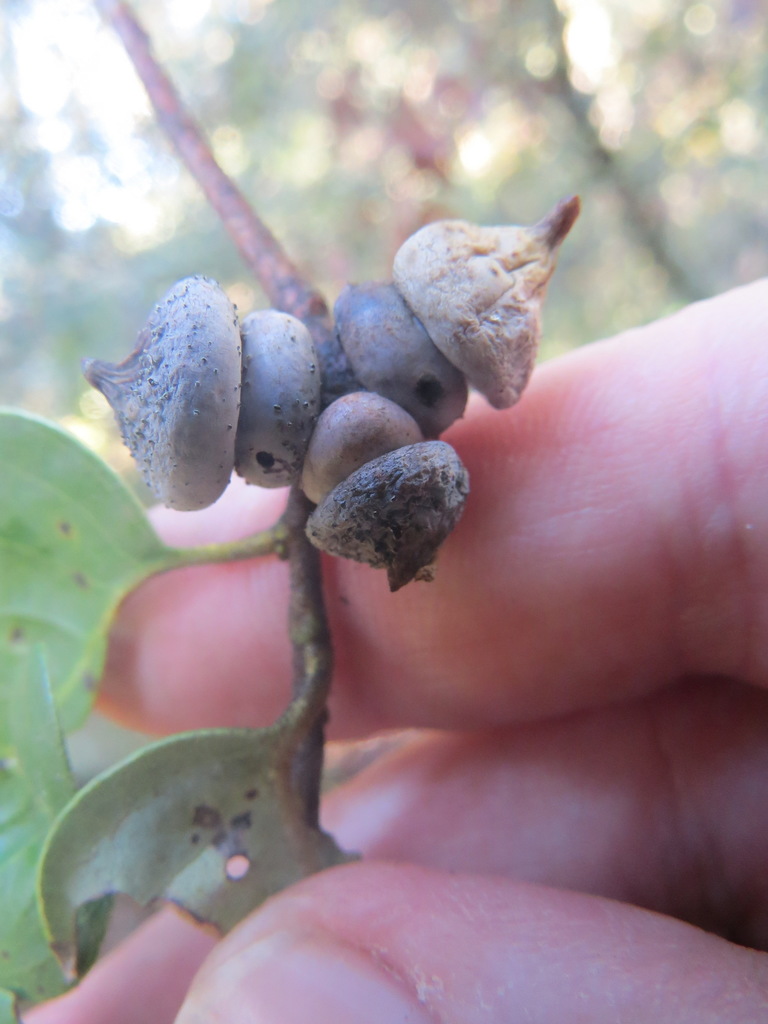
(c) Garth Harwood, some rights reserved (CC BY) · licence
Family: Cynipidae · Class: Insecta · Order: Hymenoptera
Heteroecus sanctaeclarae (Mushroom Gall Wasp) is a California animal in the Cynipidae family.
The Mushroom Gall Wasp (Heteroecus sanctaeclarae) is a small parasitoid wasp in the family Cynipidae, a group known for inducing galls on various host plants. Adult cynipid wasps typically measure 2-4 mm in length, with compressed bodies and characteristic wing venation patterns. Like other gall wasps, this species exhibits sexual dimorphism, with females possessing well-developed ovipositors for egg laying. The historical range of Heteroecus sanctaeclarae extended across much of North America, including California, where it occurred in suitable habitat areas. According to the U.S. Fish and Wildlife Service, the species' historical distribution encompassed numerous states from coast to coast, suggesting it was once more widespread than current observations indicate. The current distribution and population status in California remain poorly documented, with limited recent collection records available in scientific databases. Specific habitat requirements for this gall wasp have not been well documented in the scientific literature. As a member of the Cynipidae family, it likely requires specific host plant associations for gall formation and larval development. Gall wasps typically exhibit narrow host specificity, with each species often associated with particular plant genera or even individual species. The microhabitat preferences, elevation range, and seasonal habitat use patterns for H. sanctaeclarae require further investigation. The life cycle of Heteroecus sanctaeclarae presumably follows the typical cynipid pattern, involving gall induction on host plants where larvae develop. Female wasps insert eggs into plant tissues using their ovipositor, triggering gall formation through chemical signals. The developing larvae feed within these protective structures until reaching maturity. Many gall wasps exhibit complex life cycles with alternating sexual and asexual generations, though the specific reproductive biology of this species remains undocumented. Adult emergence timing, mating behavior, and host plant selection strategies require scientific study. The conservation status of Heteroecus sanctaeclarae appears concerning, with the species being tracked in federal databases despite lacking formal listing under the Endangered Species Act. The U.S. Fish and Wildlife Service maintains records for this species in their Environmental Conservation Online System, suggesting potential conservation concerns. However, the lack of recent ecological studies and population assessments makes it difficult to determine current threats or population trends. Like many specialized insects, habitat loss and fragmentation may pose significant challenges, particularly if the species depends on specific host plants or ecosystem conditions. Detailed ecological studies of this species are lacking. The above information synthesizes available data from federal databases and general knowledge of cynipid biology. We welcome contributions of verified scientific data, photographs, or field observations to enhance this species account. Additional research is needed to document host plant relationships, distribution patterns, and population status to support appropriate conservation planning.
Classification
Class: Insecta · Order: Hymenoptera · Family: Cynipidae
Frequently asked questions
How is Heteroecus sanctaeclarae classified?
Heteroecus sanctaeclarae belongs to class Insecta, order Hymenoptera, family Cynipidae.
What family does Heteroecus sanctaeclarae belong to?
Heteroecus sanctaeclarae is in the Cynipidae family.
What is Heteroecus sanctaeclarae?
The Mushroom Gall Wasp (Heteroecus sanctaeclarae) is a small parasitoid wasp in the family Cynipidae, a group known for inducing galls on various host plants.
Is Heteroecus sanctaeclarae found in California?
Yes. Heteroecus sanctaeclarae is recorded in California in The California Species Project's catalogue.
Related species
Other California species in the same genus, family, or bioregion.
Data from The California Species Project — 14,000+ California species with verified data from CNPS, CDFW, USFWS, and more.