Heterosilpha ramosa
Garden Carrion Beetle
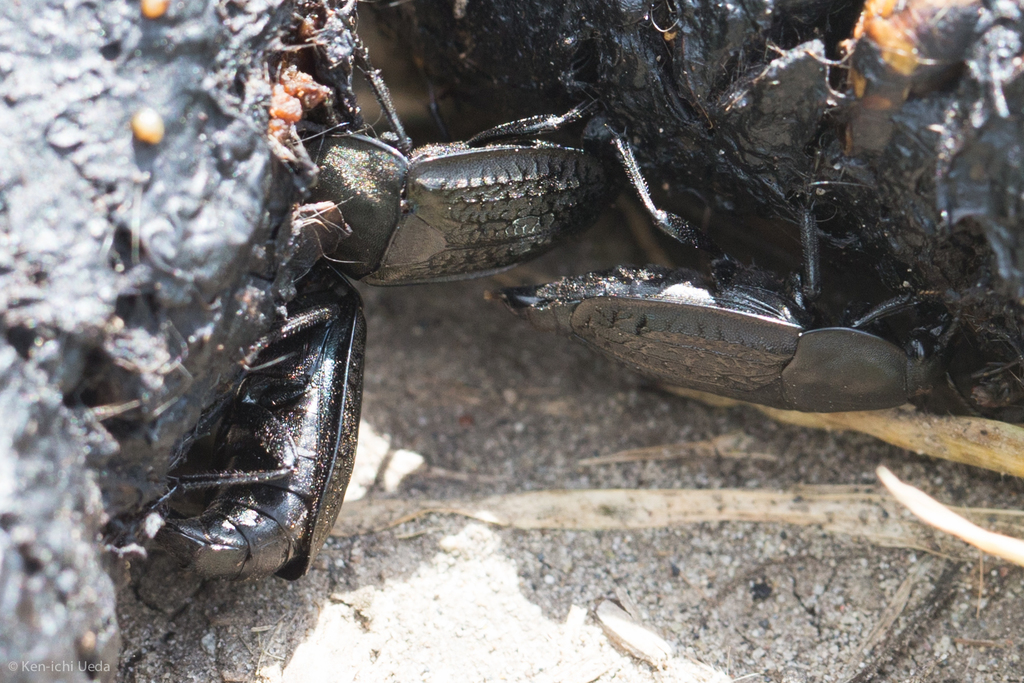
(c) Ken-ichi Ueda, some rights reserved (CC BY) · licence
Family: Silphidae · Class: Insecta · Order: Coleoptera
Heterosilpha ramosa (Garden Carrion Beetle) is a California animal in the Silphidae family.
The Garden Carrion Beetle (Heterosilpha ramosa) is a member of the family Silphidae, commonly known as carrion beetles. This species belongs to the order Coleoptera and is one of several North American representatives of the genus Heterosilpha. Like other silphids, this beetle exhibits the characteristic body plan adapted for feeding on decaying organic matter, with a moderately flattened, oval-shaped body and well-developed legs for movement across varied substrates. The range of H. ramosa extends across western North America, with documented populations throughout California and into adjacent states. According to BugGuide, this species occurs from British Columbia south through the Pacific states, with California representing a significant portion of its distribution. The beetle has been recorded from various elevations, from coastal areas to mountainous regions, demonstrating considerable habitat flexibility within its geographic range. Heterosilpha ramosa inhabits diverse terrestrial environments where decaying organic matter is available. The species occurs in forest ecosystems, woodland areas, chaparral, and suburban gardens, reflecting its adaptability to both natural and human-modified landscapes. These beetles are typically found in leaf litter, under logs, beneath stones, and in other microhabitats where decomposing plant and animal matter accumulates. Garden environments provide suitable habitat, as indicated by the common name, where the beetles may be encountered in compost areas and among decaying vegetation. As a carrion beetle, H. ramosa plays an important ecological role in decomposition processes. Adults and larvae feed primarily on decaying animal matter, though they may also consume rotting plant material and associated fungi. The species exhibits typical silphid reproductive behavior, with females laying eggs in or near suitable food sources. Larvae develop through several instars while feeding on decomposing matter, eventually pupating in the soil or substrate. Adults are primarily active during cooler periods, often being found under cover during daylight hours and becoming more active at night. The conservation status of the Garden Carrion Beetle has not been formally evaluated at federal or state levels. The species does not appear on any endangered species lists, and current population trends are not well documented. However, like many invertebrates dependent on natural decomposition processes, H. ramosa may face challenges from habitat modification, pesticide use, and changes in land management practices. The species' presence in both natural and suburban environments suggests some resilience to habitat alteration, though specific population studies would be needed to assess long-term trends. Detailed ecological research on this species remains limited, with much of the available information derived from general collections and taxonomic studies rather than focused life history investigations. The beetle's role in nutrient cycling and its interactions with other decomposer organisms represent important areas for future research, particularly given the increasing recognition of invertebrate contributions to ecosystem function.
Classification
Class: Insecta · Order: Coleoptera · Family: Silphidae
Frequently asked questions
How is Heterosilpha ramosa classified?
Heterosilpha ramosa belongs to class Insecta, order Coleoptera, family Silphidae.
What family does Heterosilpha ramosa belong to?
Heterosilpha ramosa is in the Silphidae family.
What is Heterosilpha ramosa?
The Garden Carrion Beetle (Heterosilpha ramosa) is a member of the family Silphidae, commonly known as carrion beetles.
Is Heterosilpha ramosa found in California?
Yes. Heterosilpha ramosa is recorded in California in The California Species Project's catalogue.
Related species
Other California species in the same genus, family, or bioregion.
Data from The California Species Project — 14,000+ California species with verified data from CNPS, CDFW, USFWS, and more.