Heterostichus rostratus
Giant Kelpfish
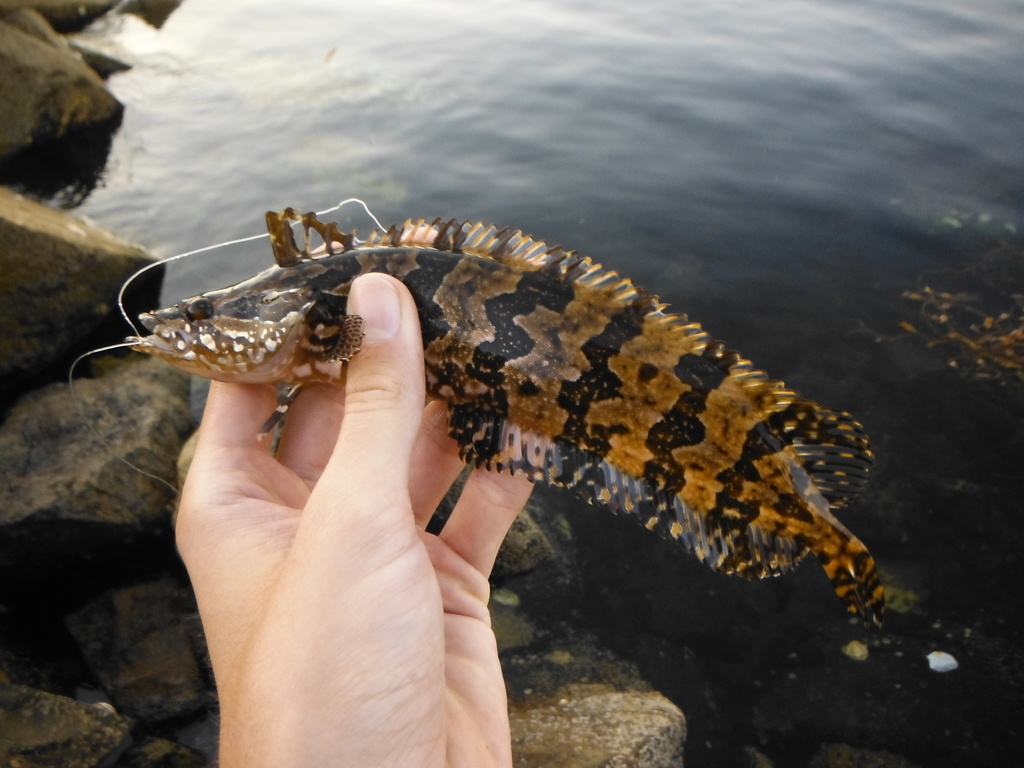
(c) zr217, some rights reserved (CC BY) · licence
Family: Clinidae · Class: Actinopterygii · Order: Perciformes
Heterostichus rostratus (Giant Kelpfish) is a California animal in the Clinidae family.
The Giant Kelpfish (Heterostichus rostratus) is a large member of the Clinidae family, distinguished as one of California's most notable kelp forest inhabitants. Adults typically reach lengths of 61 cm (24 inches), making them among the largest clinids. The species exhibits extensive color variation, ranging from bright green to brown, red, or yellow, often matching the color of the kelp or algae in their immediate surroundings. Their elongated, laterally compressed body features a long, pointed snout and continuous dorsal fin extending along most of the back. Giant kelpfish occur along the Pacific coast from British Columbia, Canada to Baja California, Mexico. In California waters, they are distributed from the Oregon border south to the Mexican border, with populations documented in both nearshore and offshore environments. The species has been recorded in various California locations including Ballona Creek estuary, where they were captured during biological surveys, and throughout the Southern California Bight. This species primarily inhabits kelp forests, rocky reefs, and nearshore environments from the intertidal zone to depths of approximately 40 meters (131 feet). Giant kelpfish show a strong association with kelp beds, particularly giant kelp (Macrocystis pyrifera) forests, where they utilize the complex three-dimensional structure for shelter and foraging. They also occur in areas with other marine algae and occasionally venture into estuarine environments, as documented in Ballona Creek surveys. The species prefers areas with rocky substrate and moderate to strong water movement. Giant kelpfish are ambush predators, remaining motionless among kelp fronds before striking at prey. Their diet consists primarily of small fish, crustaceans, and marine worms. They exhibit well-developed camouflage abilities, changing color to match their surroundings within the kelp canopy. Reproduction occurs through external fertilization, with females depositing adhesive eggs in protected areas among kelp holdfasts or rocky crevices. Males may exhibit territorial behavior during breeding season, defending small areas within the kelp forest. Giant kelpfish are not currently listed under federal or state endangered species legislation. However, they face indirect threats through kelp forest degradation caused by warming ocean temperatures, pollution, and sea urchin population explosions that can devastate kelp ecosystems. The species appears in California Department of Fish and Wildlife monitoring programs, ranking 21st among nearshore fish species in survey frequency. Climate change poses long-term concerns as it affects kelp forest distribution and health throughout their range. According to CDFW nearshore monitoring data, giant kelpfish maintain stable populations in suitable habitat, though their dependence on kelp ecosystems makes them vulnerable to environmental changes affecting these critical marine forests. Conservation efforts focus on protecting kelp forest habitats and monitoring water quality in nearshore environments.
Classification
Class: Actinopterygii · Order: Perciformes · Family: Clinidae
Frequently asked questions
How is Heterostichus rostratus classified?
Heterostichus rostratus belongs to class Actinopterygii, order Perciformes, family Clinidae.
What family does Heterostichus rostratus belong to?
Heterostichus rostratus is in the Clinidae family.
What is Heterostichus rostratus?
The Giant Kelpfish (Heterostichus rostratus) is a large member of the Clinidae family, distinguished as one of California's most notable kelp forest inhabitants.
Is Heterostichus rostratus found in California?
Yes. Heterostichus rostratus is recorded in California in The California Species Project's catalogue.
More California species
This species has no close relatives in our California data — here are other species to explore.
Data from The California Species Project — 14,000+ California species with verified data from CNPS, CDFW, USFWS, and more.