Heterostylum robustum
Bomber fly
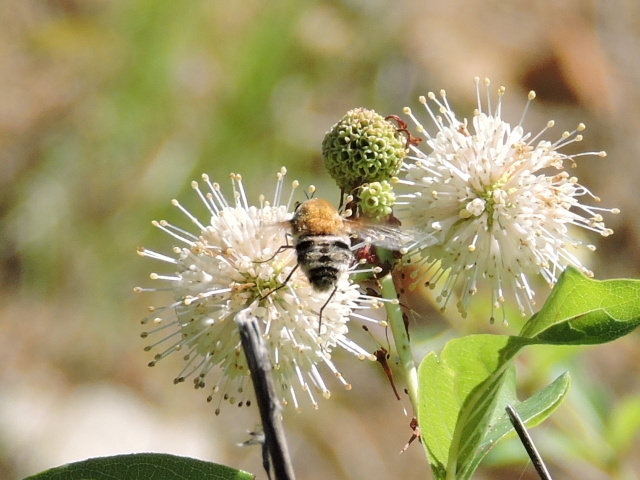
(c) Sam Kieschnick, some rights reserved (CC BY) · licence
Family: Bombyliidae · Class: Insecta · Order: Diptera
Heterostylum robustum (Bomber fly) is a California animal in the Bombyliidae family.
Heterostylum robustum, commonly known as the bomber fly, is a medium-sized fly in the family Bombyliidae, subfamily Bombyliinae, tribe Dischistini. This species belongs to a group commonly called bee flies, characterized by their robust, often fuzzy appearance and hovering flight patterns reminiscent of bees. Adult bomber flies typically measure 8-15 mm in length, with a stout, densely hairy body and relatively large eyes. The wings are often held perpendicular to the body when at rest, and many species in this genus display dark wing patterns or spots. Heterostylum robustum occurs in western North America, with documented populations in California. According to historical records, this species has been collected from various locations across the state, including coastal areas such as the Ballona Wetlands region in Los Angeles County (Mattoni 1991). The species appears to have a broader western distribution, though specific range boundaries require further documentation. Bomber flies typically inhabit open areas including grasslands, chaparral, coastal scrub, and desert margins. They are often found in areas with sandy or well-drained soils, which may be important for their larval development. Adults are commonly observed on flowers, particularly those with exposed nectar sources, and may be found in association with native plant communities where their host species occur. Adult Heterostylum robustum are nectar feeders, using their elongated proboscis to access flower resources. Like other bombyliid flies, they are likely important pollinators in their ecosystems, transferring pollen between flowers during feeding visits. The larvae are parasitoids or predators of other insects, typically developing in soil or sandy substrates where they attack the immature stages of beetles, moths, or other soil-dwelling arthropods. Adults are most active during warm, sunny conditions and exhibit the characteristic hovering flight behavior of bee flies, often seen hovering near flowers or potential egg-laying sites. Mating likely occurs during spring and early summer months, with females depositing eggs in appropriate soil conditions where larvae can locate suitable hosts. The conservation status of Heterostylum robustum has not been formally evaluated by state or federal agencies. As with many native pollinator species, populations may face pressures from habitat loss, particularly in California's rapidly developing coastal and inland regions. The species' presence in historical surveys of the Ballona Wetlands suggests it may be sensitive to habitat degradation in urbanized areas. Many bombyliid flies have specific host requirements that make them vulnerable to ecosystem changes affecting their larval host species. Current population trends and distribution are not well documented, indicating a need for targeted surveys to assess the species' status. Conservation of native plant communities and maintenance of undisturbed soil habitats are likely important for supporting stable populations of this and other native bee fly species.
Classification
Class: Insecta · Order: Diptera · Family: Bombyliidae
Frequently asked questions
How is Heterostylum robustum classified?
Heterostylum robustum belongs to class Insecta, order Diptera, family Bombyliidae.
What family does Heterostylum robustum belong to?
Heterostylum robustum is in the Bombyliidae family.
What is Heterostylum robustum?
Heterostylum robustum, commonly known as the bomber fly, is a medium-sized fly in the family Bombyliidae, subfamily Bombyliinae, tribe Dischistini.
Is Heterostylum robustum found in California?
Yes. Heterostylum robustum is recorded in California in The California Species Project's catalogue.
Related species
Other California species in the same genus, family, or bioregion.
Data from The California Species Project — 14,000+ California species with verified data from CNPS, CDFW, USFWS, and more.