Hippodamia caseyi
Casey's Lady Beetle
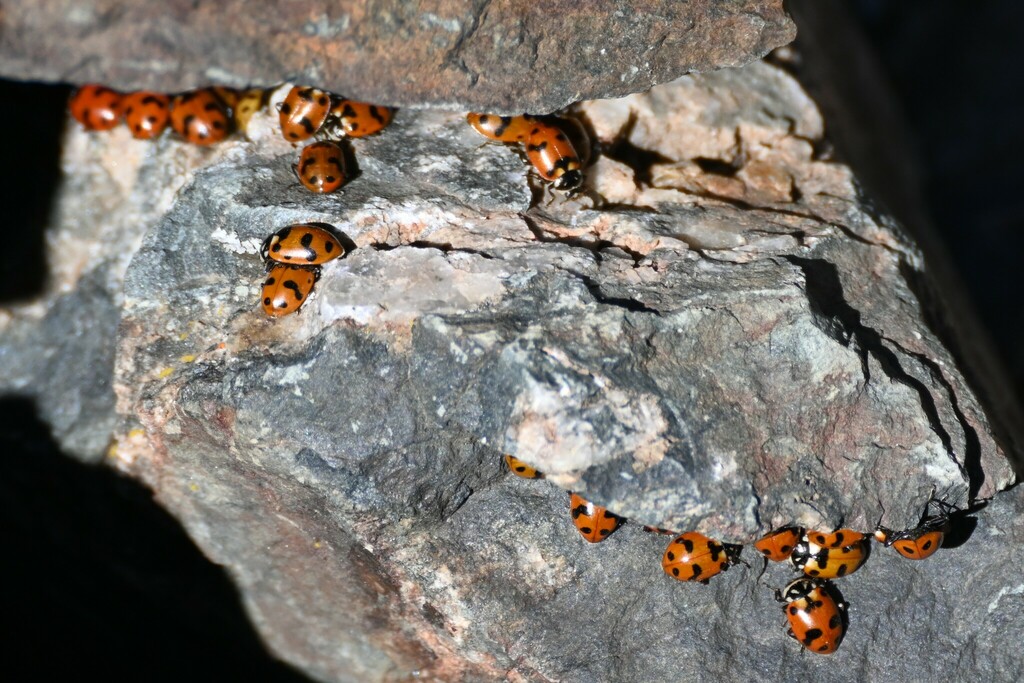
(c) Syd Cannings, some rights reserved (CC BY) · licence
Family: Coccinellidae · Class: Insecta · Order: Coleoptera
Hippodamia caseyi (Casey's Lady Beetle) is a California animal in the Coccinellidae family.
Casey's Lady Beetle is a small predatory beetle measuring 4.8 to 6.7 mm in length and 2.8 to 4.3 mm in width (Gordon 1985). The species exhibits distinctive coloration with a black pronotum featuring partial white margins and usually convergent white lines. The elytra (wing covers) display variable patterns that distinguish it from closely related Hippodamia species. This North American endemic occurs across a broad range extending from southern Canada through much of the western United States. In California, Casey's Lady Beetle has been documented in various counties, though specific distribution patterns within the state require further documentation. The species appears to have a preference for temperate regions with suitable prey populations and appropriate overwintering sites. Casey's Lady Beetle inhabits diverse terrestrial environments where aphid populations are abundant. Like other members of the genus Hippodamia, this species is typically found in agricultural areas, grasslands, gardens, and natural vegetation communities that support aphid colonies. The beetles require sites with adequate plant structure for hunting and shelter, as well as appropriate microhabitats for overwintering survival. As a predatory coccinellid, Casey's Lady Beetle feeds primarily on aphids, making it an important biological control agent. Adults and larvae consume soft-bodied insects, with aphids comprising the majority of their diet. The species likely exhibits typical lady beetle reproductive behavior, with females depositing eggs near aphid colonies to ensure immediate food availability for emerging larvae. Seasonal activity patterns follow the standard coccinellid lifecycle, with adults becoming active in spring, reproducing during warmer months, and seeking overwintering sites in fall. Adults may aggregate in protected locations such as under rocks, logs, or leaf litter during winter months. Casey's Lady Beetle currently holds no federal or state conservation listing status. However, like many beneficial insects, the species faces potential pressures from habitat modification, pesticide use, and climate change. Agricultural intensification and the widespread application of broad-spectrum insecticides can significantly impact lady beetle populations by reducing prey availability and causing direct mortality. Climate variability may affect the synchronization between beetle emergence and peak aphid abundance, potentially disrupting predator-prey relationships. The conservation significance of Casey's Lady Beetle extends beyond its taxonomic value, as predatory coccinellids provide substantial economic benefits through natural pest control services. Maintaining healthy populations of native lady beetles supports sustainable agricultural practices and reduces reliance on chemical pest control methods. Current knowledge of this species' specific ecological requirements, population trends, and distribution patterns remains limited, indicating a need for additional research to better understand its conservation needs and role in ecosystem functioning. Scientific documentation for this species remains limited compared to more commonly studied lady beetles. Enhanced monitoring of Casey's Lady Beetle populations and their habitat requirements would improve conservation planning and biological control program effectiveness.
Classification
Class: Insecta · Order: Coleoptera · Family: Coccinellidae
Frequently asked questions
How is Hippodamia caseyi classified?
Hippodamia caseyi belongs to class Insecta, order Coleoptera, family Coccinellidae.
What family does Hippodamia caseyi belong to?
Hippodamia caseyi is in the Coccinellidae family.
What is Hippodamia caseyi?
Casey's Lady Beetle is a small predatory beetle measuring 4.8 to 6.7 mm in length and 2.8 to 4.3 mm in width (Gordon 1985).
Is Hippodamia caseyi found in California?
Yes. Hippodamia caseyi is recorded in California in The California Species Project's catalogue.
Related species
Other California species in the same genus, family, or bioregion.
Data from The California Species Project — 14,000+ California species with verified data from CNPS, CDFW, USFWS, and more.