Hippodamia convergens
Convergent Lady Beetle
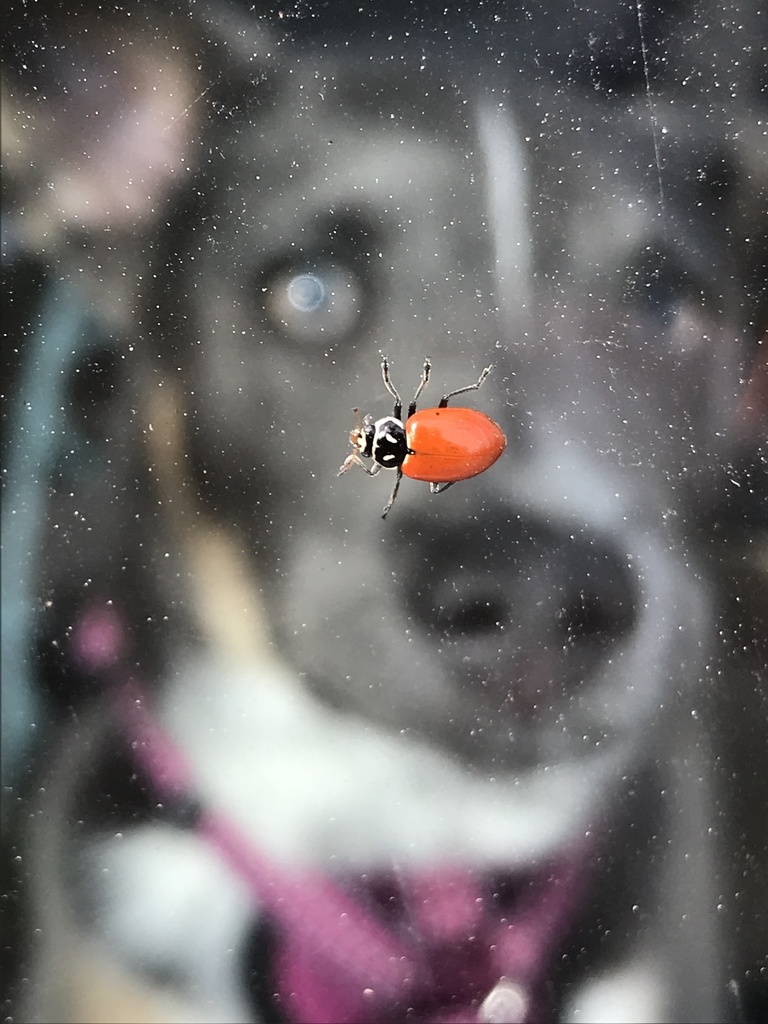
(c) Adam J. Searcy, some rights reserved (CC BY) · licence
Family: Coccinellidae · Class: Insecta · Order: Coleoptera
Hippodamia convergens (Convergent Lady Beetle) is a California animal in the Coccinellidae family.
The convergent lady beetle is a small, oval-shaped beetle measuring 4 to 7 millimeters (0.16 to 0.28 inches) in length. Adults display characteristic orange to red elytra (wing covers) with variable black spotting, typically bearing 0 to 13 spots that may be faint or absent entirely. The pronotum is black with white markings that converge toward the center, giving the species its common name. The head is black with white patches near the eyes. Sexual dimorphism is minimal, though males are slightly smaller than females. This species occurs throughout most of North America, ranging from southern Canada to Central America. In California, convergent lady beetles are found statewide from sea level to elevations exceeding 3,000 meters (9,800 feet). They inhabit diverse ecosystems including agricultural fields, gardens, grasslands, shrublands, forests, and riparian areas. The species demonstrates broad habitat tolerance, occurring in both natural and human-modified landscapes. Convergent lady beetles prefer areas with abundant aphid populations, their primary prey. They also consume other soft-bodied insects including mealybugs, scale insects, whiteflies, spider mites, and eggs of various pest species. Adults are active from spring through fall, with peak activity during warm months when aphid populations are highest. The species exhibits distinctive overwintering behavior, with adults aggregating in large groups under tree bark, in leaf litter, or clustered within native bunch grass clumps. These overwintering aggregations can contain thousands of individuals in protected microhabitats. Reproduction occurs from spring through summer, with females depositing yellow, oval eggs in clusters of 10 to 50 on plant surfaces near aphid colonies. Eggs hatch after 3 to 5 days into elongated, dark-colored larvae with orange markings. Larvae are voracious predators, consuming up to 400 aphids during their 2 to 3 week development period. Pupation occurs on plant surfaces, with adults emerging after approximately one week. The species typically completes 2 to 5 generations annually, depending on climate and food availability. Convergent lady beetles face various conservation challenges despite their widespread distribution. Agricultural pesticide applications pose significant threats, with studies documenting reduced survival rates when beetles are exposed to pyrethroids and other insecticides (Xerces Society 2018, 2019). Soil-applied neonicotinoids that translocate to flowers have demonstrated lethal effects on adults. Habitat loss from intensive agriculture and urban development reduces overwintering sites and prey availability. Climate change may alter the timing of aphid outbreaks and beetle life cycles. Despite these pressures, the species maintains stable populations across most of its range and serves as an important biological control agent. Commercial production of convergent lady beetles for agricultural pest management has created additional conservation concerns, as wild-collected beetles are often transported far from their collection sites, potentially disrupting local populations and genetic structure. Conservation efforts focus on maintaining diverse agricultural landscapes with pesticide-free refugia and preserving native bunch grasslands that provide critical overwintering habitat.
Classification
Class: Insecta · Order: Coleoptera · Family: Coccinellidae
Frequently asked questions
How is Hippodamia convergens classified?
Hippodamia convergens belongs to class Insecta, order Coleoptera, family Coccinellidae.
What family does Hippodamia convergens belong to?
Hippodamia convergens is in the Coccinellidae family.
What is Hippodamia convergens?
The convergent lady beetle is a small, oval-shaped beetle measuring 4 to 7 millimeters (0.16 to 0.28 inches) in length.
Is Hippodamia convergens found in California?
Yes. Hippodamia convergens is recorded in California in The California Species Project's catalogue.
Related species
Other California species in the same genus, family, or bioregion.
Data from The California Species Project — 14,000+ California species with verified data from CNPS, CDFW, USFWS, and more.