Histriophoca fasciata
Ribbon Seal
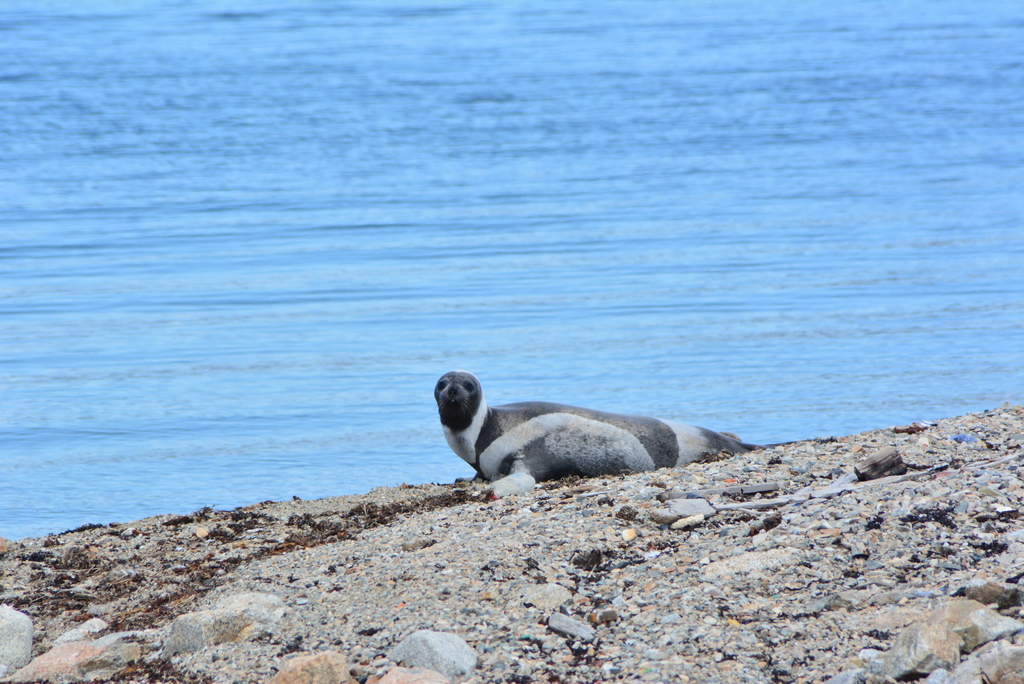
no rights reserved · CC0
Family: Phocidae · Class: Mammalia · Order: Carnivora
Histriophoca fasciata (Ribbon Seal) is a California animal in the Phocidae family.
The ribbon seal is a medium-sized pinniped distinguished by distinctive white or yellowish bands that encircle the head, trunk, and fore-flippers against a dark brown to black background. Adult males measure 1.5 to 1.7 meters (4.9 to 5.6 feet) in length and weigh 70 to 95 kilograms (154 to 209 pounds), while females are slightly smaller at 1.4 to 1.6 meters (4.6 to 5.2 feet) and 65 to 85 kilograms (143 to 187 pounds). The species exhibits pronounced sexual dimorphism, with males displaying more prominent banding and developing an inflatable throat sac during breeding season. Pups are born with white lanugo fur that molts to a uniform dark coat before the distinctive banding pattern emerges at maturity. Ribbon seals inhabit the North Pacific Ocean and adjacent seas, with their range extending from the Sea of Okhotsk through the Bering Sea to the Chukchi Sea. The species occurs in Alaskan waters year-round but is considered vagrant in California waters. Sightings along the California coast are extremely rare, with occasional individuals reported as far south as Monterey Bay. These California occurrences typically involve young seals that have strayed far from their normal range. The species is closely associated with sea ice throughout most of its life cycle, preferring pack ice and ice floes in pelagic waters. Ribbon seals use ice for pupping, molting, and resting, showing strong preference for areas where ice coverage is 50 to 90 percent. During ice-free periods, they remain largely pelagic, diving to depths exceeding 200 meters (656 feet) and staying submerged for up to 13 minutes. The species avoids coastal areas and rarely hauls out on land. Ribbon seals are primarily solitary outside of breeding season, which occurs from April through May on stable ice floes. Females give birth to a single pup after an 11-month gestation that includes a 3.5-month delayed implantation. Pups nurse for approximately four weeks before weaning. The species feeds predominantly on pelagic fish including Arctic cod, pollock, and herring, as well as cephalopods and crustaceans. Adults undergo an annual molt from July through September, during which they fast and remain on ice. The ribbon seal is not listed under the Endangered Species Act as of December 2025, though it was considered for listing in 2008 due to climate change concerns. The species is classified as Near Threatened by the IUCN, with global population estimates ranging from 240,000 to 290,000 individuals. Primary conservation concerns include loss of sea ice habitat due to climate warming, potential impacts from commercial fisheries, and increased vessel traffic in Arctic waters. The species' dependence on sea ice makes it particularly vulnerable to ongoing climate change, though current populations appear stable.
Classification
Class: Mammalia · Order: Carnivora · Family: Phocidae
Frequently asked questions
How is Histriophoca fasciata classified?
Histriophoca fasciata belongs to class Mammalia, order Carnivora, family Phocidae.
What family does Histriophoca fasciata belong to?
Histriophoca fasciata is in the Phocidae family.
What is Histriophoca fasciata?
The ribbon seal is a medium-sized pinniped distinguished by distinctive white or yellowish bands that encircle the head, trunk, and fore-flippers against a dark brown to black background.
Is Histriophoca fasciata found in California?
Yes. Histriophoca fasciata is recorded in California in The California Species Project's catalogue.
Related species
Other California species in the same genus, family, or bioregion.
Data from The California Species Project — 14,000+ California species with verified data from CNPS, CDFW, USFWS, and more.