Homoeosoma electella
American Sunflower Moth
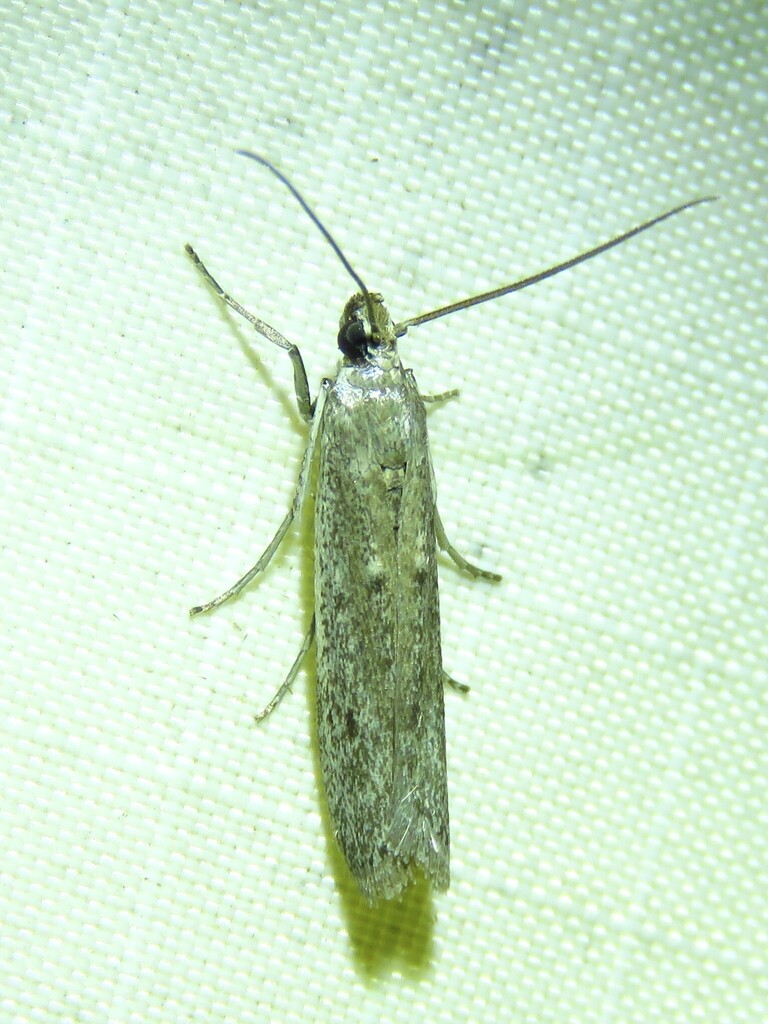
(c) Annika Lindqvist, some rights reserved (CC BY) · licence
Family: Pyralidae · Class: Insecta · Order: Lepidoptera
Homoeosoma electella (American Sunflower Moth) is a California animal in the Pyralidae family.
The American Sunflower Moth is a small pyralid moth with a wingspan of 15-24 mm according to the original species description, though more recent measurements indicate forewing length of 7.5-12 mm (Powell & Opler 2009). The species exhibits two distinct color phases in both sexes: a gray form with a prominent white subcostal streak, and a tan form that may or may not display the subcostal streak (Powell & Opler 2009). Like other members of the Phycitinae subfamily, adults possess the characteristic snout-like labial palps that give this group its common name. Homoeosoma electella occurs throughout much of North America, with documented records extending from Canada south through the United States. Recent collection data indicates the species ranges from Colorado east to Rhode Island, with new state records documented as recently as 2021 (News of the Lepidopterists' Society 2022). The moth appears to be expanding its range, with first state records reported from New Mexico in 2022 and Rhode Island in 2021. The species inhabits areas where its host plants occur, particularly agricultural regions and disturbed habitats supporting members of the Asteraceae family. In Colorado, the moth has been documented as especially abundant in sunflower fields, where adults are attracted to lights near agricultural areas (News of the Lepidopterists' Society 2025). The species shows a preference for open habitats including crop fields, weedy areas, and sites with abundant composite flowers. Larval development occurs within the flower heads of various plant families, with the Asteraceae serving as the primary host group. Known host genera include Anthemis, Aster, Baccharis, Baileya, Bidens, Calendula, Carduus, Carthamus, Chrysanthemum, Cirsium, Coreopsis, Cosmos, Dahlia, Echinacea, Engelmannia, Gaillardia, and Grindelia, among others (Moth Photographers Group). The larvae feed on developing seeds within the flower heads, following a feeding strategy common among phycitine moths. Additional host families include Amaranthaceae, Cactaceae, Combretaceae, Malvaceae, Plumbaginaceae, and Rutaceae, indicating broad host plant utilization. Adult flight periods vary geographically but include summer months, with Colorado collections documented in July. The species appears particularly abundant where sunflowers are common, suggesting Helianthus species may represent preferred hosts. In agricultural settings, the moth can be found feeding on both native composites and cultivated varieties. The American Sunflower Moth is not currently listed under federal or state conservation programs. The species appears to be benefiting from agricultural practices that maintain sunflower cultivation, and its broad host plant range suggests ecological flexibility. Recent range expansions and new state records indicate stable or potentially increasing populations. However, comprehensive population monitoring has not been conducted, and the species' conservation status remains unassessed by major conservation organizations.
Classification
Class: Insecta · Order: Lepidoptera · Family: Pyralidae
Frequently asked questions
How is Homoeosoma electella classified?
Homoeosoma electella belongs to class Insecta, order Lepidoptera, family Pyralidae.
What family does Homoeosoma electella belong to?
Homoeosoma electella is in the Pyralidae family.
What is Homoeosoma electella?
The American Sunflower Moth is a small pyralid moth with a wingspan of 15-24 mm according to the original species description, though more recent measurements indicate forewing length of 7.5-12 mm (Powell & Opler 2009).
Is Homoeosoma electella found in California?
Yes. Homoeosoma electella is recorded in California in The California Species Project's catalogue.
Related species
Other California species in the same genus, family, or bioregion.
Data from The California Species Project — 14,000+ California species with verified data from CNPS, CDFW, USFWS, and more.