Homoeosoma impressalis
Impressed Sunflower Moth
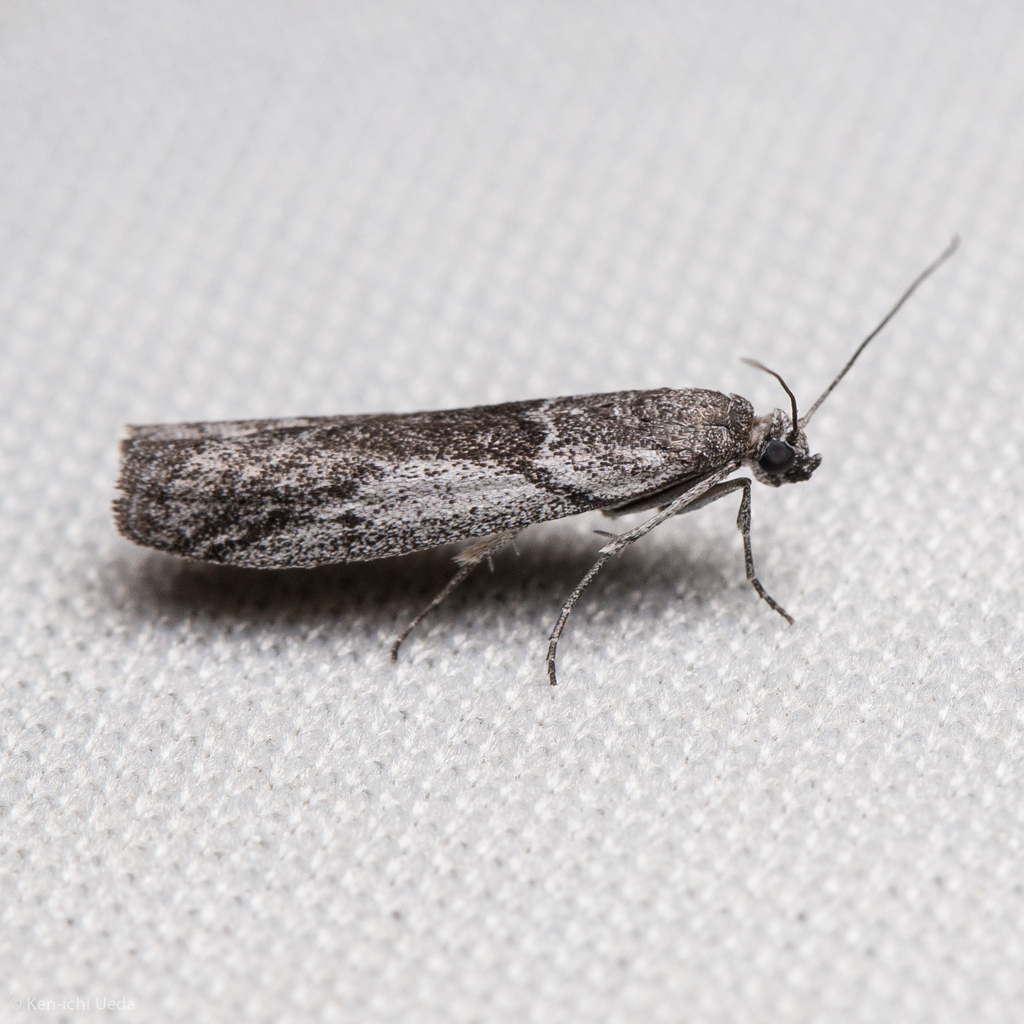
(c) Ken-ichi Ueda, some rights reserved (CC BY) · licence
Family: Pyralidae · Class: Insecta · Order: Lepidoptera
Homoeosoma impressalis (Impressed Sunflower Moth) is a California animal in the Pyralidae family.
The impressed sunflower moth (Homoeosoma impressalis) is a small pyralid moth in the family Pyralidae. Adults are characterized by the typical snout moth morphology, with elongated labial palps that project forward from the head, giving the appearance of a snout. The forewings display muted brown and gray coloration with subtle patterns, while the hindwings are typically lighter in color. Wing span measurements for this species have not been well documented in the scientific literature. The range and distribution of Homoeosoma impressalis within California remains poorly documented. The genus Homoeosoma includes multiple species that feed on plants in the Asteraceae family, with several species known to be associated with native thistles (Cirsium species) as flowerhead feeders (Xerces Society 2018). However, specific distributional data for H. impressalis in California has not been comprehensively surveyed or published. Habitat preferences for this species have not been extensively studied. Based on the ecology of related Homoeosoma species, impressed sunflower moths likely inhabit areas where their host plants occur, potentially including grasslands, meadows, and disturbed areas where Asteraceae plants are present. The genus shows diversity in habitat associations, with different species utilizing various plant communities throughout their ranges. The larval biology and adult behavior of H. impressalis remain largely undocumented in the scientific literature. Related species in the genus Homoeosoma are known to be flowerhead feeders, with larvae developing within the flower heads of their host plants. The larvae typically bore into the developing seeds and flower structures, completing their development within these protected microhabitats. Adult flight periods, mating behaviors, and seasonal activity patterns for this species have not been specifically documented. Conservation status information for Homoeosoma impressalis is not available from standard conservation databases. The species does not appear on federal or state endangered species lists, and population trends remain unknown due to limited scientific study. Many small moth species, particularly those in the family Pyralidae, are understudied and lack comprehensive population assessments. The identification and ecological requirements of many pyralid moths present ongoing taxonomic and conservation challenges. California supports approximately 4,500 moth species, with many smaller species yet to be fully classified or studied (California Native Plant Society). The impressed sunflower moth represents one of many lesser-known lepidopteran species that may play important ecological roles as herbivores and pollinators, despite limited scientific documentation of their biology and distribution. Detailed ecological studies of this species are lacking. The above information synthesizes available taxonomic placement and inferences based on related species ecology. Scientific documentation for Homoeosoma impressalis remains extremely limited despite thorough literature review. We welcome contributions of verified scientific data, photographs, or field observations to enhance this species account.
Classification
Class: Insecta · Order: Lepidoptera · Family: Pyralidae
Frequently asked questions
How is Homoeosoma impressalis classified?
Homoeosoma impressalis belongs to class Insecta, order Lepidoptera, family Pyralidae.
What family does Homoeosoma impressalis belong to?
Homoeosoma impressalis is in the Pyralidae family.
What is Homoeosoma impressalis?
The impressed sunflower moth (Homoeosoma impressalis) is a small pyralid moth in the family Pyralidae.
Is Homoeosoma impressalis found in California?
Yes. Homoeosoma impressalis is recorded in California in The California Species Project's catalogue.
Related species
Other California species in the same genus, family, or bioregion.
Data from The California Species Project — 14,000+ California species with verified data from CNPS, CDFW, USFWS, and more.