Honora montinatatella
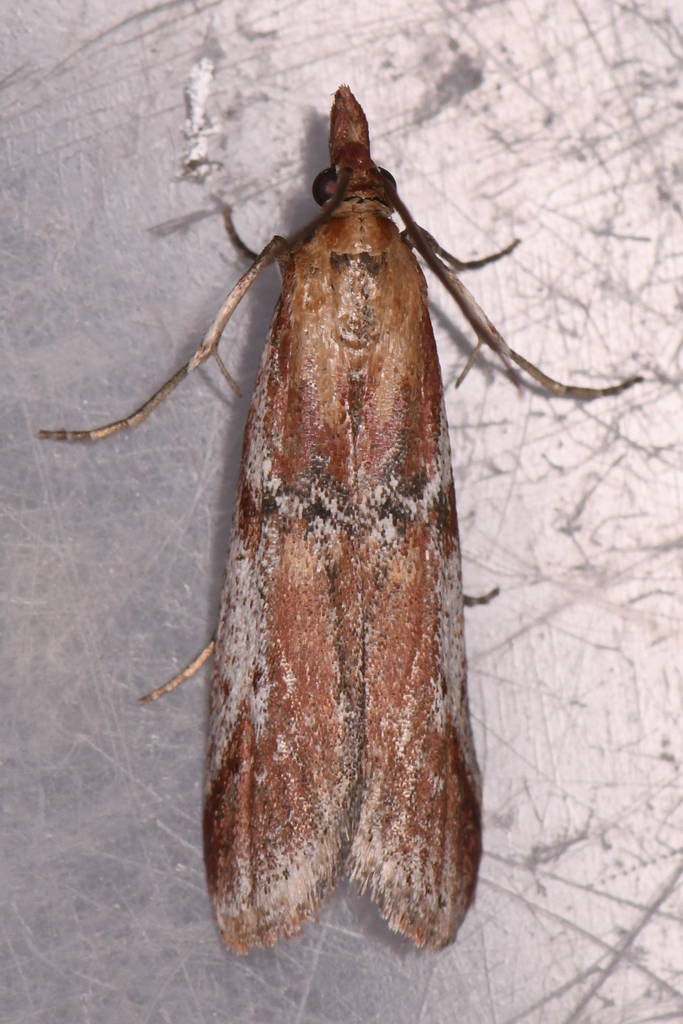
(c) Trevor Van Loon, some rights reserved (CC BY) · licence
Family: Pyralidae · Class: Insecta · Order: Lepidoptera
Honora montinatatella is a California animal in the Pyralidae family.
Honora montinatatella is a moth species in the family Pyralidae, one of the largest families of Lepidoptera containing over 6,000 described species worldwide. This species belongs to the order Lepidoptera, which encompasses all butterflies and moths, and represents part of California's diverse pyralid moth fauna. As a member of the Pyralidae family, Honora montinatatella likely exhibits the typical characteristics of pyralid moths, which generally have narrow forewings and broad hindwings. Most pyralid species are small to medium-sized moths with wingspans typically ranging from 10 to 35 millimeters. The forewings are usually elongated and may display various patterns of scaling, while the hindwings are often lighter in coloration. Many pyralids have a distinctive labial palp structure that projects forward from the head, though specific morphological details for this particular species require further documentation. The current distribution and range of Honora montinatatella in California remains poorly documented in available scientific literature. Many pyralid moths demonstrate restricted distributions, often associated with specific host plants or microhabitat requirements. Without comprehensive survey data, the historical and current range of this species cannot be definitively established. Habitat preferences for Honora montinatatella are not well-documented in existing sources. Pyralid moths as a group occupy diverse ecological niches, from grasslands and chaparral to forest ecosystems. Some species are associated with specific plant communities, while others demonstrate broader habitat tolerance. The elevation range and specific microhabitat requirements for this species require additional field research and documentation. The ecological role and life history of Honora montinatatella remain largely unknown. Most pyralid moths undergo complete metamorphosis, with larvae that may feed on various plant materials, including leaves, stems, seeds, or stored organic matter. Some species are leaf miners, while others bore into plant tissues or feed externally. Adult flight periods vary among pyralid species, with some having single annual generations and others producing multiple broods per year. Mating behaviors, larval host plant associations, and seasonal activity patterns for this specific species require further investigation. The conservation status of Honora montinatatella is not established through federal or state listing processes. The species lacks formal protection status designations, and population trends are unknown due to limited survey efforts and taxonomic research. Many small moth species remain understudied, with basic biological and ecological information gaps that complicate conservation assessment efforts. The absence of comprehensive distribution data, population monitoring, and threat assessments reflects the broader challenge of documenting and protecting California's diverse but poorly known invertebrate fauna. Further taxonomic work, field surveys, and ecological studies are needed to determine the species' conservation needs and appropriate management strategies.
Classification
Class: Insecta · Order: Lepidoptera · Family: Pyralidae
Frequently asked questions
How is Honora montinatatella classified?
Honora montinatatella belongs to class Insecta, order Lepidoptera, family Pyralidae.
What family does Honora montinatatella belong to?
Honora montinatatella is in the Pyralidae family.
What is Honora montinatatella?
Honora montinatatella is a moth species in the family Pyralidae, one of the largest families of Lepidoptera containing over 6,000 described species worldwide.
Is Honora montinatatella found in California?
Yes. Honora montinatatella is recorded in California in The California Species Project's catalogue.
Related species
Other California species in the same genus, family, or bioregion.
Data from The California Species Project — 14,000+ California species with verified data from CNPS, CDFW, USFWS, and more.