Hoplia callipyge
Grapevine Hoplia
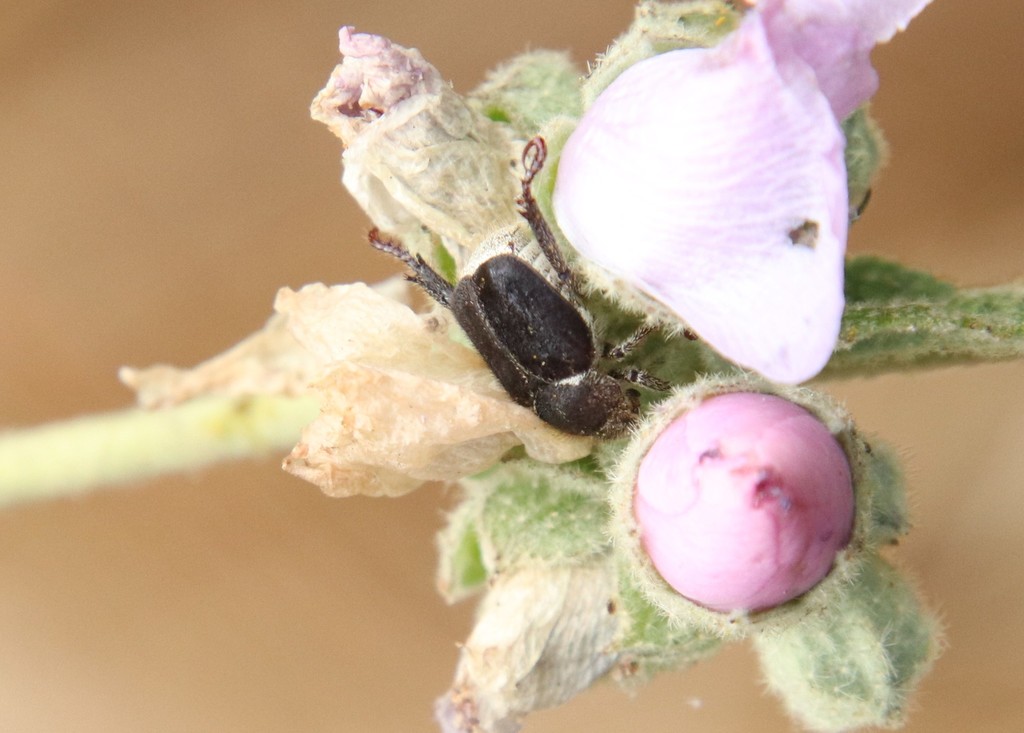
(c) Millie Basden, some rights reserved (CC BY) · licence
Family: Scarabaeidae · Class: Insecta · Order: Coleoptera
Hoplia callipyge (Grapevine Hoplia) is a California animal in the Scarabaeidae family.
The Grapevine Hoplia (Hoplia callipyge) is a small scarab beetle in the family Scarabaeidae, subfamily Melolonthinae, tribe Hopliini. Adults typically measure approximately 11 mm in length, displaying the characteristic robust, oval body shape of hopliine beetles. The species exhibits sexual dimorphism common in the genus, with males generally possessing enlarged foreclaws and distinctive genital structures that distinguish them from related species (BugGuide 2011). Hoplia callipyge occurs in California, with documented records from mountainous regions including Lassen County at elevations around 5,100 feet (1,554 meters). The species appears to be part of a limited western North American hopliine fauna, with only four Hoplia species documented west of the Rocky Mountains according to taxonomic keys (Hardy, via BugGuide 2011). The specific distribution and range limits of H. callipyge within California remain poorly documented in the scientific literature. Like other members of the genus Hoplia, this species likely inhabits areas with suitable host vegetation, though specific habitat requirements have not been thoroughly documented. Hopliine beetles typically occur in association with various shrubs and herbaceous plants, often in mountainous or foothill environments. The elevation record from Lassen County suggests the species may prefer montane habitats, though the full elevation range and habitat preferences require further study. Adult Hoplia beetles are generally active during late spring and early summer months, coinciding with peak flowering periods of their host plants. Males and females typically feed on flowers and foliage, with many species showing preferences for specific plant families. The larvae develop in soil, feeding on plant roots and organic matter. Specific details about the breeding biology, seasonal activity patterns, and host plant relationships of H. callipyge have not been well documented in published literature. The conservation status of Hoplia callipyge appears to be unassessed, with no federal or state listing designations currently in place as of December 2025. The species is included in the U.S. Fish and Wildlife Service taxonomic database (TSN: 928647), indicating recognition as a valid taxon, but lacks comprehensive status evaluation. Limited distributional data and ecological information make it difficult to assess population trends or conservation needs. The apparent restriction to California and potentially limited range within the state suggest the species may warrant further survey and status assessment. Scientific documentation for this species remains limited. The information presented here synthesizes available data from taxonomic databases and community observations. Additional research is needed to better understand the species' distribution, habitat requirements, life history, and conservation status. Field surveys and taxonomic studies would help clarify the range and ecological needs of this California endemic scarab beetle.
Classification
Class: Insecta · Order: Coleoptera · Family: Scarabaeidae
Frequently asked questions
How is Hoplia callipyge classified?
Hoplia callipyge belongs to class Insecta, order Coleoptera, family Scarabaeidae.
What family does Hoplia callipyge belong to?
Hoplia callipyge is in the Scarabaeidae family.
What is Hoplia callipyge?
The Grapevine Hoplia (Hoplia callipyge) is a small scarab beetle in the family Scarabaeidae, subfamily Melolonthinae, tribe Hopliini.
Is Hoplia callipyge found in California?
Yes. Hoplia callipyge is recorded in California in The California Species Project's catalogue.
Related species
Other California species in the same genus, family, or bioregion.
Data from The California Species Project — 14,000+ California species with verified data from CNPS, CDFW, USFWS, and more.