Horisme incana
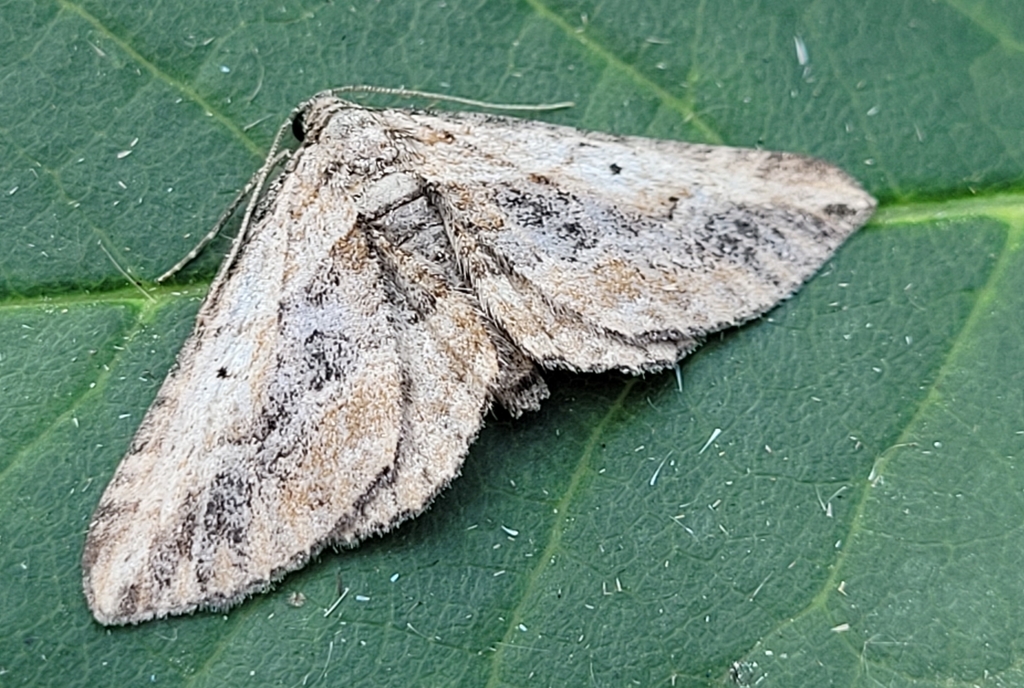
(c) Doug Macaulay, some rights reserved (CC BY) · licence
Family: Geometridae · Class: Insecta · Order: Lepidoptera
Horisme incana is a California animal in the Geometridae family.
Horisme incana is a geometrid moth in the family Geometridae, subfamily Larentiinae. This species belongs to a genus of moths commonly known as carpet moths or winter moths, though no standardized common name has been established for this particular species. Adult moths typically display the muted coloration characteristic of many geometrids, with forewings that are generally gray to brownish-gray, often marked with subtle crosslines and patterns that provide effective camouflage against tree bark and lichen-covered surfaces. The range and distribution of Horisme incana remain poorly documented in the scientific literature. Limited specimen records suggest the species may occur in western North America, including California, though comprehensive distributional data are lacking. Many members of the genus Horisme are known from montane and subalpine environments, suggesting this species may similarly inhabit higher elevation regions. Habitat preferences for Horisme incana have not been thoroughly studied, but related species in the genus typically inhabit coniferous and mixed forests. These moths are often associated with areas containing their larval host plants, which in other Horisme species frequently include members of the Rosaceae family, particularly wild cherry (Prunus species) and related shrubs. Adults are attracted to artificial lights and may be found in areas adjacent to forest edges, clearings, and mountainous terrain where suitable vegetation occurs. Like other geometrids, Horisme incana likely undergoes complete metamorphosis with egg, larval, pupal, and adult stages. The larvae, commonly called inchworms or loopers, characteristically move by arching their bodies due to the absence of prolegs on most abdominal segments. Larval development probably occurs on deciduous shrubs or trees, with caterpillars feeding on foliage during spring and early summer months. Adults typically emerge during late summer or fall, with flight periods varying by elevation and local climate conditions. Mating and egg-laying behaviors follow patterns typical of other geometrids, with females depositing eggs on or near host plant material. The conservation status of Horisme incana is currently unknown due to insufficient data on population trends, distribution, and ecological requirements. The species has not been assessed for federal or state listing status, nor has it been evaluated by the International Union for Conservation of Nature. This data deficiency is common among many moth species, particularly those that may have restricted ranges or occur in specialized habitats. Climate change impacts on montane ecosystems, habitat fragmentation, and potential threats to host plant communities could affect populations, but specific conservation needs cannot be determined without additional research. Systematic surveys and taxonomic studies are needed to better understand the distribution, abundance, and ecological role of this species within California's lepidopteran fauna.
Classification
Class: Insecta · Order: Lepidoptera · Family: Geometridae
Frequently asked questions
How is Horisme incana classified?
Horisme incana belongs to class Insecta, order Lepidoptera, family Geometridae.
What family does Horisme incana belong to?
Horisme incana is in the Geometridae family.
What is Horisme incana?
Horisme incana is a geometrid moth in the family Geometridae, subfamily Larentiinae.
Is Horisme incana found in California?
Yes. Horisme incana is recorded in California in The California Species Project's catalogue.
Related species
Other California species in the same genus, family, or bioregion.
Data from The California Species Project — 14,000+ California species with verified data from CNPS, CDFW, USFWS, and more.