Hubbardia idria
Idria Short-tailed Whipscorpion
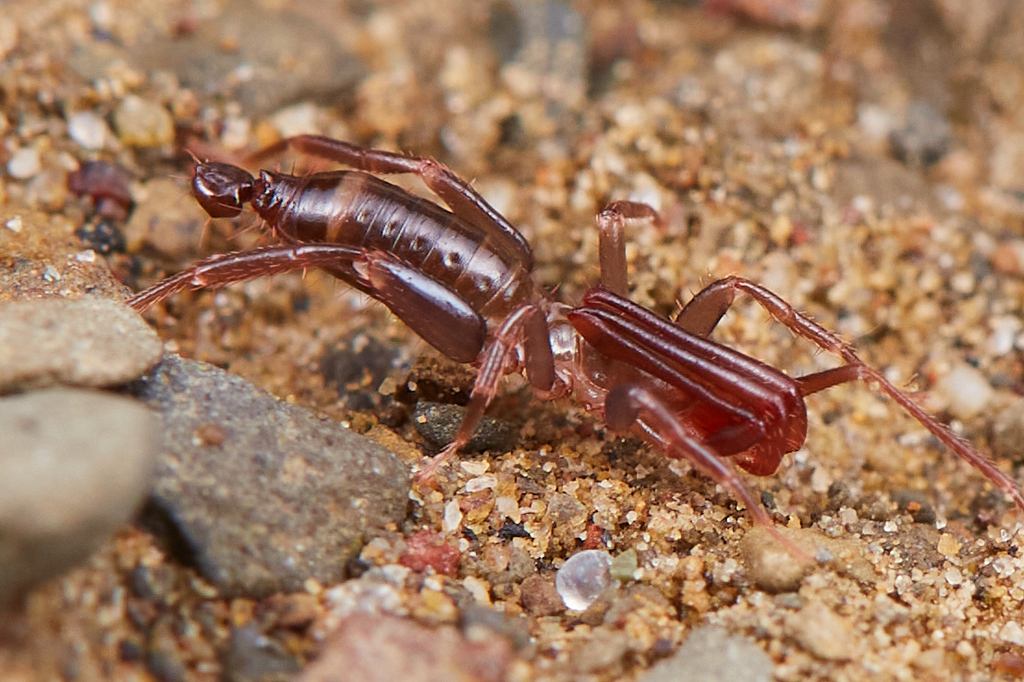
(c) Ken-ichi Ueda, some rights reserved (CC BY) · licence
Family: Hubbardiidae · Class: Arachnida · Order: Schizomida
Conservation status: G1 S1
Hubbardia idria (Idria Short-tailed Whipscorpion) is a California animal in the Hubbardiidae family.
Hubbardia idria is a small arachnid belonging to the order Schizomida, commonly known as short-tailed whipscorpions or micro whipscorpions. This species is characterized by the typical schizomid body plan, featuring a segmented abdomen with a short, flagelliform tail structure that distinguishes it from the longer-tailed uropygids. The body is divided into a prosoma (cephalothorax) and opisthosoma (abdomen), with the prosoma bearing four pairs of walking legs and prominent pedipalps used for prey capture and manipulation. Like other members of the family Hubbardiidae, H. idria lacks eyes and relies on tactile and chemical sensory systems for navigation and prey detection. This species is endemic to California, representing one of the most geographically restricted schizomids in North America. The specific distribution and localities where H. idria occurs have not been comprehensively documented in available literature, though the species name suggests a potential association with the Idria region of San Benito County. The extremely limited range contributes to its conservation concern, as reflected in its Global and State ranking of G1 S1, indicating it is critically imperiled both globally and within California. Schizomids typically inhabit cryptic microhabitats including leaf litter, soil crevices, cave systems, and beneath stones or logs where moisture levels remain relatively stable. These arachnids require environments with consistent humidity and are sensitive to desiccation. The specific habitat requirements and ecological preferences of H. idria remain poorly documented, though it likely occupies similar microhabitats to related species within Mediterranean climate zones of California. As predatory arachnids, schizomids feed on small invertebrates including springtails, mites, small insects, and other soil-dwelling arthropods. They use their enlarged pedipalps to capture and subdue prey, injecting digestive enzymes before consuming the liquefied tissues. Reproduction in schizomids involves indirect sperm transfer through spermatophore deposition, with females laying eggs in protected locations within their habitat. Development includes several molts before reaching sexual maturity, and many species exhibit extended parental care behaviors. The conservation status of Hubbardia idria reflects significant concern for this species' long-term viability. The G1 S1 ranking indicates that this species is at extreme risk of extinction, with very few populations or occurrences documented. Primary threats to schizomids generally include habitat destruction, agricultural conversion, urban development, and climate change impacts that alter moisture regimes in their specialized microhabitats. The limited distribution of H. idria makes it particularly vulnerable to localized disturbances or environmental changes. Detailed ecological studies of this species are lacking, and much of the basic biological information remains unknown. The species appears to have extremely limited scientific documentation, highlighting the need for targeted surveys to better understand its distribution, population status, and specific habitat requirements. Conservation of H. idria will likely require protection of its remaining habitat and comprehensive field studies to inform management strategies for this critically imperiled California endemic.
Classification
Class: Arachnida · Order: Schizomida · Family: Hubbardiidae
Conservation status
G1 S1
Frequently asked questions
How is Hubbardia idria classified?
Hubbardia idria belongs to class Arachnida, order Schizomida, family Hubbardiidae.
What family does Hubbardia idria belong to?
Hubbardia idria is in the Hubbardiidae family.
Is Hubbardia idria protected or of conservation concern?
Hubbardia idria carries the following status: G1 S1.
What is Hubbardia idria?
Hubbardia idria is a small arachnid belonging to the order Schizomida, commonly known as short-tailed whipscorpions or micro whipscorpions.
Is Hubbardia idria found in California?
Yes. Hubbardia idria is recorded in California in The California Species Project's catalogue.
Related species
Other California species in the same genus, family, or bioregion.
Data from The California Species Project — 14,000+ California species with verified data from CNPS, CDFW, USFWS, and more.