Hubbardia shoshonensis
Shoshone Cave Whip-scorpion
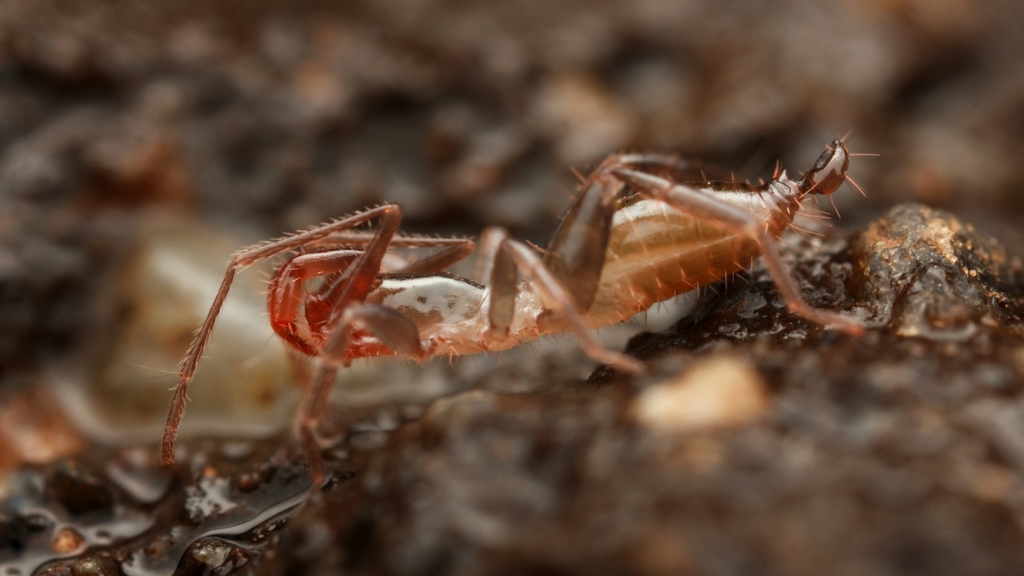
(c) Evrytte Carlson, some rights reserved (CC BY) · licence
Family: Hubbardiidae · Class: Arachnida · Order: Schizomida
Conservation status: G1 S1
Hubbardia shoshonensis (Shoshone Cave Whip-scorpion) is a California animal in the Hubbardiidae family.
The Shoshone Cave Whip-scorpion is a small arachnid in the order Schizomida, family Hubbardiidae, originally described as Trithyreus shoshonensis by Briggs and Hom in 1972 before being transferred to the genus Hubbardia. Like other schizomids, this species possesses a distinctive three-segmented abdomen with the terminal segment modified into a short flagellum, distinguishing it from true scorpions which have long, segmented tails with venomous stingers. This species is known only from Shoshone Cave in Inyo County, California, making it one of California's most geographically restricted arachnids. According to NatureServe, this species is likely a very narrow endemic found exclusively in this single cave system. The nearest cave habitat to Shoshone Cave is located more than 200 kilometers away, emphasizing the species' isolation (Briggs & Hom 1972). The Shoshone Cave Whip-scorpion inhabits the specialized subterranean environment of Shoshone Cave, which provides the constant temperature, high humidity, and absence of light characteristic of cave ecosystems. Cave-dwelling schizomids typically occupy the deeper, stable zones of caves where environmental conditions remain consistent year-round. These microhabitats often include areas with organic debris, bat guano, or other nutrient sources that support cave food webs. Like other schizomids, this species likely functions as a predator in the cave ecosystem, feeding on small invertebrates such as springtails, mites, and other cave-dwelling arthropods. Schizomids are generally sit-and-wait predators that use their pedipalps to capture prey. Reproduction in schizomids involves indirect sperm transfer, with males depositing spermatophores that females pick up. The species' biology remains poorly documented, with specific information about reproduction timing, development, and population dynamics unavailable. The Shoshone Cave Whip-scorpion carries a Global/State rank of G1 S1, indicating it is critically imperiled both globally and within California due to its extremely limited range and small population size. According to NatureServe, the species is impacted by groundwater extraction, which can alter the cave's hydrological regime and potentially affect the humidity and stability of the cave environment essential for the species' survival. The species' restriction to a single cave system makes it particularly vulnerable to any disturbance or environmental change affecting Shoshone Cave. As a cave-obligate species with such a restricted range, the Shoshone Cave Whip-scorpion represents a unique evolutionary lineage adapted to the specific conditions of its cave habitat. The species highlights the importance of protecting California's cave ecosystems and managing groundwater resources to maintain the hydrological integrity of cave systems that support endemic species.
Classification
Class: Arachnida · Order: Schizomida · Family: Hubbardiidae
Conservation status
G1 S1
Frequently asked questions
How is Hubbardia shoshonensis classified?
Hubbardia shoshonensis belongs to class Arachnida, order Schizomida, family Hubbardiidae.
What family does Hubbardia shoshonensis belong to?
Hubbardia shoshonensis is in the Hubbardiidae family.
Is Hubbardia shoshonensis protected or of conservation concern?
Hubbardia shoshonensis carries the following status: G1 S1.
What is Hubbardia shoshonensis?
The Shoshone Cave Whip-scorpion is a small arachnid in the order Schizomida, family Hubbardiidae, originally described as Trithyreus shoshonensis by Briggs and Hom in 1972 before being transferred to the genus Hubbardia.
Is Hubbardia shoshonensis found in California?
Yes. Hubbardia shoshonensis is recorded in California in The California Species Project's catalogue.
Related species
Other California species in the same genus, family, or bioregion.
Data from The California Species Project — 14,000+ California species with verified data from CNPS, CDFW, USFWS, and more.