Hulstia undulatella
Sugarbeet Crown Borer Moth
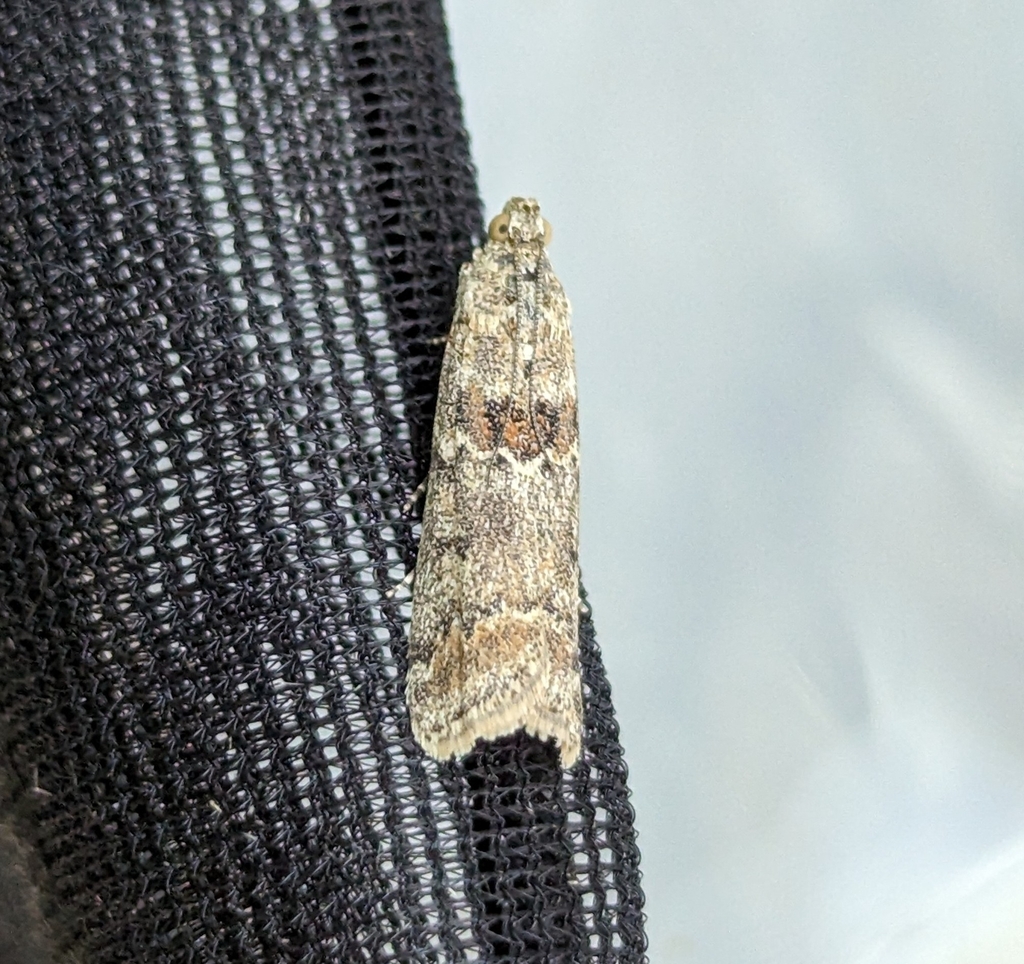
no rights reserved · CC0
Family: Pyralidae · Class: Insecta · Order: Lepidoptera
Hulstia undulatella (Sugarbeet Crown Borer Moth) is a California animal in the Pyralidae family.
The Sugarbeet Crown Borer Moth is a small pyralid moth in the snout moth family. This species was described by James Brackenridge Clemens in 1860 and is classified within the genus Hulstia, though it has historically been placed in the genus Ancylosis (iNaturalist). The moth displays typical pyralid characteristics with a narrow, elongated body and distinctly pronounced labial palps that extend forward like a snout. Hulstia undulatella has a broad North American distribution, ranging from Ontario and Michigan south to Florida, and extending west to California, Oregon, and Idaho (BugGuide). The species occurs wherever sugarbeets are cultivated commercially. In California, the moth is found primarily in the southwestern portion of the state, particularly in semi-arid montane habitats including areas of San Bernardino County (Moths of North America). Records also exist from Utah, where specimens have been collected at Green River KOA Campground in Emery County (News of the Lepidopterists' Society 1991). The species inhabits commercial agricultural fields where sugarbeets are grown, as well as semi-arid montane environments in the southwestern United States (BugGuide, Moths of North America). The moth appears adapted to disturbed agricultural landscapes and can persist in areas with intensive farming practices. Its distribution closely follows the cultivation range of its primary host plant. As its common name suggests, the Sugarbeet Crown Borer Moth is closely associated with sugarbeets (Beta vulgaris), where larvae bore into the crown and root portions of the plant. The species exhibits typical pyralid life cycle patterns, though specific details of its reproductive biology and seasonal activity patterns have not been extensively documented in the scientific literature. Research has been conducted on pheromone attraction in males, with studies identifying compounds such as Z9-14Ac that produce capture responses in traps (Repositorio CATIE). Like many agricultural pest species, H. undulatella populations are likely influenced by farming practices, pesticide applications, and the availability of host plants. The moth's distribution appears stable across its range, tracking the cultivation of sugarbeets throughout North America. No specific conservation concerns have been identified for this species, as it maintains viable populations across its extensive range. The species' association with a commercially important crop means its ecology and management have received attention primarily from an agricultural pest perspective rather than conservation biology. Scientific documentation for this species remains limited beyond its taxonomic classification and agricultural pest status. The information presented here is based on available sources including BugGuide, iNaturalist, and academic databases. If you have additional verified information about this species' biology, distribution, or ecology, please contact us to help improve this species account.
Classification
Class: Insecta · Order: Lepidoptera · Family: Pyralidae
Frequently asked questions
How is Hulstia undulatella classified?
Hulstia undulatella belongs to class Insecta, order Lepidoptera, family Pyralidae.
What family does Hulstia undulatella belong to?
Hulstia undulatella is in the Pyralidae family.
What is Hulstia undulatella?
The Sugarbeet Crown Borer Moth is a small pyralid moth in the snout moth family.
Is Hulstia undulatella found in California?
Yes. Hulstia undulatella is recorded in California in The California Species Project's catalogue.
Related species
Other California species in the same genus, family, or bioregion.
Data from The California Species Project — 14,000+ California species with verified data from CNPS, CDFW, USFWS, and more.