Hyalella muerta
Texas Spring Amphipod
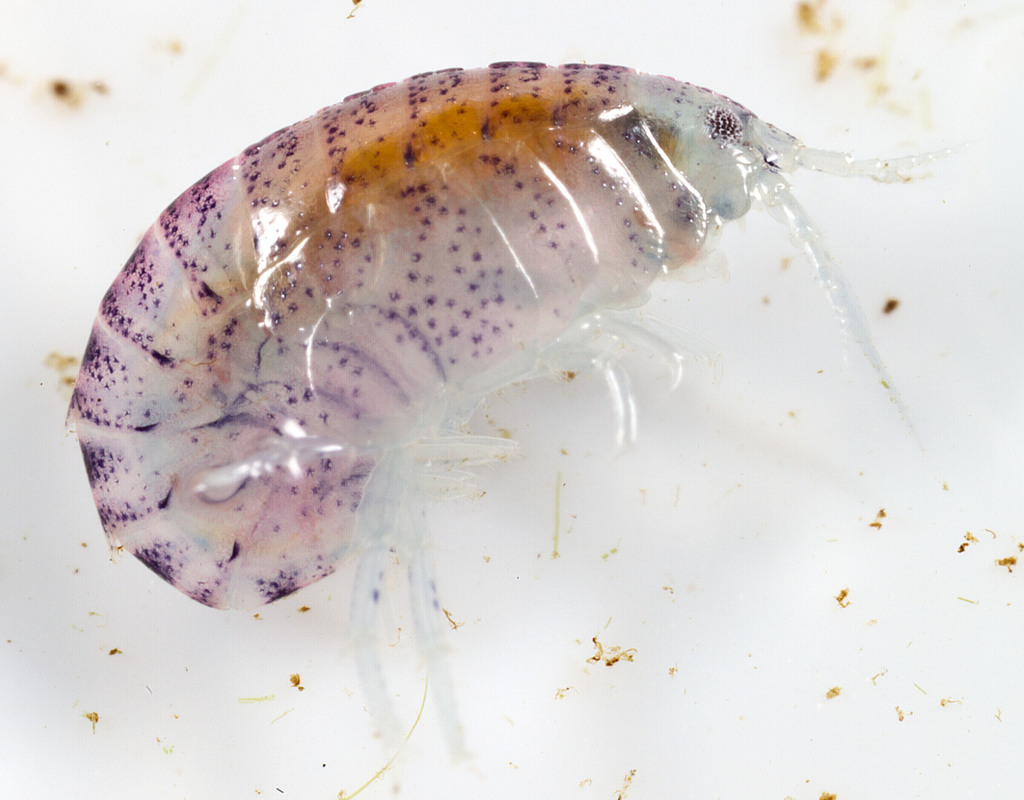
no rights reserved · CC0
Family: Hyalellidae · Class: Malacostraca · Order: Amphipoda
Conservation status: G1 S1
Hyalella muerta (Texas Spring Amphipod) is a California animal in the Hyalellidae family.
The Texas Spring Amphipod (Hyalella muerta) is a small freshwater crustacean endemic to Texas spring systems. This amphipod belongs to the family Hyalellidae within the order Amphipoda and represents one of only seven species in the genus Hyalella tracked by the U.S. Fish and Wildlife Service (FWS 2025). Physical characteristics of H. muerta are poorly documented in available scientific literature. As a member of the amphipod order, this species likely exhibits the characteristic laterally compressed body form typical of freshwater amphipods, though specific measurements and distinguishing features have not been published. The species has an extremely restricted range within Texas. According to NatureServe, H. muerta is found at Big Boiling Springs (also known as Main, Salado, or Siren Springs) and Robertson Springs at Salado in Bell County, Texas (LCRA TSC 2024). The species may also occur in Buttermilk Creek springs, though this requires confirmation. This limited distribution contributes to its Global Conservation Status Rank of G1, indicating it is critically imperiled with typically 5 or fewer occurrences. Habitat requirements for the Texas Spring Amphipod are closely tied to spring ecosystems. The species inhabits gravel substrates, typically found under rocks and in the vicinity of spring outflows (LCRA TSC 2024). Like other Texas spring amphipods, H. muerta depends entirely on groundwater-fed surface waters, as spring flows that discharge from aquifers provide the exclusive habitat for these specialized crustaceans (FWS 2009). The species likely requires the stable temperature and water quality conditions characteristic of spring environments. Ecological and behavioral information for H. muerta remains largely undocumented. Other members of the genus Hyalella are typically detritivores and omnivores, feeding on organic matter, algae, and small invertebrates. Reproductive biology, seasonal activity patterns, and specific dietary preferences for this species have not been studied or published in available literature. The conservation status of H. muerta reflects its precarious situation as a spring-endemic species. With a Global Conservation Status Rank of G1 S1, both globally and within Texas the species is considered critically imperiled. Population estimates are unknown according to NatureServe (LCRA TSC 2024), highlighting significant knowledge gaps regarding this species' status. The species appears on Fish and Wildlife Service taxonomic databases but lacks federal listing status as of December 2025. Primary threats likely include groundwater depletion, water quality degradation, and habitat modification affecting the spring systems upon which the species depends. Climate change and increased water demand in Texas may pose additional long-term risks to the limited spring habitats supporting H. muerta. Detailed ecological studies of this species are lacking. The above information synthesizes available data from government databases and environmental assessments. Additional research is needed to understand the basic biology, population status, and conservation needs of this critically imperiled Texas endemic.
Classification
Class: Malacostraca · Order: Amphipoda · Family: Hyalellidae
Conservation status
G1 S1
Frequently asked questions
How is Hyalella muerta classified?
Hyalella muerta belongs to class Malacostraca, order Amphipoda, family Hyalellidae.
What family does Hyalella muerta belong to?
Hyalella muerta is in the Hyalellidae family.
Is Hyalella muerta protected or of conservation concern?
Hyalella muerta carries the following status: G1 S1.
What is Hyalella muerta?
The Texas Spring Amphipod (Hyalella muerta) is a small freshwater crustacean endemic to Texas spring systems.
Is Hyalella muerta found in California?
Yes. Hyalella muerta is recorded in California in The California Species Project's catalogue.
Related species
Other California species in the same genus, family, or bioregion.
Data from The California Species Project — 14,000+ California species with verified data from CNPS, CDFW, USFWS, and more.