Hydria undulata
Scallop shell moth
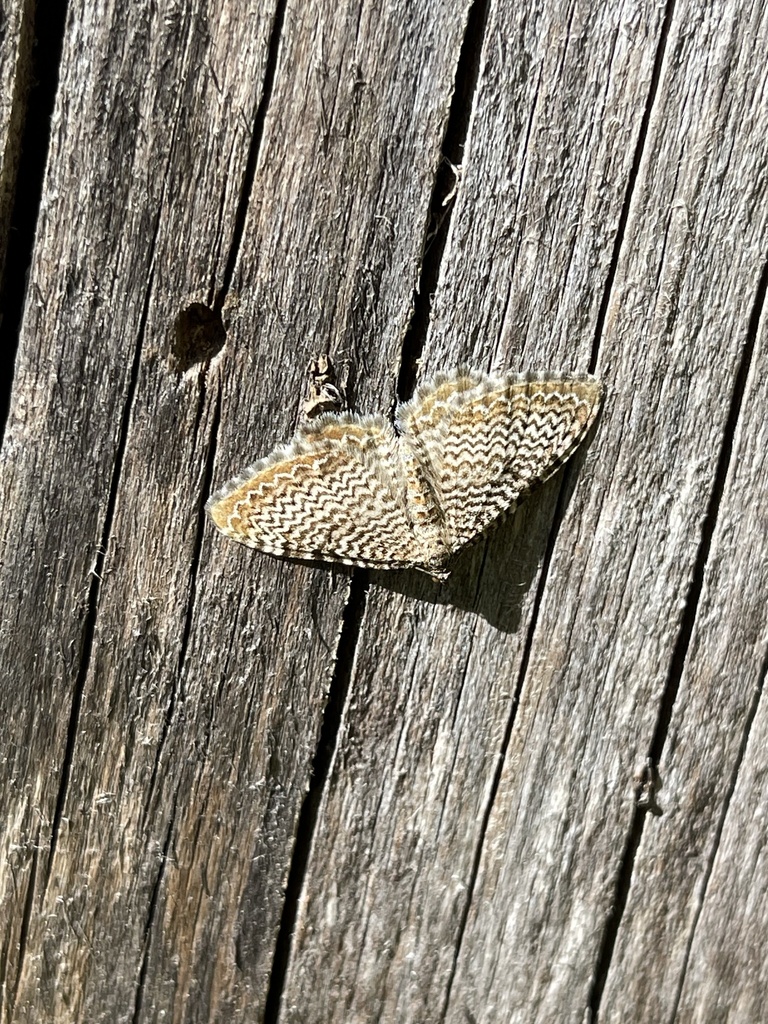
(c) wkee4ager, some rights reserved (CC BY) · licence
Family: Geometridae · Class: Insecta · Order: Lepidoptera
Hydria undulata (Scallop shell moth) is a California animal in the Geometridae family.
The scallop shell moth (Hydria undulata) is a geometrid moth belonging to the family Geometridae. This species was first described by Carl Linnaeus in his 1758 10th edition of Systema Naturae and is also known by the synonym Rheumaptera undulata (iNaturalist). The moth displays the characteristic wing patterns typical of geometrid species, with forewings bearing distinctive scalloped or undulating lines that give the species its common name. Hydria undulata has a broad distribution across the Palearctic realm and North America (iNaturalist). In North America, the species occurs across much of the northern regions, including the Pacific Northwest. According to the U.S. Forest Service, one species of Hydria occurs in the Pacific Northwest, indicating the presence of H. undulata in this region (USFS 2000). The species' range extends from southern Canada southward, with populations documented in northern California along the West Coast. The scallop shell moth inhabits forested environments, particularly in association with deciduous and mixed woodlands. Like many geometrid moths, this species likely utilizes a variety of deciduous trees and shrubs as larval host plants, though specific host plant relationships for North American populations have not been comprehensively documented in available literature. The species shows a preference for temperate forest habitats across its range. As a member of the Geometridae family, Hydria undulata larvae are caterpillars commonly known as "inchworms" or "loopers" due to their distinctive locomotion method. The larvae feed on foliage of their host plants, while adults are active during appropriate seasonal periods for mating and reproduction. Like most geometrid moths, adults are primarily nocturnal and may be attracted to artificial light sources. The species likely has one generation per year in northern portions of its range, though specific life cycle timing and reproductive ecology for California populations require further documentation. No specific conservation status has been assigned to Hydria undulata at federal or state levels. NatureServe assigns the species a global status of G5, indicating it is secure globally with no immediate conservation concerns (NatureServe Explorer). The broad distribution across multiple continents suggests stable populations overall. However, like many forest-associated lepidopteran species, local populations may face pressure from habitat modification, forest management practices, and climate change impacts on forest ecosystems. Scientific documentation for this species in California remains limited compared to more extensively studied moth species. The information presented here is based on available sources including taxonomic databases, forest service publications, and citizen science observations. If you have additional verified information about this species' biology, distribution, or ecology in California, please contact us to help improve this species account.
Classification
Class: Insecta · Order: Lepidoptera · Family: Geometridae
Frequently asked questions
How is Hydria undulata classified?
Hydria undulata belongs to class Insecta, order Lepidoptera, family Geometridae.
What family does Hydria undulata belong to?
Hydria undulata is in the Geometridae family.
What is Hydria undulata?
The scallop shell moth (Hydria undulata) is a geometrid moth belonging to the family Geometridae.
Is Hydria undulata found in California?
Yes. Hydria undulata is recorded in California in The California Species Project's catalogue.
Related species
Other California species in the same genus, family, or bioregion.
Data from The California Species Project — 14,000+ California species with verified data from CNPS, CDFW, USFWS, and more.