Hydriomena marinata
Marin Hydriomena
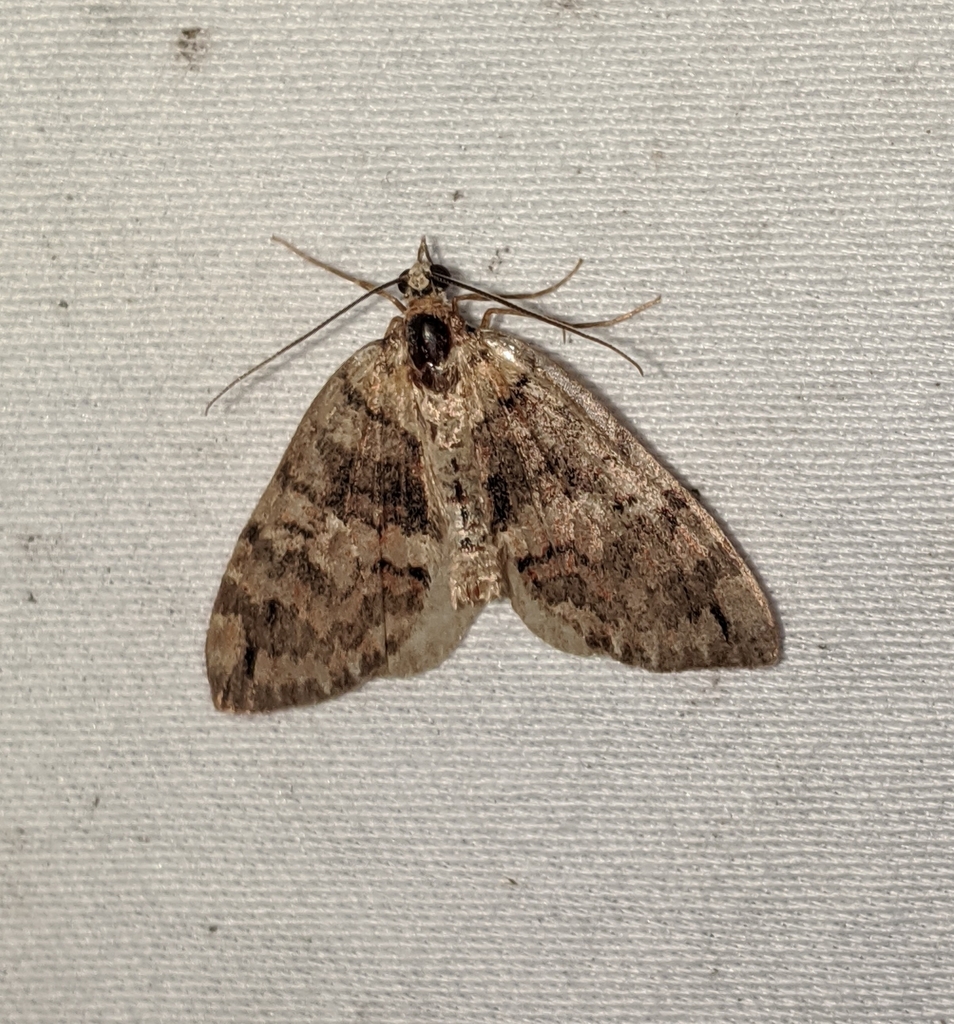
no rights reserved · CC0
Family: Geometridae · Class: Insecta · Order: Lepidoptera
Hydriomena marinata (Marin Hydriomena) is a California animal in the Geometridae family.
Hydriomena marinata is a geometrid moth in the subfamily Larentiinae, first described by Barnes and McDunnough in 1917. This species belongs to the tribe Hydriomenini and is assigned Hodges number 7231 in the standard classification system for North American Lepidoptera (BugGuide 2025). The species exhibits the typical geometrid moth body plan with relatively broad wings and slender antennae. Adult specimens have been identified through DNA analysis, confirming the species' taxonomic placement within the genus Hydriomena (BugGuide 2025). Detailed morphological descriptions of wing patterns and coloration are not well documented in available literature. Hydriomena marinata occurs across western North America, with confirmed distributions in British Columbia, California, Oregon, and Washington (BugGuide 2025). The species has two recognized subspecies: H. m. marinata, with the type locality at Verdi, Nevada, and H. m. exasperata, with the type locality at Departure Bay, British Columbia (Moth Photographers Group 2025). Within California, the species appears to have a scattered distribution pattern. This moth inhabits coniferous forest ecosystems where its host plants occur. According to recent taxonomic work, larvae feed exclusively on plants in the family Pinaceae, specifically targeting three genera: Picea (spruces), Pseudotsuga (Douglas fir), and Tsuga (hemlocks) (Shropshire & Tallamy 2025). This host plant specialization restricts the species to montane and subalpine forest habitats where these conifers dominate the canopy. Flight period data indicates regional variation in adult emergence timing. In British Columbia, adults are active from April through August, with peak activity during May through July. California populations show a somewhat different pattern, with records from March, May, June, and November, suggesting either multiple broods or extended emergence periods. Oregon and Washington populations follow the northern pattern with April through August flight periods (Moth Photographers Group 2025). The species' ecology remains poorly studied, with limited information available regarding larval biology, overwintering strategies, and population dynamics. As a specialist herbivore of coniferous trees, H. marinata likely plays a role in forest ecosystem dynamics, though its specific ecological impact has not been quantified. NatureServe currently assigns Hydriomena marinata a global conservation rank of G4, indicating the species is apparently secure with no immediate conservation concerns (NatureServe 2025). The species lacks federal or state listing status and does not appear on conservation priority lists. However, like many forest-dependent insects, H. marinata may face pressures from habitat fragmentation, climate change effects on montane forests, and forestry practices that alter the composition and structure of coniferous habitats. Scientific documentation for this species remains limited compared to more conspicuous Lepidoptera. The information presented here synthesizes available data from taxonomic databases and recent host plant research. Additional field studies are needed to better understand the species' population status, detailed life history, and ecological requirements across its range.
Classification
Class: Insecta · Order: Lepidoptera · Family: Geometridae
Frequently asked questions
How is Hydriomena marinata classified?
Hydriomena marinata belongs to class Insecta, order Lepidoptera, family Geometridae.
What family does Hydriomena marinata belong to?
Hydriomena marinata is in the Geometridae family.
What is Hydriomena marinata?
Hydriomena marinata is a geometrid moth in the subfamily Larentiinae, first described by Barnes and McDunnough in 1917.
Is Hydriomena marinata found in California?
Yes. Hydriomena marinata is recorded in California in The California Species Project's catalogue.
Related species
Other California species in the same genus, family, or bioregion.
Data from The California Species Project — 14,000+ California species with verified data from CNPS, CDFW, USFWS, and more.