Hydriomena perfracta
Shattered Hydriomena
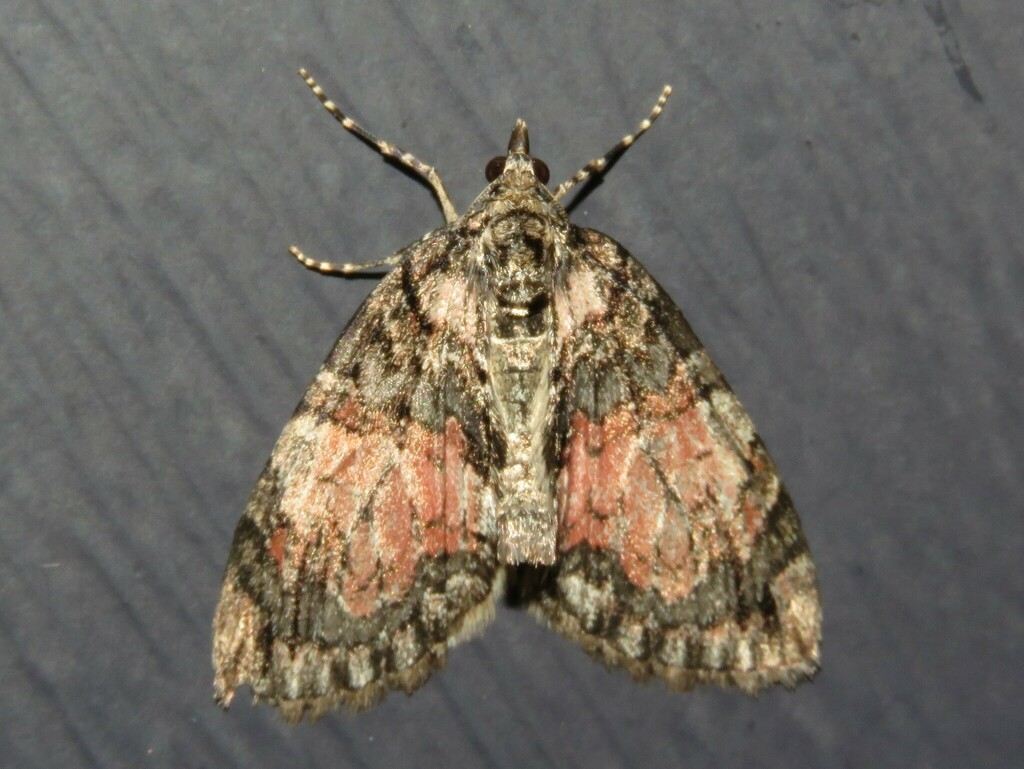
(c) Dan MacNeal, some rights reserved (CC BY) · licence
Family: Geometridae · Class: Insecta · Order: Lepidoptera
Hydriomena perfracta (Shattered Hydriomena) is a California animal in the Geometridae family.
Hydriomena perfracta, commonly known as the Shattered Hydriomena, is a geometrid moth in the family Geometridae. This species belongs to a diverse group of moths commonly called inchworms or loopers in their larval stage. Adult moths typically measure 20 to 25 mm in wingspan, displaying the characteristic triangular wing shape of geometrids when at rest. The forewings exhibit a complex pattern of brown, gray, and white markings that create a fragmented or "shattered" appearance, giving the species its common name. The hindwings are typically lighter in coloration with subtle banding patterns. The range and distribution of Hydriomena perfracta remains poorly documented in the scientific literature. Like many geometrid moths, this species likely has a restricted distribution within specific habitat types in western North America. The genus Hydriomena includes approximately 40 species in North America, with several endemic to California and the Pacific Northwest. Many species within this genus occupy montane and subalpine environments, suggesting H. perfracta may follow similar distributional patterns. Habitat preferences for the Shattered Hydriomena are not well-established in current literature. Based on ecological patterns observed in related Hydriomena species, this moth likely inhabits coniferous or mixed coniferous-deciduous forests at moderate to high elevations. The species may be associated with specific plant communities that support its larval development, though host plant relationships remain undocumented. Many geometrids in montane environments are linked to native shrubs and understory vegetation. The life cycle and behavior of H. perfracta follows the typical geometrid pattern of complete metamorphosis. Adult moths are likely nocturnal, attracted to artificial lights during their flight period. Flight timing is unknown but probably occurs during summer months when temperatures and resource availability support adult activity. Larvae, if following the family pattern, would be caterpillars that move in the characteristic looping motion by bringing the rear segments forward to meet the front segments. The larval stage likely overwinters, with pupation occurring in soil or leaf litter before adult emergence. The conservation status of Hydriomena perfracta is not formally assessed by state or federal agencies. The species lacks federal protection under the Endangered Species Act and does not appear on California state wildlife conservation lists. This absence from formal conservation assessments likely reflects limited knowledge about the species' distribution, population size, and ecological requirements rather than confirmed stability. Many geometrid moths face potential threats from habitat modification, climate change, and pesticide use, though specific impacts on H. perfracta remain unstudied. The lack of comprehensive survey data for this species highlights the broader challenge of conserving invertebrate biodiversity, particularly among lesser-known moth species that may have restricted ranges or specialized habitat requirements.
Classification
Class: Insecta · Order: Lepidoptera · Family: Geometridae
Frequently asked questions
How is Hydriomena perfracta classified?
Hydriomena perfracta belongs to class Insecta, order Lepidoptera, family Geometridae.
What family does Hydriomena perfracta belong to?
Hydriomena perfracta is in the Geometridae family.
What is Hydriomena perfracta?
Hydriomena perfracta, commonly known as the Shattered Hydriomena, is a geometrid moth in the family Geometridae.
Is Hydriomena perfracta found in California?
Yes. Hydriomena perfracta is recorded in California in The California Species Project's catalogue.
Related species
Other California species in the same genus, family, or bioregion.
Data from The California Species Project — 14,000+ California species with verified data from CNPS, CDFW, USFWS, and more.