Hydrobates furcatus
Fork-tailed Storm- Petrel
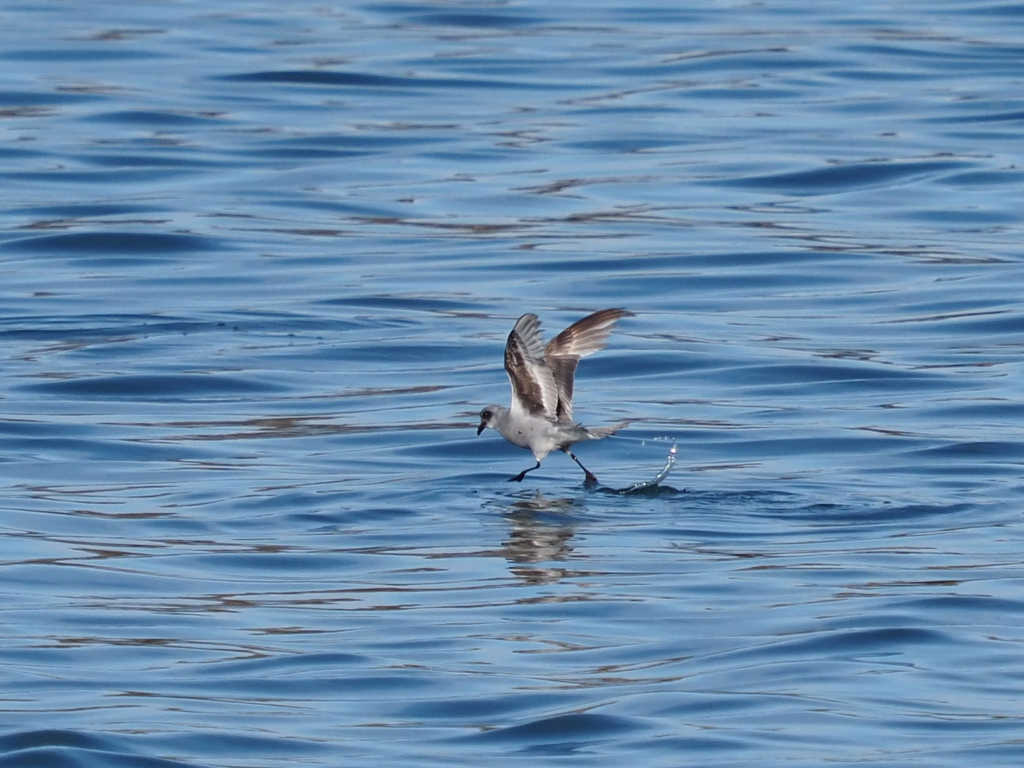
(c) Matt Muir, some rights reserved (CC BY) · licence
Family: Hydrobatidae · Class: Aves · Order: Procellariiformes
Conservation status: G5 S1
Hydrobates furcatus (Fork-tailed Storm- Petrel) is a California animal in the Hydrobatidae family.
The Fork-tailed Storm-Petrel is a small seabird measuring approximately 20-23 cm (8-9 inches) in length with a wingspan of 46 cm (18 inches). The species displays light gray plumage overall, with darker wing tips and a distinctive forked tail that gives the bird its common name. Unlike other storm-petrels, this species has a relatively pale coloration and lacks the white rump patch characteristic of many storm-petrel species. The Fork-tailed Storm-Petrel breeds along the North American Pacific coast from northern California to Alaska, as well as along the northeast coast of Asia. In California, the species is considered rare with a State rank of S1, indicating critically imperiled status within the state. According to the California Department of Fish and Wildlife, this species is designated as a Species of Special Concern. The species' global rank of G5 indicates it is secure globally, though populations vary significantly by region. This pelagic species nests on offshore islands and rocky coastal areas, utilizing burrows, crevices, and sometimes artificial nest sites. Fork-tailed Storm-Petrels prefer remote islands free from mammalian predators. The species spends most of its life at sea over continental shelf waters, typically foraging within 200 km of the continental shelf edge. Environmental Sensitivity Index maps document breeding colonies on various California islands, with seasonal presence from March through November. Fork-tailed Storm-Petrels are surface feeders, picking small fish, squid, and zooplankton from the ocean surface while in flight. They exhibit a distinctive feeding behavior of pattering across the water surface with their feet while maintaining flight. The species is generally less gregarious than other storm-petrels but may form small foraging groups. Breeding occurs during an extended nesting season, with birds laying a single white egg in burrows or rock crevices. Both parents share incubation duties over approximately 50 days, followed by an extended chick-rearing period. As a Species of Special Concern in California, the Fork-tailed Storm-Petrel faces threats from introduced predators on nesting islands, habitat disturbance, and marine pollution. The species' tendency to ingest surface contaminants makes it particularly vulnerable to oil spills and plastic debris. Climate change may alter oceanic conditions and prey availability, potentially affecting foraging success and breeding productivity. Conservation efforts focus on predator removal from nesting islands and monitoring of breeding colonies. The species' small California population requires continued monitoring to assess trends and identify conservation needs. Protection of offshore island nesting habitat and marine foraging areas remains critical for maintaining viable populations in California waters.
Classification
Class: Aves · Order: Procellariiformes · Family: Hydrobatidae
Conservation status
G5 S1
Frequently asked questions
How is Hydrobates furcatus classified?
Hydrobates furcatus belongs to class Aves, order Procellariiformes, family Hydrobatidae.
What family does Hydrobates furcatus belong to?
Hydrobates furcatus is in the Hydrobatidae family.
Is Hydrobates furcatus protected or of conservation concern?
Hydrobates furcatus carries the following status: G5 S1.
What is Hydrobates furcatus?
The Fork-tailed Storm-Petrel is a small seabird measuring approximately 20-23 cm (8-9 inches) in length with a wingspan of 46 cm (18 inches).
Is Hydrobates furcatus found in California?
Yes. Hydrobates furcatus is recorded in California in The California Species Project's catalogue.
Related species
Other California species in the same genus, family, or bioregion.
Data from The California Species Project — 14,000+ California species with verified data from CNPS, CDFW, USFWS, and more.