Hydrobates melania
Black Storm-petrel
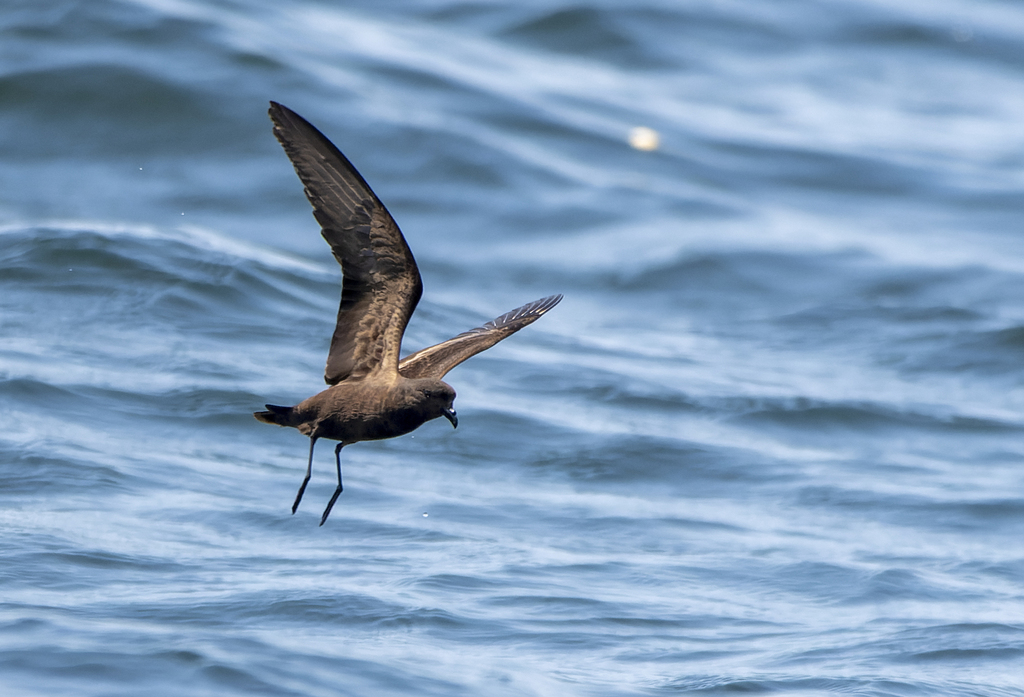
(c) David F. Belmonte, some rights reserved (CC BY) · licence
Family: Hydrobatidae · Class: Aves · Order: Procellariiformes
Conservation status: G3 S1
Hydrobates melania (Black Storm-petrel) is a California animal in the Hydrobatidae family.
The Black Storm-Petrel is a medium-sized seabird and the largest of the all-dark storm-petrels in North American waters. Adults measure approximately 23 cm (9 inches) in length with a wingspan of 46-51 cm (18-20 inches), making it the most robust member of its genus following the extinction of the Guadalupe Storm-Petrel in the 20th century. The species displays uniformly dark plumage with brownish-black coloration above and slightly paler underparts. In flight, the bird exhibits a distinctive deep, languid wingbeat pattern that distinguishes it from smaller storm-petrel species. The Black Storm-Petrel inhabits tropical, subtropical, and warm-temperate waters of the extreme eastern North Pacific Ocean. Its breeding range centers on islands in the Gulf of California and along the Pacific coast of Baja California, Mexico, with some colonies extending to islands off southern California. According to the U.S. Fish and Wildlife Service, the species exhibits an unusual bifurcated winter distribution pattern, with populations either moving north to waters off southern and central California or south to waters off Central America and northern South America (Birds of the World). Nesting occurs in xeric habitat on rocky islands, where the species utilizes natural crevices, caves, and rocky cavities. The Black Storm-Petrel often shares nesting areas with other all-dark storm-petrels, with habitat partitioning occurring based on body size and cavity requirements. As the largest species in this group, it typically occupies the largest available nesting crevices. The species shows a preference for more inshore waters compared to its congeners. Black Storm-Petrels are nocturnal at breeding colonies, arriving after dark to avoid predation and departing before dawn. The species feeds primarily by surface-picking and shallow plunge-diving for small fish, squid, and planktonic crustaceans. Breeding occurs during summer months, with females laying a single white egg in protected rock crevices. Both parents share incubation duties over an extended period typical of storm-petrels, and chicks develop slowly, remaining in the nest for several months before fledging. The Black Storm-Petrel is designated as a Species of Concern by the U.S. Fish and Wildlife Service as of 2021, reflecting concerns about population stability and vulnerability to threats (USFWS Birds of Conservation Concern 2021). The species' restricted breeding range makes it particularly susceptible to habitat disturbance, introduced predators on nesting islands, and marine pollution. Climate change may affect prey availability and alter ocean conditions in its foraging areas. Oil spills pose a significant threat given the species' preference for inshore waters. The unusual bifurcated migration pattern may represent an adaptive strategy to avoid entrapment in areas with poor foraging conditions, but also increases exposure to threats across multiple regions. Conservation efforts focus on protecting nesting habitat on key breeding islands and monitoring population trends through standardized seabird surveys.
Classification
Class: Aves · Order: Procellariiformes · Family: Hydrobatidae
Conservation status
G3 S1
Frequently asked questions
How is Hydrobates melania classified?
Hydrobates melania belongs to class Aves, order Procellariiformes, family Hydrobatidae.
What family does Hydrobates melania belong to?
Hydrobates melania is in the Hydrobatidae family.
Is Hydrobates melania protected or of conservation concern?
Hydrobates melania carries the following status: G3 S1.
What is Hydrobates melania?
The Black Storm-Petrel is a medium-sized seabird and the largest of the all-dark storm-petrels in North American waters.
Is Hydrobates melania found in California?
Yes. Hydrobates melania is recorded in California in The California Species Project's catalogue.
Related species
Other California species in the same genus, family, or bioregion.
Data from The California Species Project — 14,000+ California species with verified data from CNPS, CDFW, USFWS, and more.