Hydromantes brunus
Limestone salamander
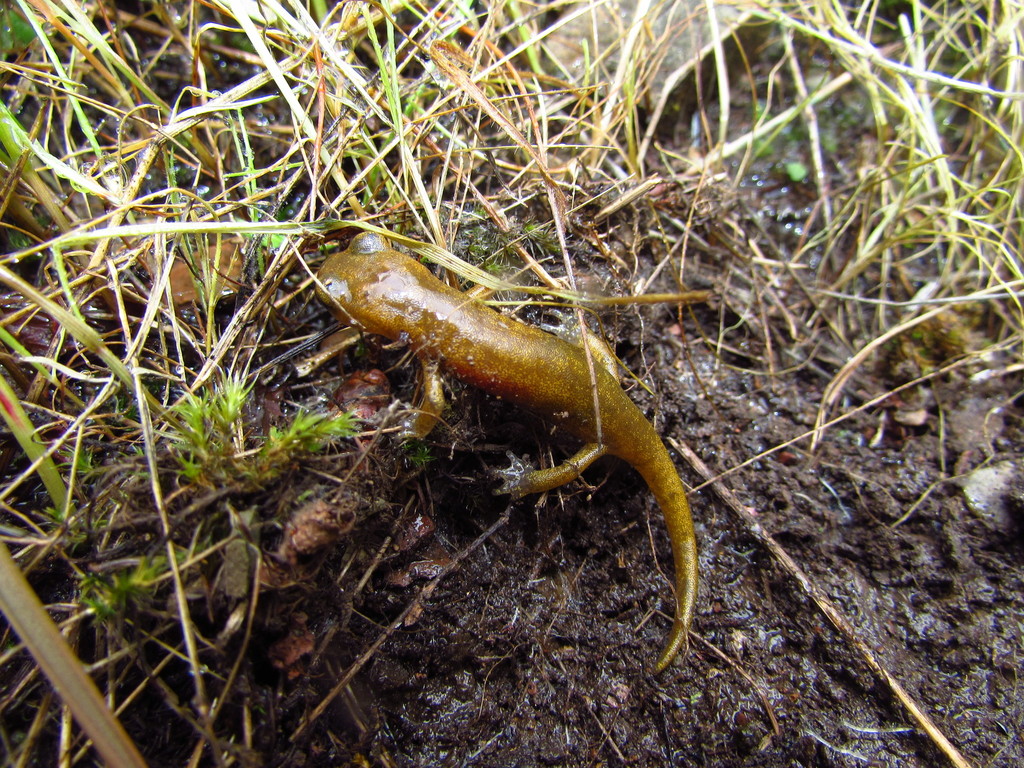
(c) Matt D'Agrosa, some rights reserved (CC BY) · licence
Family: Plethodontidae · Class: Amphibia · Order: Caudata
Conservation status: FP · G2G3 S2S3
Hydromantes brunus (Limestone salamander) is a California animal in the Plethodontidae family.
The limestone salamander (Hydromantes brunus) is a medium-sized terrestrial salamander endemic to California's Sierra Nevada foothills. Adults typically measure 90 to 130 mm (3.5 to 5.1 inches) in total length, with males slightly smaller than females. The species exhibits a robust body with relatively short legs and a long tail that can regenerate if lost. Coloration ranges from gray-brown to reddish-brown dorsally, often with darker mottling or patches. The ventral surface is typically lighter, appearing cream to pale gray. The skin has a smooth, moist texture characteristic of lungless salamanders, with visible costal grooves along the sides. The limestone salamander occurs in a narrow band along the western slope of the Sierra Nevada in California, primarily in Fresno, Madera, Mariposa, and Tuolumne counties. The species' range extends from approximately 300 to 1,200 meters (1,000 to 4,000 feet) in elevation. Historical records indicate the species was more widely distributed, but habitat fragmentation has resulted in isolated populations scattered across suitable limestone formations. Current populations are concentrated in areas with exposed limestone outcrops and associated talus slopes. This species is closely associated with limestone karst formations and related geological substrates. Limestone salamanders inhabit caves, rock crevices, talus slopes, and areas beneath large rocks where limestone bedrock is present or nearby. The species requires high humidity levels and stable temperatures, typically found in north-facing slopes or areas with persistent moisture. Suitable habitat often includes mixed oak woodland, chaparral, and foothill pine communities where limestone outcrops occur. Underground retreats and cave systems provide critical thermal refugia during extreme weather conditions. Limestone salamanders are primarily nocturnal and become active on the surface during cool, humid conditions, particularly following precipitation. The species feeds on small invertebrates including springtails, mites, small beetles, and other arthropods found in leaf litter and rock crevices. Reproduction occurs through internal fertilization, with females depositing clusters of 6 to 20 eggs in moist underground chambers during late winter and early spring. Eggs undergo direct development without an aquatic larval stage, with juveniles emerging as miniature adults after approximately 6 to 8 months. Sexual maturity is reached at 3 to 4 years of age. The California Department of Fish and Wildlife lists the limestone salamander as Threatened under the California Endangered Species Act, with a state rank of S2S3 indicating the species is imperiled to vulnerable. The global rank of G2G3 reflects similar conservation concerns range-wide. Primary threats include habitat loss from urban development, quarrying operations targeting limestone deposits, and recreational activities that disturb cave and rock outcrop habitats. Climate change poses additional risks through increased temperatures and altered precipitation patterns that may reduce available moisture in critical microhabitats. Fire suppression practices have led to increased vegetation density in some areas, potentially altering the microclimate conditions required by the species. Conservation efforts focus on habitat protection, quarry operation restrictions, and monitoring of known populations to assess population trends and habitat quality.
Classification
Class: Amphibia · Order: Caudata · Family: Plethodontidae
Conservation status
FP · G2G3 S2S3
Frequently asked questions
How is Hydromantes brunus classified?
Hydromantes brunus belongs to class Amphibia, order Caudata, family Plethodontidae.
What family does Hydromantes brunus belong to?
Hydromantes brunus is in the Plethodontidae family.
Is Hydromantes brunus protected or of conservation concern?
Hydromantes brunus carries the following status: FP · G2G3 S2S3.
What is Hydromantes brunus?
The limestone salamander (Hydromantes brunus) is a medium-sized terrestrial salamander endemic to California's Sierra Nevada foothills.
Is Hydromantes brunus found in California?
Yes. Hydromantes brunus is recorded in California in The California Species Project's catalogue.
Related species
Other California species in the same genus, family, or bioregion.
Data from The California Species Project — 14,000+ California species with verified data from CNPS, CDFW, USFWS, and more.