Hydromantes platycephalus
Mount Lyell Salamander
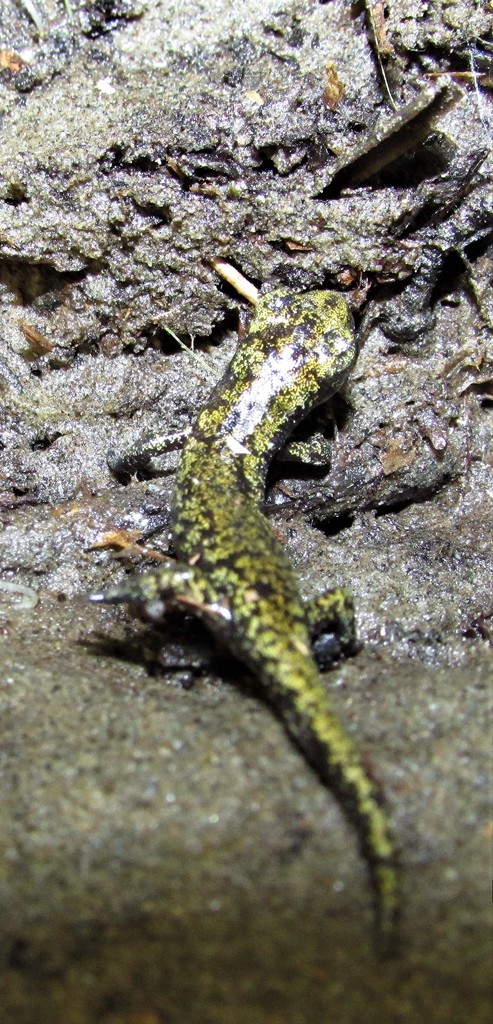
(c) Matt D'Agrosa, some rights reserved (CC BY) · licence
Family: Plethodontidae · Class: Amphibia · Order: Caudata
Conservation status: WL · G4 S4
Hydromantes platycephalus (Mount Lyell Salamander) is a California animal in the Plethodontidae family.
The Mount Lyell salamander (Hydromantes platycephalus) is a medium-sized lungless salamander endemic to the Sierra Nevada of California. Adults typically measure 89 to 120 mm (3.5 to 4.7 inches) in total length, with females generally larger than males. The species exhibits a flattened body and head, reflected in its scientific name 'platycephalus' meaning flat-headed. Coloration ranges from dark brown to nearly black dorsally, often with lighter mottling or bronze flecks. The ventral surface is typically lighter, ranging from gray to pale yellow. The tail is approximately equal to snout-vent length and may show slight constriction at the base. The Mount Lyell salamander occurs exclusively in the high elevation granitic regions of the central and southern Sierra Nevada. The species' range extends from the Desolation Wilderness area in El Dorado County south to the Kings River drainage in Fresno County. Populations are documented from elevations of 1,219 to 3,658 meters (4,000 to 12,000 feet), making it one of the highest-elevation salamanders in North America. The type locality is Mount Lyell in Yosemite National Park, where the species was first scientifically described. This salamander inhabits granite talus slopes, rock crevices, and cliff faces in subalpine and alpine zones. The species shows strong fidelity to granitic substrates, rarely occurring on other rock types. Microhabitat selection focuses on areas with consistent moisture retention, typically found in north-facing slopes or areas with permanent snowfields and seepage. The species occurs in sparsely vegetated areas above treeline, as well as within whitebark pine and mountain hemlock forests at lower elevations within its range. Mount Lyell salamanders are nocturnal and largely terrestrial, emerging from rock crevices during humid conditions or after precipitation events. The species lacks lungs and respires entirely through skin and buccal cavity surfaces, requiring consistent moisture for gas exchange. Reproduction is terrestrial, with females depositing eggs in moist rock crevices during summer months. Clutch sizes range from 7 to 19 eggs, with direct development occurring over approximately one year. Adults feed primarily on small arthropods including springtails, mites, and small beetles found within their rocky habitat. The Mount Lyell salamander is currently listed as a Watch List species by the California Department of Fish and Wildlife, with a state conservation rank of S4 (apparently secure). Climate change represents the primary long-term threat, as warming temperatures may reduce suitable high-elevation habitat and alter snowpack patterns essential for maintaining moisture levels. The species' restricted range and specific habitat requirements make it vulnerable to environmental changes. Additionally, recreational activities in popular Sierra Nevada destinations may cause habitat disturbance through rock climbing and off-trail hiking. Current population trends are not well documented, though the species appears stable within protected areas including Yosemite and Sequoia National Parks.
Classification
Class: Amphibia · Order: Caudata · Family: Plethodontidae
Conservation status
WL · G4 S4
Frequently asked questions
How is Hydromantes platycephalus classified?
Hydromantes platycephalus belongs to class Amphibia, order Caudata, family Plethodontidae.
What family does Hydromantes platycephalus belong to?
Hydromantes platycephalus is in the Plethodontidae family.
Is Hydromantes platycephalus protected or of conservation concern?
Hydromantes platycephalus carries the following status: WL · G4 S4.
What is Hydromantes platycephalus?
The Mount Lyell salamander (Hydromantes platycephalus) is a medium-sized lungless salamander endemic to the Sierra Nevada of California.
Is Hydromantes platycephalus found in California?
Yes. Hydromantes platycephalus is recorded in California in The California Species Project's catalogue.
Related species
Other California species in the same genus, family, or bioregion.
Data from The California Species Project — 14,000+ California species with verified data from CNPS, CDFW, USFWS, and more.