Hydromantes shastae
Shasta salamander
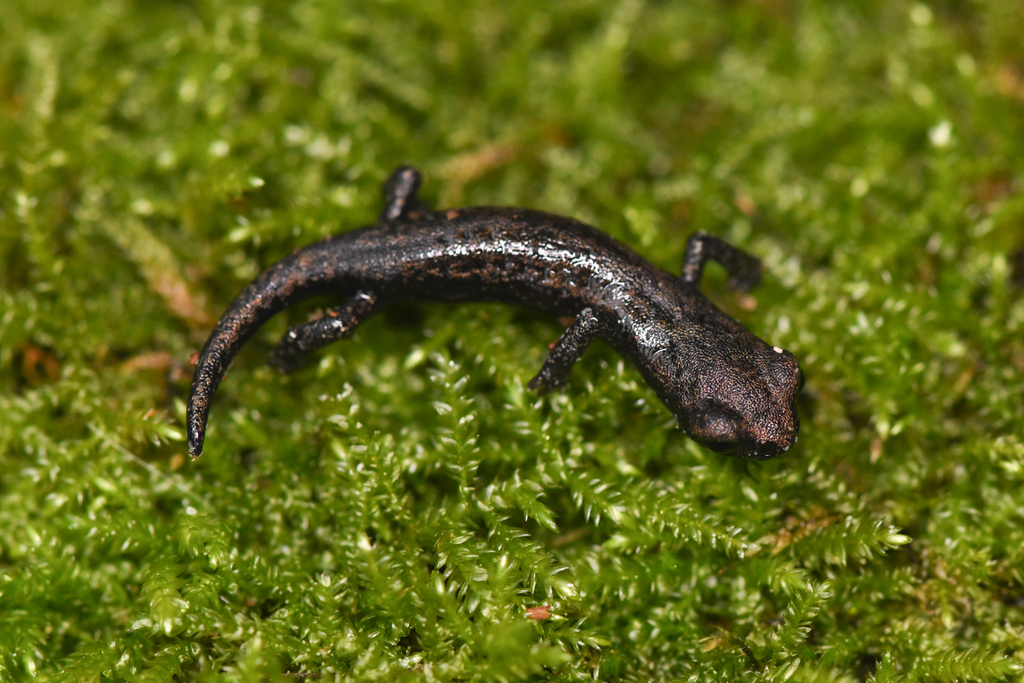
(c) Trevor Van Loon, some rights reserved (CC BY) · licence
Family: Plethodontidae · Class: Amphibia · Order: Caudata
Conservation status: ST · G3 S3
Hydromantes shastae (Shasta salamander) is a California animal in the Plethodontidae family.
The Shasta salamander is a medium-sized, terrestrial plethodontid salamander endemic to the limestone regions of northern California. Adults typically measure 89 to 140 mm (3.5 to 5.5 inches) in total length, with a relatively short tail comprising approximately 40% of total body length. The dorsal coloration ranges from brownish-gray to olive-brown with irregular darker mottling or blotching. The ventral surface is lighter, typically cream to pale yellow with fine dark speckling. The species exhibits the characteristic webbed hind feet of the genus Hydromantes, with extensive webbing between the fourth and fifth toes that aids in climbing on rocky surfaces. Historically, Shasta salamanders were known from limestone caves and outcrops in the Shasta Lake region of Shasta County, California. The species occurs in scattered populations within a relatively restricted range centered around the McCloud River drainage and Shasta Lake area. According to recent taxonomic research, the Shasta salamander complex may represent multiple cryptic species, with genetic studies by Bingham et al. (2018) identifying distinct lineages that may warrant recognition as separate species: Hydromantes samweli and Hydromantes wintu. Until formal taxonomic review, all populations within this complex remain protected under the state threatened designation. Shasta salamanders are obligate inhabitants of limestone caves, talus slopes, and rocky outcrops in mixed coniferous forest. They occur at elevations ranging from approximately 122 to 1,067 meters (400 to 3,500 feet). The species requires high humidity microhabitats and is typically found in deep rock crevices, cave entrances, and beneath large limestone boulders. Surface activity is largely restricted to periods of high humidity, particularly during fall and winter months when temperatures are cool and moisture levels are elevated. As lungless salamanders, Shasta salamanders respire entirely through their skin and must maintain constant moisture. They are primarily nocturnal, emerging from rock crevices during humid conditions to forage for small invertebrates including spiders, beetles, flies, and other arthropods. Reproduction is terrestrial, with females depositing eggs in moist rock crevices during spring months. Clutch sizes typically range from 4 to 16 eggs, which undergo direct development without an aquatic larval stage. Juveniles emerge as miniature adults after approximately 3 to 4 months of development. The California Department of Fish and Wildlife listed the Shasta salamander as threatened in 1971, making it one of the earliest amphibian species to receive state protection. The species faces threats from habitat modification, limestone quarrying operations, recreational cave disturbance, and climate change impacts on moisture regimes. Water level fluctuations at Shasta Lake associated with dam operations may affect some populations. The restricted range and specialized habitat requirements make the species particularly vulnerable to environmental changes. Current population estimates are not well-established due to the secretive nature and cryptic taxonomy of the species complex.
Classification
Class: Amphibia · Order: Caudata · Family: Plethodontidae
Conservation status
ST · G3 S3
Frequently asked questions
How is Hydromantes shastae classified?
Hydromantes shastae belongs to class Amphibia, order Caudata, family Plethodontidae.
What family does Hydromantes shastae belong to?
Hydromantes shastae is in the Plethodontidae family.
Is Hydromantes shastae protected or of conservation concern?
Hydromantes shastae carries the following status: ST · G3 S3.
What is Hydromantes shastae?
The Shasta salamander is a medium-sized, terrestrial plethodontid salamander endemic to the limestone regions of northern California.
Is Hydromantes shastae found in California?
Yes. Hydromantes shastae is recorded in California in The California Species Project's catalogue.
Related species
Other California species in the same genus, family, or bioregion.
Data from The California Species Project — 14,000+ California species with verified data from CNPS, CDFW, USFWS, and more.