Hydrophilus triangularis
Giant Water Scavenger Beetle
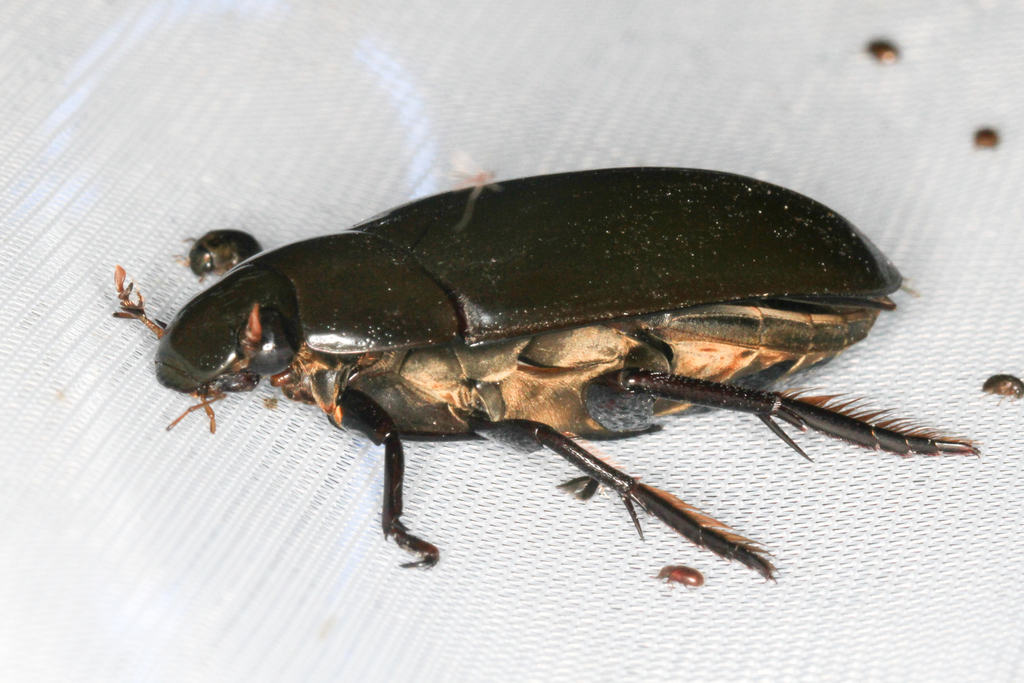
(c) Tom Field, some rights reserved (CC BY) · licence
Family: Hydrophilidae · Class: Insecta · Order: Coleoptera
Hydrophilus triangularis (Giant Water Scavenger Beetle) is a California animal in the Hydrophilidae family.
The Giant Water Scavenger Beetle (Hydrophilus triangularis) is one of the largest aquatic beetles in North America, belonging to the family Hydrophilidae. Adults typically measure 35-48 millimeters (1.4-1.9 inches) in length, making them among the most substantial freshwater beetles. The body is oval-shaped with a distinctly convex dorsal surface, appearing almost helmet-like in profile. The elytra are dark brown to black with a glossy sheen, while the underside exhibits a reddish-brown coloration. The antennae are clubbed and hydrofuge, designed to trap air bubbles for underwater respiration. This species occurs across much of North America, with populations documented from southern Canada through the United States and into northern Mexico. In California, Hydrophilus triangularis is found in suitable aquatic habitats throughout much of the state, from coastal regions to inland valleys and mountainous areas. The species appears to be most common in the Central Valley and coastal plain regions where permanent water bodies are abundant. Giant Water Scavenger Beetles inhabit permanent freshwater environments including ponds, lakes, slow-moving streams, and marshes. They show preference for shallow areas with abundant aquatic vegetation and organic debris. The species tolerates a range of water conditions but typically occurs in habitats with neutral to slightly alkaline pH levels. Adults are commonly found among emergent vegetation near shorelines, while larvae develop in the benthic zone of the same water bodies. Despite their common name suggesting scavenging behavior, adults are primarily herbivorous, feeding on algae, decaying plant matter, and detritus. However, larvae are voracious predators, consuming aquatic worms, small crustaceans, insect larvae, and other invertebrates. Adult beetles are strong swimmers but also capable fliers, often moving between water bodies during nighttime dispersal flights. Reproduction occurs in spring and early summer, with females constructing distinctive silken egg cases that float on the water surface. Each case contains 20-100 eggs and is equipped with a breathing tube extending above the waterline. Development from egg to adult typically requires one full year, with larvae overwintering in the sediment. Hydrophilus triangularis currently holds no federal or state conservation listing status in California. The species appears to maintain stable populations across much of its range, though local declines may occur due to habitat degradation, water pollution, and wetland loss. Urban development and agricultural practices that alter natural hydrology pose ongoing threats to aquatic beetle communities. Climate change impacts, including altered precipitation patterns and increased drought frequency, may affect the permanence of breeding habitats. The species serves as an indicator of freshwater ecosystem health, as populations require clean, well-oxygenated water with diverse aquatic plant communities for successful reproduction and development.
Classification
Class: Insecta · Order: Coleoptera · Family: Hydrophilidae
Frequently asked questions
How is Hydrophilus triangularis classified?
Hydrophilus triangularis belongs to class Insecta, order Coleoptera, family Hydrophilidae.
What family does Hydrophilus triangularis belong to?
Hydrophilus triangularis is in the Hydrophilidae family.
What is Hydrophilus triangularis?
The Giant Water Scavenger Beetle (Hydrophilus triangularis) is one of the largest aquatic beetles in North America, belonging to the family Hydrophilidae.
Is Hydrophilus triangularis found in California?
Yes. Hydrophilus triangularis is recorded in California in The California Species Project's catalogue.
Related species
Other California species in the same genus, family, or bioregion.
Data from The California Species Project — 14,000+ California species with verified data from CNPS, CDFW, USFWS, and more.