Hydrophis platurus
Yellow-Bellied Seasnake
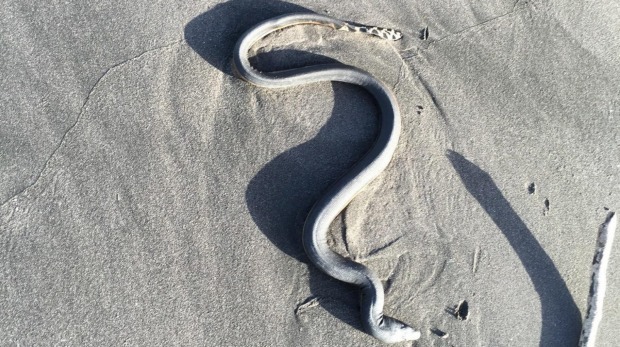
(c) Emily Roberts, some rights reserved (CC BY) · licence
Family: Elapidae · Class: Reptilia · Order: Squamata
Hydrophis platurus (Yellow-Bellied Seasnake) is a California animal in the Elapidae family.
The yellow-bellied seasnake (Hydrophis platurus) is the most widely distributed snake species in the world and the only truly pelagic sea snake. Adults typically measure 60 to 88 centimeters (24 to 35 inches) in total length, with females generally larger than males. The species exhibits distinctive coloration with a dark brown to black dorsal surface and bright yellow ventral surface, creating a sharp contrast along the lateral margins. The tail is compressed laterally and paddle-shaped, adapted for swimming, while the body is laterally flattened throughout its length. The head is small relative to the body, with enlarged nostrils positioned dorsally and equipped with valves to prevent water entry. Historically, yellow-bellied seasnakes have been recorded in California waters, representing the northernmost extent of their range in the eastern Pacific. The species occurs in tropical and subtropical oceanic waters from the eastern Pacific coast of the Americas to the western Pacific and Indian Oceans. In the eastern Pacific, they range from Ecuador north to southern California, with occasional records during El Niño events when warm water currents extend their range northward. California sightings are rare and typically associated with unusually warm ocean conditions, with most records from offshore waters of San Diego, Orange, and Los Angeles counties. Yellow-bellied seasnakes inhabit the open ocean surface, remaining within the upper 10 meters of warm oceanic waters with temperatures above 18°C (64°F). They are associated with convergence zones where different water masses meet, creating areas of concentrated prey and floating debris. The species cannot survive in water temperatures below 16°C (61°F) for extended periods, which limits their permanent establishment in California's typically cooler coastal waters. They require saline environments and cannot tolerate freshwater. This species is highly adapted to pelagic life, feeding primarily on small fish that shelter beneath floating objects or in surface waters. Prey includes juvenile fish of various species, particularly those in the families Nomeidae and Bramidae. Yellow-bellied seasnakes are ovoviviparous, giving birth to live young after a gestation period of approximately six months. Females produce 2 to 6 offspring, which are born fully developed and capable of independent survival. The species exhibits passive drift behavior, allowing ocean currents to transport them across vast distances. Yellow-bellied seasnakes are not federally listed under the Endangered Species Act, and their global conservation status is considered stable due to their wide distribution and large population size. However, the species faces threats from ocean pollution, particularly plastic debris and oil spills, as well as climate change effects on ocean temperatures and currents. In California waters, their occurrence remains sporadic and climate-dependent, with no established breeding populations. The species serves as an indicator of oceanic warming events and changing marine ecosystem conditions along the California coast.
Classification
Class: Reptilia · Order: Squamata · Family: Elapidae
Frequently asked questions
How is Hydrophis platurus classified?
Hydrophis platurus belongs to class Reptilia, order Squamata, family Elapidae.
What family does Hydrophis platurus belong to?
Hydrophis platurus is in the Elapidae family.
What is Hydrophis platurus?
The yellow-bellied seasnake (Hydrophis platurus) is the most widely distributed snake species in the world and the only truly pelagic sea snake.
Is Hydrophis platurus found in California?
Yes. Hydrophis platurus is recorded in California in The California Species Project's catalogue.
More California species
This species has no close relatives in our California data — here are other species to explore.
Data from The California Species Project — 14,000+ California species with verified data from CNPS, CDFW, USFWS, and more.