Hydroporus leechi
Leech's Skyline Diving Beetle
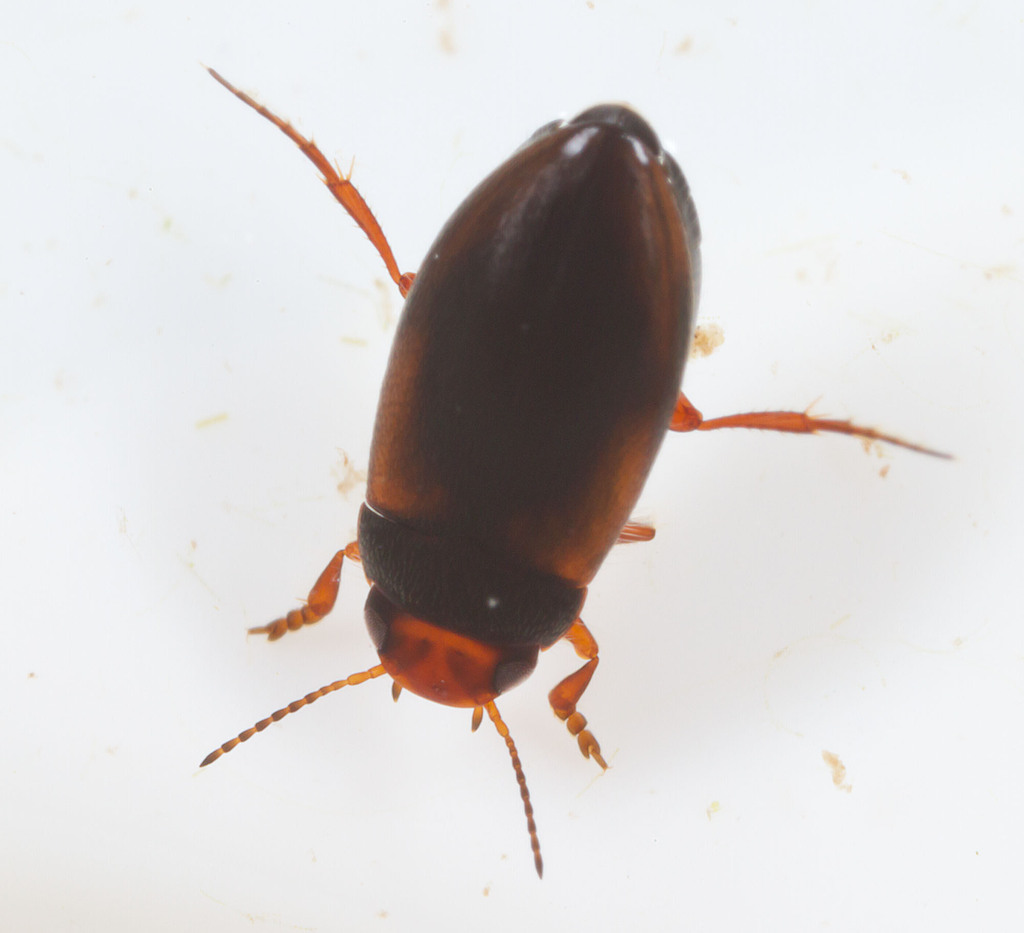
no rights reserved · CC0
Family: Dytiscidae · Class: Insecta · Order: Coleoptera
Conservation status: G3 S2S3
Hydroporus leechi (Leech's Skyline Diving Beetle) is a California animal in the Dytiscidae family.
Leech's skyline diving beetle (Hydroporus leechi) is a small aquatic beetle in the family Dytiscidae. Adult beetles typically measure 2.5 to 4.0 millimeters (0.10 to 0.16 inches) in length, making them among the smaller diving beetles. Like other members of the genus Hydroporus, they possess streamlined, oval-shaped bodies adapted for aquatic life, with modified hind legs that function as swimming paddles. The elytra (wing covers) are typically dark brown to black with subtle patterns that may include lighter markings. This species is endemic to California, with a highly restricted distribution in the northern Coast Ranges. Historical records indicate the beetle occurs in montane areas of Mendocino, Lake, and possibly Napa counties. The species appears to be associated with high-elevation aquatic habitats, particularly in areas above 1,200 meters (4,000 feet) elevation, though specific locality data remains limited in published literature. Leech's skyline diving beetle inhabits small, permanent or semi-permanent water bodies in montane forest environments. These include spring-fed pools, seeps, small ponds, and slow-moving sections of headwater streams. The species appears to prefer clear, cool water with minimal flow and abundant organic matter. Associated vegetation typically includes mixed coniferous forest dominated by Douglas fir, ponderosa pine, and various oak species. The precise microhabitat requirements and substrate preferences have not been thoroughly documented. As with other diving beetles, H. leechi is predatory in both larval and adult stages. Adults are capable swimmers that hunt small aquatic invertebrates, including midge larvae, small crustaceans, and other soft-bodied prey. The species likely has a multiyear life cycle typical of montane aquatic insects, with larvae developing in the same water bodies where adults are found. Reproductive timing and specific breeding requirements remain poorly documented, though temperate diving beetles typically mate in spring and early summer. Adults can fly between water bodies but appear to have limited dispersal capability given their restricted range. Leech's skyline diving beetle carries a Global Conservation Status rank of G3 (vulnerable) and a California State rank of S2S3 (imperiled to vulnerable), according to NatureServe (2013). The species faces significant conservation challenges due to its extremely limited distribution and specialized habitat requirements. Primary threats likely include habitat degradation from logging activities, water diversions, livestock grazing impacts on riparian areas, and climate change effects on montane hydrology. The small, isolated nature of suitable habitat makes populations particularly vulnerable to local disturbances. As of December 2025, the species is not federally listed under the Endangered Species Act, though its conservation status indicates cause for concern. Additional survey work and ecological studies are needed to better understand population trends, specific habitat requirements, and conservation needs for this rare endemic beetle.
Classification
Class: Insecta · Order: Coleoptera · Family: Dytiscidae
Conservation status
G3 S2S3
Frequently asked questions
How is Hydroporus leechi classified?
Hydroporus leechi belongs to class Insecta, order Coleoptera, family Dytiscidae.
What family does Hydroporus leechi belong to?
Hydroporus leechi is in the Dytiscidae family.
Is Hydroporus leechi protected or of conservation concern?
Hydroporus leechi carries the following status: G3 S2S3.
What is Hydroporus leechi?
Leech's skyline diving beetle (Hydroporus leechi) is a small aquatic beetle in the family Dytiscidae.
Is Hydroporus leechi found in California?
Yes. Hydroporus leechi is recorded in California in The California Species Project's catalogue.
Related species
Other California species in the same genus, family, or bioregion.
Data from The California Species Project — 14,000+ California species with verified data from CNPS, CDFW, USFWS, and more.