Hydroporus simplex
Simple Hydroporus Diving Beetle
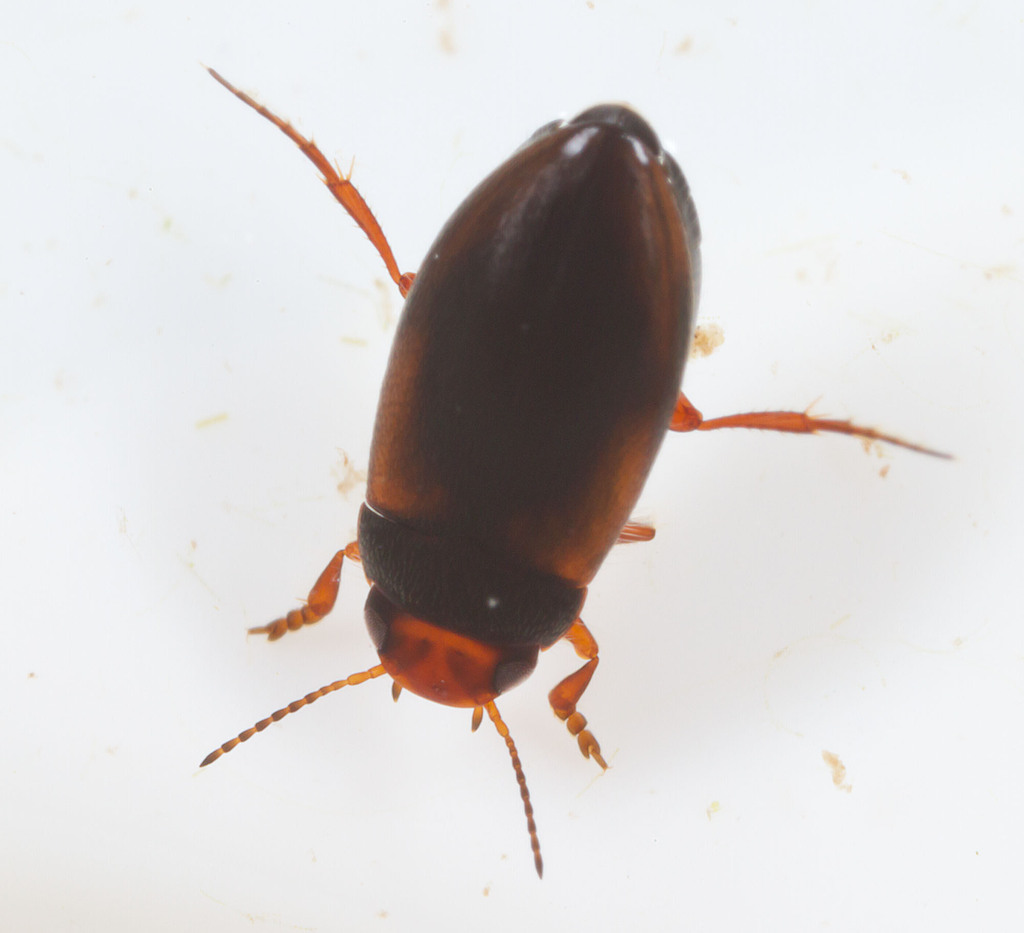
no rights reserved · CC0
Family: Dytiscidae · Class: Insecta · Order: Coleoptera
Conservation status: G3G4 S3S4
Hydroporus simplex (Simple Hydroporus Diving Beetle) is a California animal in the Dytiscidae family.
The Simple Hydroporus Diving Beetle (Hydroporus simplex) is a small aquatic beetle belonging to the family Dytiscidae. Adults typically measure 2.5 to 4.0 mm in length, displaying the characteristic streamlined body shape adapted for aquatic life. The species exhibits a dark brown to black coloration with a somewhat shiny appearance, and like other members of the genus, possesses modified hind legs that function as swimming paddles. Hydroporus simplex occurs across western North America, with documented populations in California, Oregon, Washington, and portions of western Canada. In California, the species has been recorded from various counties, though specific distribution data remains limited. The beetle's range extends from sea level to moderate elevations, typically associated with areas containing suitable aquatic habitats. This species inhabits a variety of freshwater environments including ponds, slow-moving streams, marshes, and seasonal pools. Adults are commonly found in shallow littoral zones among emergent and submerged vegetation. The beetles show a preference for water bodies with organic substrates and moderate vegetation cover, which provide both hunting grounds and refuge from predators. Temporary and semi-permanent water bodies appear to be particularly important habitat components. As predatory beetles, Hydroporus simplex adults are active hunters that feed on small aquatic invertebrates including midge larvae, mayfly nymphs, and other soft-bodied prey. The species exhibits typical dytiscid behavior, using their powerful swimming legs to pursue prey through the water column. Adults must surface regularly to renew their air supply, carrying air bubbles beneath their elytra for underwater respiration. Reproduction occurs in spring and early summer, with females depositing eggs singly or in small clusters on aquatic vegetation or organic debris. Larvae are also predaceous, developing through three instars before pupating in moist soil adjacent to water bodies. The species likely completes one generation per year in most locations. Hydroporus simplex is assigned a global conservation rank of G3G4, indicating it is vulnerable to extirpation but not critically imperiled, while its California rank of S3S4 suggests similar status at the state level. The species faces threats common to many aquatic invertebrates, including habitat loss from wetland drainage and development, water quality degradation from agricultural runoff and urban pollution, and hydrological changes from water diversions. Climate change poses additional challenges through altered precipitation patterns and increased temperature extremes that may affect seasonal pool hydrology. The beetle's dependence on specific aquatic microhabitats makes it particularly vulnerable to habitat modifications. Detailed ecological studies of this species remain limited, and much of the basic biology requires further investigation. Population trends and specific habitat requirements need additional research to inform conservation planning. The species' inclusion in various biological surveys suggests ongoing monitoring efforts, though comprehensive status assessments are lacking for most regions within its range.
Classification
Class: Insecta · Order: Coleoptera · Family: Dytiscidae
Conservation status
G3G4 S3S4
Frequently asked questions
How is Hydroporus simplex classified?
Hydroporus simplex belongs to class Insecta, order Coleoptera, family Dytiscidae.
What family does Hydroporus simplex belong to?
Hydroporus simplex is in the Dytiscidae family.
Is Hydroporus simplex protected or of conservation concern?
Hydroporus simplex carries the following status: G3G4 S3S4.
What is Hydroporus simplex?
The Simple Hydroporus Diving Beetle (Hydroporus simplex) is a small aquatic beetle belonging to the family Dytiscidae.
Is Hydroporus simplex found in California?
Yes. Hydroporus simplex is recorded in California in The California Species Project's catalogue.
Related species
Other California species in the same genus, family, or bioregion.
Data from The California Species Project — 14,000+ California species with verified data from CNPS, CDFW, USFWS, and more.