Hylephila phyleus
Fiery Skipper
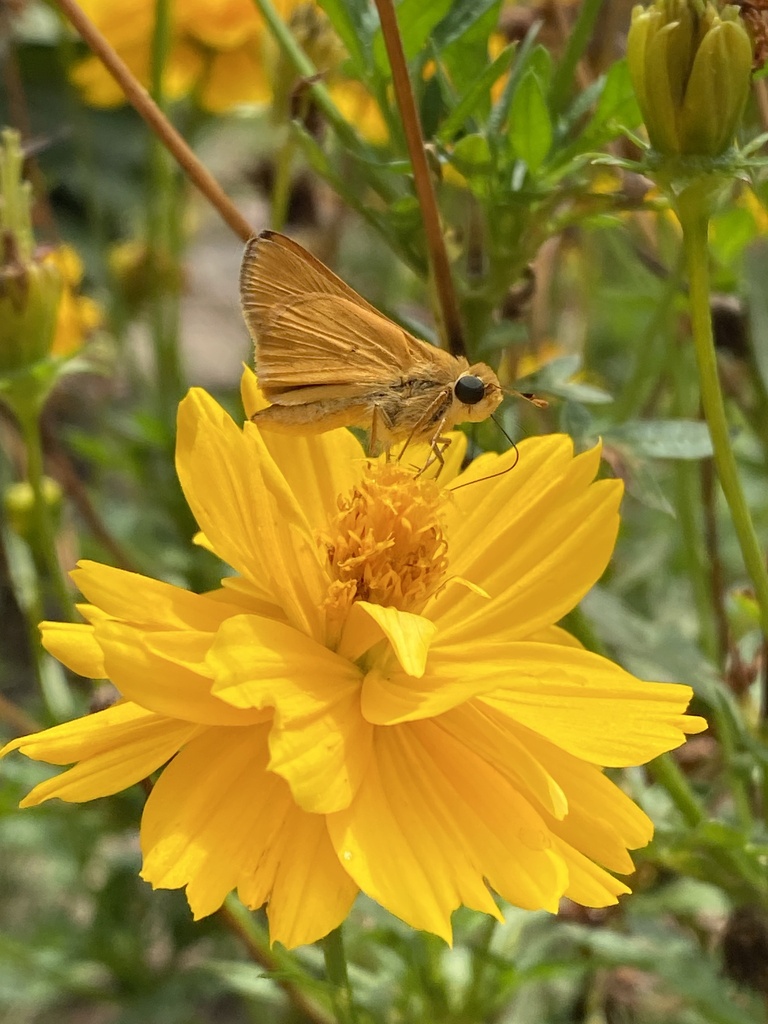
no rights reserved · CC0
Family: Hesperiidae · Class: Insecta · Order: Lepidoptera
Hylephila phyleus (Fiery Skipper) is a California animal in the Hesperiidae family.
The fiery skipper is a small butterfly with a wingspan of 25 to 32 mm (1.0 to 1.3 inches). Males display bright orange forewings with distinctive black markings, including a black stigma (scent patch) and jagged black borders. The hindwings are orange with black spotted borders. Females are darker, with brown forewings marked by light orange or yellow spots arranged in bands, and orange-brown hindwings with pale spots. The underside of the hindwings in both sexes shows pale yellow coloration with small dark spots. The antennae are short with hooked clubs, characteristic of the skipper family. The fiery skipper ranges from the southern United States south through the West Indies and Central America to Argentina. This species cannot survive harsh winters and functions as a seasonal migrant in northern portions of its range. Each summer, individuals may stray and re-colonize northward to northern California, southern Minnesota, southern Ontario, and southern New England. In California, the species is most commonly encountered in the southern regions and Central Valley, with seasonal populations extending into the San Francisco Bay Area during favorable years. This skipper inhabits open, sunny areas including lawns, parks, gardens, golf courses, roadsides, and agricultural areas where grasses are abundant. The species shows a strong preference for disturbed habitats and human-modified landscapes. Adults are commonly observed in suburban areas with maintained grass lawns and can be found from sea level to moderate elevations. The butterfly requires areas with both nectar sources for adults and suitable grass hosts for larvae. Fiery skippers feed on various grass species, with larvae developing on Bermuda grass (Cynodon dactylon), crabgrass (Digitaria), St. Augustine grass (Stenotaphrum secundatum), and other grasses. Adults nectar on small flowers including lantana, asters, and various composites. Males establish territories in sunny, open areas and engage in rapid, darting flight patterns typical of skippers. Breeding occurs continuously in warm climates, with multiple generations per year. In California, the species may produce three to four broods annually in favorable conditions. Larvae construct shelters by folding grass blades together with silk and feed within these protective structures. The fiery skipper has no special conservation status and is not listed under federal or California endangered species legislation. As a widespread, adaptable species that thrives in human-modified environments, populations appear stable across most of its range. The butterfly benefits from urbanization and lawn cultivation, which provide abundant host plants. Climate change may potentially expand its northern range limits as winters become milder, allowing for overwinter survival in previously unsuitable areas. The species serves as an indicator of healthy grassland ecosystems and contributes to pollination networks in its various habitats.
Classification
Class: Insecta · Order: Lepidoptera · Family: Hesperiidae
Frequently asked questions
How is Hylephila phyleus classified?
Hylephila phyleus belongs to class Insecta, order Lepidoptera, family Hesperiidae.
What family does Hylephila phyleus belong to?
Hylephila phyleus is in the Hesperiidae family.
What is Hylephila phyleus?
The fiery skipper is a small butterfly with a wingspan of 25 to 32 mm (1.0 to 1.3 inches).
Is Hylephila phyleus found in California?
Yes. Hylephila phyleus is recorded in California in The California Species Project's catalogue.
Related species
Other California species in the same genus, family, or bioregion.
Data from The California Species Project — 14,000+ California species with verified data from CNPS, CDFW, USFWS, and more.