Hypena palparia
Mottled Bomolocha Moth
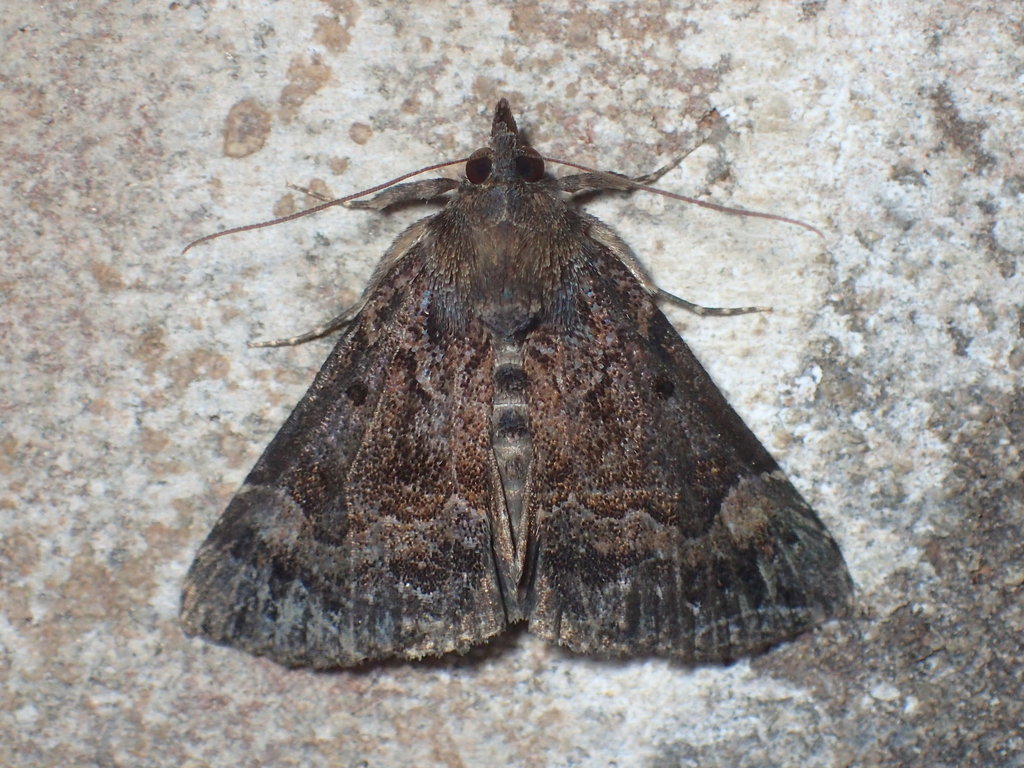
(c) John P Friel, some rights reserved (CC BY) · licence
Family: Erebidae · Class: Insecta · Order: Lepidoptera
Hypena palparia (Mottled Bomolocha Moth) is a California animal in the Erebidae family.
The Mottled Bomolocha Moth (Hypena palparia) is a small to medium-sized moth in the family Erebidae, subfamily Hypeninae. Adults typically measure 20-25 mm (0.8-1.0 inches) in wingspan. The forewings are characterized by a mottled brown and gray pattern with darker transverse lines and pale mottling that creates a cryptic appearance against bark and dead vegetation. The hindwings are typically lighter brown to grayish-brown with less distinct markings. The palpi are notably long and prominent, extending forward from the head, which is characteristic of moths in the genus Hypena. This species occurs in western North America, with records from California, Oregon, Washington, and British Columbia. In California, the Mottled Bomolocha Moth has been documented from coastal and montane regions, though specific county-level distribution data remains limited. The species appears to have a scattered distribution pattern, with populations potentially isolated by habitat fragmentation. The Mottled Bomolocha Moth inhabits mixed coniferous and deciduous forests, woodland edges, and riparian areas. Adults are typically found in areas with dense understory vegetation and abundant leaf litter. The species shows a preference for mesic conditions and is often associated with areas near streams or other water sources. Elevational range appears to extend from near sea level to approximately 1,500 meters (4,900 feet), though this requires further verification. Like other members of the subfamily Hypeninae, larvae are believed to feed on dead and decaying organic matter, including fallen leaves, detritus, and possibly fungi. This detritivorous feeding behavior distinguishes them from many other moth larvae that feed on living plant tissue. Adults are nocturnal and are attracted to artificial lights. The flight period typically extends from late spring through early fall, with peak activity during summer months. Adults likely have multiple generations per year in warmer regions, though specific generation timing has not been thoroughly documented. The conservation status of the Mottled Bomolocha Moth is poorly understood due to limited survey data and taxonomic uncertainty within the genus Hypena. The species is not currently listed under federal or state endangered species legislation. However, like many forest-dwelling moths, populations may be vulnerable to habitat loss from logging, urban development, and fire management practices that reduce understory complexity and dead organic matter. Climate change may also affect the species through alterations to forest moisture regimes and decomposer communities that larvae depend upon. The cryptic nature and nocturnal habits of this moth make population monitoring challenging, and additional research is needed to determine population trends and habitat requirements. Maintaining forest areas with natural levels of coarse woody debris and leaf litter accumulation may be important for conservation of this and other detritivorous moth species.
Classification
Class: Insecta · Order: Lepidoptera · Family: Erebidae
Frequently asked questions
How is Hypena palparia classified?
Hypena palparia belongs to class Insecta, order Lepidoptera, family Erebidae.
What family does Hypena palparia belong to?
Hypena palparia is in the Erebidae family.
What is Hypena palparia?
The Mottled Bomolocha Moth (Hypena palparia) is a small to medium-sized moth in the family Erebidae, subfamily Hypeninae.
Is Hypena palparia found in California?
Yes. Hypena palparia is recorded in California in The California Species Project's catalogue.
Related species
Other California species in the same genus, family, or bioregion.
Data from The California Species Project — 14,000+ California species with verified data from CNPS, CDFW, USFWS, and more.