Hypera postica
Alfalfa Weevil
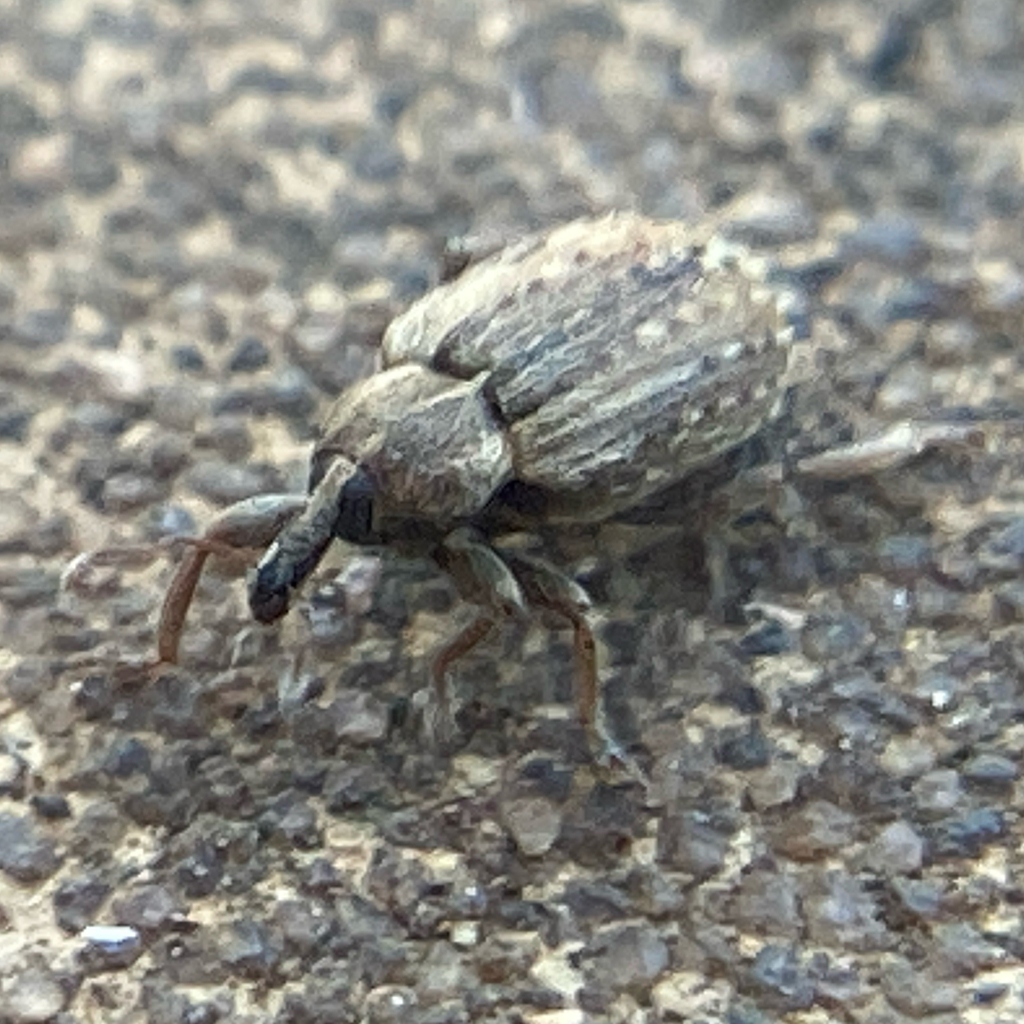
(c) F. LaBry, some rights reserved (CC BY) · licence
Family: Curculionidae · Class: Insecta · Order: Coleoptera
Hypera postica (Alfalfa Weevil) is a California animal in the Curculionidae family.
The alfalfa weevil is a small, cylindrical beetle measuring 4-5 mm (0.16-0.20 inches) in length. Adults display brown to grayish-brown coloration with a distinctive lighter-colored stripe running down the center of the back. The body is covered with fine scales that give it a mottled appearance. The head bears a characteristic elongated snout typical of weevils, with elbowed antennae positioned partway along the rostrum. Larvae are pale green with a white stripe down the back and a brown head capsule, measuring up to 8 mm when fully developed. Originally native to Europe and western Asia, the alfalfa weevil was first introduced to North America in 1904 (BugGuide). The species has since established populations throughout the United States and southern Canada. In California, the alfalfa weevil occurs in agricultural regions where alfalfa is cultivated, including the Central Valley, coastal valleys, and intermountain areas. The species has also spread to areas where related leguminous plants grow wild. Alfalfa weevils inhabit agricultural landscapes dominated by leguminous crops, particularly alfalfa fields. Adults and larvae are closely associated with alfalfa (Medicago sativa) and related plants in the family Fabaceae. The species can survive in various elevations where suitable host plants occur, from sea level to montane valleys. Adults overwinter in crop residue, leaf litter, and other protected locations within or adjacent to alfalfa fields. Adults emerge from overwintering sites in early spring when temperatures consistently reach 10-15°C (50-59°F). Females deposit eggs within alfalfa stems, typically laying 200-800 eggs over their lifetime. Eggs hatch after 7-10 days, and larvae feed on developing alfalfa leaves, creating characteristic shot-hole damage patterns. The species completes 1-2 generations per year depending on climate conditions. Adults are active during daylight hours and can fly considerable distances to locate new host plants. The species has been documented feeding on other legumes including burr clover (Medicago polymorpha) and California lotus (Hosackia wrangelianus). As an introduced agricultural pest, the alfalfa weevil is not listed under any conservation programs but is actively managed through integrated pest management strategies. The species causes significant economic damage to alfalfa crops, with larvae capable of reducing hay yields by 10-25% in untreated fields. Biological control programs have introduced several European parasitoid wasps, including Bathyplectes curculionis, to help manage populations (BugGuide). The weevil's impact extends beyond agriculture, as research indicates it can affect native California legumes like California lotus in areas where multiple species co-occur. Current management approaches combine biological control agents, cultural practices such as early cutting schedules, and targeted insecticide applications when economic thresholds are exceeded. The species continues to be monitored by agricultural extension services and pest management specialists throughout its range.
Classification
Class: Insecta · Order: Coleoptera · Family: Curculionidae
Frequently asked questions
How is Hypera postica classified?
Hypera postica belongs to class Insecta, order Coleoptera, family Curculionidae.
What family does Hypera postica belong to?
Hypera postica is in the Curculionidae family.
What is Hypera postica?
The alfalfa weevil is a small, cylindrical beetle measuring 4-5 mm (0.16-0.20 inches) in length.
Is Hypera postica found in California?
Yes. Hypera postica is recorded in California in The California Species Project's catalogue.
Related species
Other California species in the same genus, family, or bioregion.
Data from The California Species Project — 14,000+ California species with verified data from CNPS, CDFW, USFWS, and more.