Hypercompe permaculata
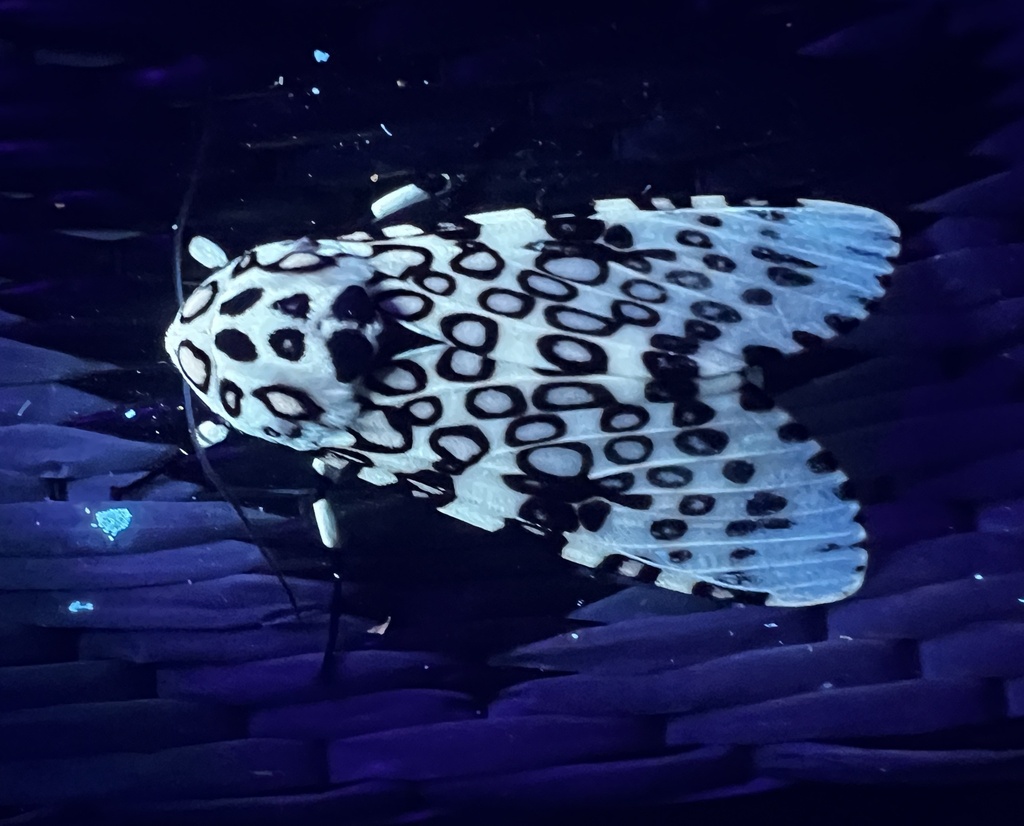
(c) Nick Tobler (Cowturtle), some rights reserved (CC BY) · licence
Family: Erebidae · Class: Insecta · Order: Lepidoptera
Hypercompe permaculata is a California animal in the Erebidae family.
Hypercompe permaculata is a moth species belonging to the family Erebidae, subfamily Arctiinae, commonly known as tiger moths. This species is part of the diverse genus Hypercompe, which comprises numerous North and South American moth species characterized by their often colorful wing patterns and robust build. Adult Hypercompe permaculata moths typically display the characteristic features of their genus, with forewings that are generally dark-colored with contrasting light markings or spots. The hindwings often exhibit bright coloration, a common trait among Arctiinae moths that serves as a warning signal to potential predators. Males can be distinguished from females by their more feathery antennae and generally smaller size. The wingspan typically ranges from 35 to 55 mm, though exact measurements for this specific species require verification from specialized lepidopteran literature. The historical and current range of H. permaculata appears to be primarily in western North America, with documented occurrences in California. However, the precise distribution boundaries, including specific counties or bioregions where this species has been recorded, require additional verification from authoritative sources such as museum collections or recent surveys. Many Hypercompe species have relatively restricted ranges, often associated with specific host plant communities or elevation zones. Like other members of the Arctiinae subfamily, H. permaculata likely inhabits areas where its larval host plants are present. Tiger moth caterpillars are typically polyphagous, feeding on a variety of herbaceous plants and shrubs. The specific habitat requirements, including elevation preferences, vegetation associations, and microhabitat needs, would depend on the distribution of suitable host plants and adult nectar sources. Many western Hypercompe species are associated with chaparral, oak woodland, or mixed forest environments. The life cycle follows the typical lepidopteran pattern of complete metamorphosis. Adults are likely nocturnal, as is common among Arctiinae moths, and may be attracted to artificial lights during their flight period. The timing of adult emergence, number of broods per year, and overwintering stage are species-specific characteristics that require verification from field studies or taxonomic literature. Larvae of tiger moths are often called 'woolly bears' due to their dense covering of setae (hairs), which can provide protection against predators and environmental conditions. The conservation status of Hypercompe permaculata is not well-documented in readily available sources. Many moth species, particularly those with limited distributions or specific habitat requirements, face potential threats from habitat loss, urbanization, pesticide use, and climate change. However, without specific population data, trend information, or formal conservation assessments, the current status of this species remains uncertain. Further research through systematic surveys and taxonomic studies would be necessary to properly evaluate any conservation needs.
Classification
Class: Insecta · Order: Lepidoptera · Family: Erebidae
Frequently asked questions
How is Hypercompe permaculata classified?
Hypercompe permaculata belongs to class Insecta, order Lepidoptera, family Erebidae.
What family does Hypercompe permaculata belong to?
Hypercompe permaculata is in the Erebidae family.
What is Hypercompe permaculata?
Hypercompe permaculata is a moth species belonging to the family Erebidae, subfamily Arctiinae, commonly known as tiger moths.
Is Hypercompe permaculata found in California?
Yes. Hypercompe permaculata is recorded in California in The California Species Project's catalogue.
Related species
Other California species in the same genus, family, or bioregion.
Data from The California Species Project — 14,000+ California species with verified data from CNPS, CDFW, USFWS, and more.