Hyperprosopon argenteum
Walleye Surfperch
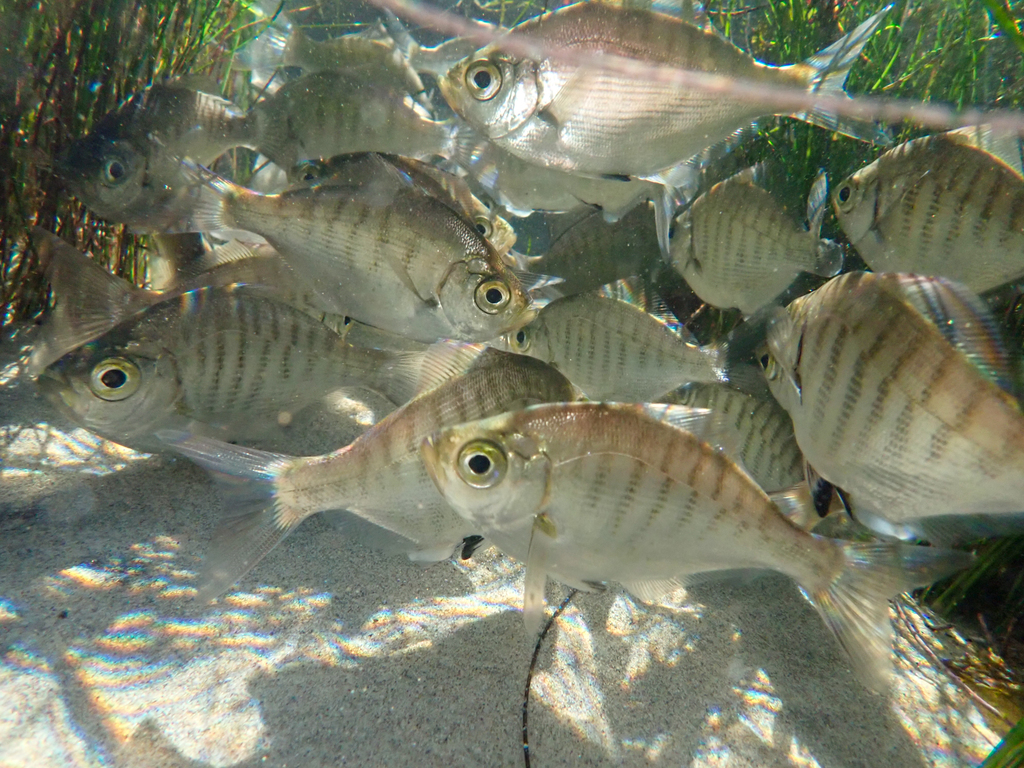
(c) Trevor Van Loon, some rights reserved (CC BY) · licence
Family: Embiotocidae · Class: Actinopterygii · Order: Perciformes
Hyperprosopon argenteum (Walleye Surfperch) is a California animal in the Embiotocidae family.
The Walleye Surfperch is a marine fish in the family Embiotocidae, commonly known as the surfperch family. Adults typically measure 20 to 30 centimeters (8 to 12 inches) in length, with a compressed, oval-shaped body characteristic of surfperches. The species displays a silvery coloration with darker vertical bars along the sides, and the common name derives from the relatively large eyes that are positioned higher on the head compared to other surfperch species. Walleye Surfperch are distributed along the Pacific coast from British Columbia, Canada, to Baja California, Mexico. In California, they occur from the Oregon border south to at least San Luis Obispo County. The species is documented in northern California waters including Humboldt Bay and Del Norte County, where they are commonly caught by recreational anglers along sandy beaches. This species inhabits coastal marine waters, showing a preference for sandy beach environments and areas near rocky structures and piers. Walleye Surfperch form dense schools along sandy beaches and appear to move into protected embayments such as Humboldt Bay during summer months. They are found in the surf zone and nearshore waters, typically remaining close to shore rather than venturing into deeper offshore areas. The species shows seasonal movement patterns, with concentrations varying throughout the year in different coastal areas. Walleye Surfperch are viviparous, meaning they give birth to live young rather than laying eggs, a characteristic trait of the Embiotocidae family. Like other surfperches, they are opportunistic feeders that consume small invertebrates, including marine worms, small crustaceans, and other benthic organisms found in sandy substrates. The species exhibits schooling behavior and is often found in mixed groups with other surfperch species, particularly Silver Surfperch. Recreational fishing data indicates they are commonly caught by hook-and-line anglers fishing from beaches in northern California counties, particularly Humboldt and Del Norte. Walleye Surfperch currently hold no special conservation status at federal or state levels. The species appears to maintain stable populations throughout its range and supports both commercial and recreational fisheries. In California's Central Coast region from Santa Cruz to San Luis Obispo counties, hook-and-line catches since 2007 have been dominated by Barred Surfperch but regularly include Walleye Surfperch along with Silver Surfperch and other species. The species is included in California's Environmental Sensitivity Index mapping as a regularly occurring marine species in coastal waters, with documented presence year-round in various coastal habitats. No specific threats have been identified that would warrant conservation concern, and the species continues to be an important component of California's nearshore marine fish community.
Classification
Class: Actinopterygii · Order: Perciformes · Family: Embiotocidae
Frequently asked questions
How is Hyperprosopon argenteum classified?
Hyperprosopon argenteum belongs to class Actinopterygii, order Perciformes, family Embiotocidae.
What family does Hyperprosopon argenteum belong to?
Hyperprosopon argenteum is in the Embiotocidae family.
What is Hyperprosopon argenteum?
The Walleye Surfperch is a marine fish in the family Embiotocidae, commonly known as the surfperch family.
Is Hyperprosopon argenteum found in California?
Yes. Hyperprosopon argenteum is recorded in California in The California Species Project's catalogue.
Related species
Other California species in the same genus, family, or bioregion.
Data from The California Species Project — 14,000+ California species with verified data from CNPS, CDFW, USFWS, and more.