Hyphantria cunea
Fall Webworm Moth
no rights reserved · CC0
Family: Erebidae · Class: Insecta · Order: Lepidoptera
Hyphantria cunea (Fall Webworm Moth) is a California animal in the Erebidae family.
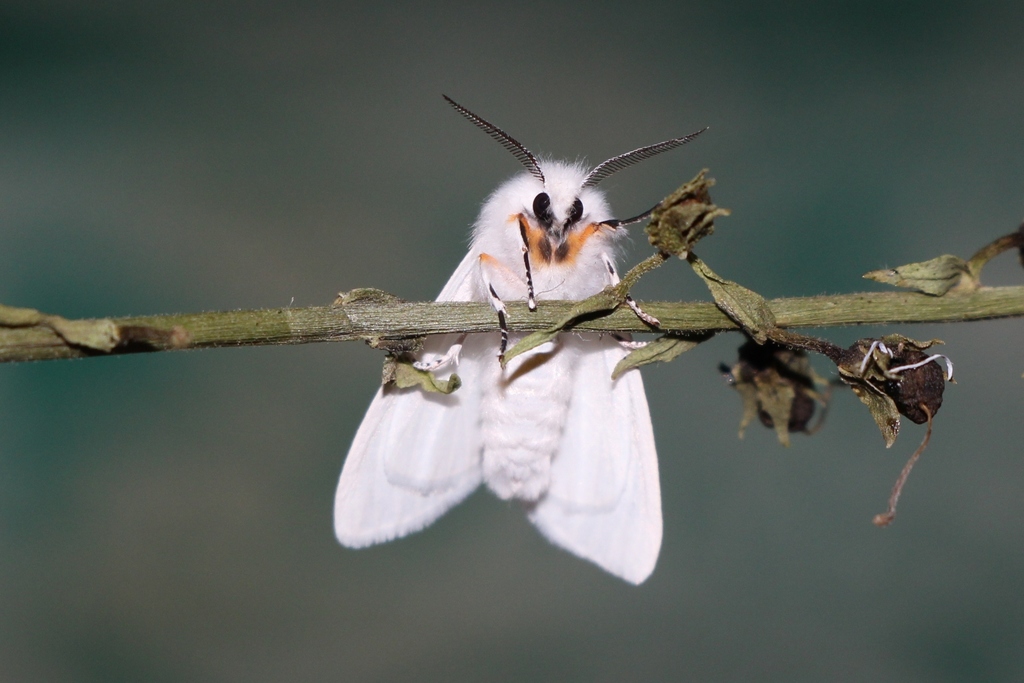
The fall webworm moth (Hyphantria cunea) is a medium-sized moth in the family Erebidae with a wingspan ranging from 30 to 42 millimeters (1.2 to 1.7 inches). Adults display considerable variation in coloration, with forewings ranging from pure white to heavily spotted with black or brown dots. The hindwings are typically white or pale yellow. Males can be distinguished from females by their more feathered antennae and slightly smaller size. The species exhibits two distinct color forms: a northern form that is predominantly white, and a southern form that shows more extensive dark markings. Fall webworm moths have a broad distribution across North America, extending from southern Canada to northern Mexico. In California, the species occurs throughout most of the state, from coastal regions to inland valleys and foothills. The moth has been introduced to parts of Europe and Asia, where it has become established as an invasive species. Within California, populations are found from sea level to elevations of approximately 1,500 meters (4,900 feet). The species inhabits a wide variety of habitats including deciduous forests, orchards, parks, suburban areas, and riparian zones. Adults are attracted to artificial lights and are commonly encountered around residential areas during flight periods. The larvae construct distinctive silk webbing tents on the branches of host trees, which serve as communal feeding and protective structures. Fall webworm moths are multivoltine, producing two to three generations per year in warmer regions, including much of California. Adults are active from late spring through early fall, with peak flight periods occurring in May-June and August-September. Females deposit clusters of 200 to 500 eggs on the undersides of leaves. Larvae are highly polyphagous, feeding on over 600 species of deciduous trees and shrubs. Common host plants include cherry, apple, peach, walnut, hickory, elm, and willow. The distinctive web tents created by larvae expand as the caterpillars grow, eventually encompassing entire branch tips. Larvae feed gregariously within these protective webs for four to six weeks before pupating in cocoons constructed in bark crevices or soil litter. As a native North American species, the fall webworm moth is not subject to conservation concern and maintains stable populations throughout its range. The species is actually considered a minor pest in some agricultural and urban forestry contexts due to the unsightly webs created by larvae and occasional defoliation of ornamental trees. However, the species rarely causes significant long-term damage to healthy trees, as feeding typically occurs late in the growing season when trees are preparing for dormancy. Natural enemies including birds, parasitic wasps, and viral pathogens help regulate populations. The moth's broad host range and adaptability to human-modified landscapes have contributed to its success across diverse habitats.
Classification
Class: Insecta · Order: Lepidoptera · Family: Erebidae
Frequently asked questions
How is Hyphantria cunea classified?
Hyphantria cunea belongs to class Insecta, order Lepidoptera, family Erebidae.
What family does Hyphantria cunea belong to?
Hyphantria cunea is in the Erebidae family.
What is Hyphantria cunea?
The fall webworm moth (Hyphantria cunea) is a medium-sized moth in the family Erebidae with a wingspan ranging from 30 to 42 millimeters (1.2 to 1.7 inches).
Is Hyphantria cunea found in California?
Yes. Hyphantria cunea is recorded in California in The California Species Project's catalogue.
Related species
Other California species in the same genus, family, or bioregion.
Data from The California Species Project — 14,000+ California species with verified data from CNPS, CDFW, USFWS, and more.