Hypocritanus lemur
Western Band-winged Hover Fly
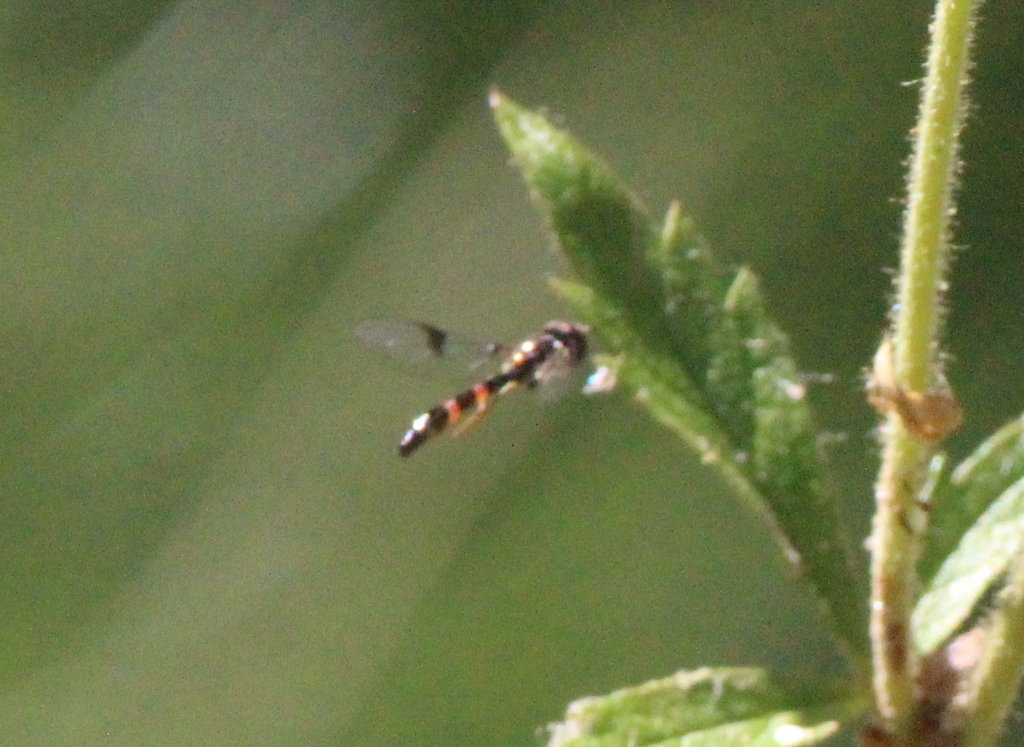
(c) Abby Hyde, some rights reserved (CC BY) · licence
Family: Syrphidae · Class: Insecta · Order: Diptera
Hypocritanus lemur (Western Band-winged Hover Fly) is a California animal in the Syrphidae family.
Hypocritanus lemur, commonly known as the Western Band-winged Hover Fly, is a member of the family Syrphidae, the hover flies or flower flies. As a syrphid fly, this species exhibits the characteristic morphology of the family, including a single pair of wings, large compound eyes, and short, stubby antennae. Hover flies are distinguished from bees and wasps, which they often mimic, by their two wings rather than four, their prominent eyes that often meet near the front of the head, and their ability to hover in place. The specific distribution and range of H. lemur within California and the western United States has not been comprehensively documented in available scientific literature. The common name suggests a western North American distribution, though detailed locality records and county-specific occurrence data are lacking. According to NatureServe Explorer, the species appears to have a large range with many recent occurrences, suggesting it may be more widespread than current documentation indicates. Like other members of Syrphidae, this species likely inhabits areas where flowering plants provide nectar resources. Hover flies are typically found in diverse habitats including gardens, meadows, forest edges, and riparian areas where they have access to floral resources. Adults are generally active during warmer months when flowers are abundant. The specific habitat preferences, elevation range, and microhabitat requirements of H. lemur have not been well studied or documented in the available literature. Adult hover flies are important pollinators and frequent visitors to flowers, feeding primarily on nectar and pollen. While they do not carry large pollen loads like bees, pollen grains adhere to their bodies and facilitate pollination as they move between flowers. The larval stage and host plants for H. lemur are not documented in current sources. Many syrphid fly larvae are beneficial predators of aphids and other soft-bodied insects, though some species have larvae that feed on decaying organic matter or live in aquatic environments. Based on available information from NatureServe, H. lemur appears to have stable populations and faces no immediate conservation concerns. The species has a large range with many recent occurrences, suggesting populations remain viable. However, the lack of detailed ecological studies and specific distribution data represents a significant knowledge gap for this species. Scientific documentation for this species remains extremely limited. The information presented here synthesizes available data from taxonomic databases and general knowledge of syrphid fly biology. Detailed studies of the species' distribution, ecology, host plants, and life history are needed to provide a more comprehensive understanding of this western hover fly.
Classification
Class: Insecta · Order: Diptera · Family: Syrphidae
Frequently asked questions
How is Hypocritanus lemur classified?
Hypocritanus lemur belongs to class Insecta, order Diptera, family Syrphidae.
What family does Hypocritanus lemur belong to?
Hypocritanus lemur is in the Syrphidae family.
What is Hypocritanus lemur?
Hypocritanus lemur, commonly known as the Western Band-winged Hover Fly, is a member of the family Syrphidae, the hover flies or flower flies.
Is Hypocritanus lemur found in California?
Yes. Hypocritanus lemur is recorded in California in The California Species Project's catalogue.
Related species
Other California species in the same genus, family, or bioregion.
Data from The California Species Project — 14,000+ California species with verified data from CNPS, CDFW, USFWS, and more.