Hypopta palmata
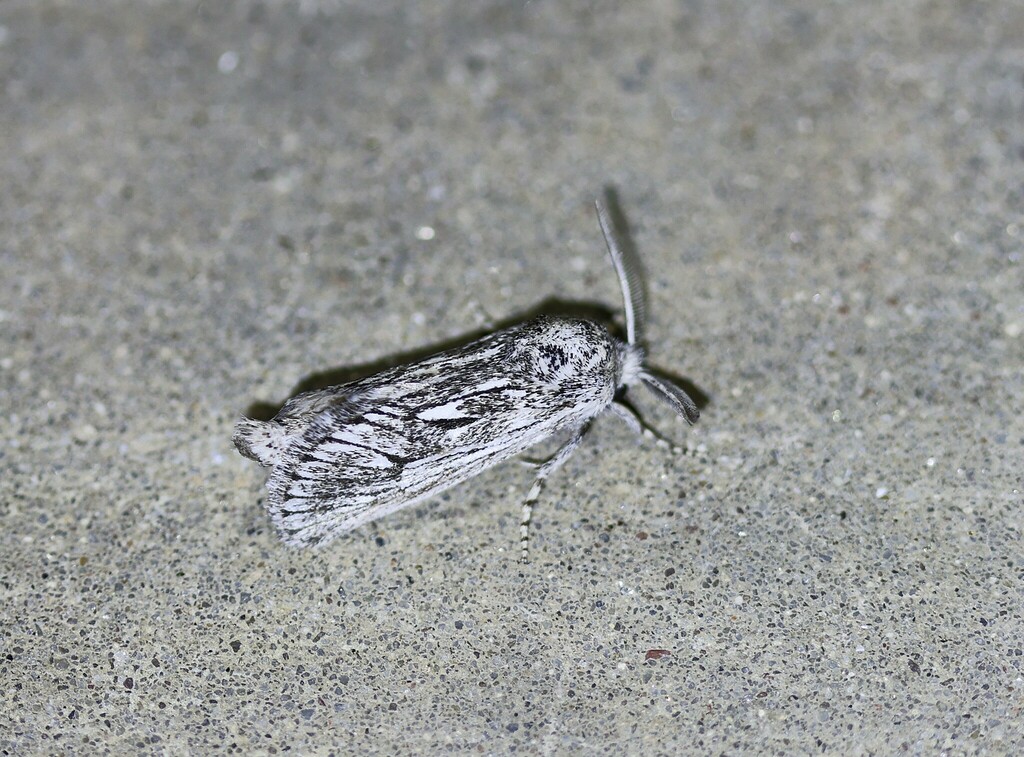
(c) nmoorhatch, some rights reserved (CC BY) · licence
Family: Cossidae · Class: Insecta · Order: Lepidoptera
Hypopta palmata is a California animal in the Cossidae family.
Hypopta palmata is a moth species in the family Cossidae, commonly known as goat moths or wood moths. This species belongs to a family characterized by wood-boring larvae that develop within the trunks and branches of trees and shrubs. Adult moths typically have robust bodies and relatively broad wings, though specific morphological details for H. palmata are not well-documented in readily available literature. The range of Hypopta palmata extends from California south into Baja California, Mexico, and eastward through Nevada and Arizona to west Texas. This distribution spans both the Sonoran and Mojave Desert regions, as well as adjacent Mediterranean climate zones in California. The species appears to be adapted to arid and semi-arid environments characteristic of the southwestern United States and northwestern Mexico. Like other Cossidae species, H. palmata likely inhabits areas where suitable host plants are present. Cossid moths typically require woody vegetation for larval development, as the larvae bore into living or dead wood to complete their development. The specific habitat preferences and elevation range for this species have not been thoroughly documented, but the geographic distribution suggests adaptation to desert shrublands, chaparral, and possibly riparian woodland edges where woody plants occur in otherwise arid landscapes. The life cycle of H. palmata, while not specifically studied, likely follows the typical Cossidae pattern. Female moths deposit eggs on or near the bark of host plants, and larvae bore into the wood upon hatching. Larval development can extend over multiple years in some cossid species, with the wood-boring larvae feeding on the inner bark and wood tissues. Pupation typically occurs within the larval galleries, and adults emerge through exit holes in the bark. Adult flight periods and specific host plant associations for H. palmata remain poorly documented. The conservation status of Hypopta palmata has not been formally evaluated by state or federal agencies. The species lacks federal or state listing status, and no specific population monitoring or conservation measures are currently in place. The relatively wide geographic range spanning multiple states and extending into Mexico suggests the species may not face immediate conservation concerns, though habitat modification and urbanization within its range could potentially impact local populations. Desert and semi-arid ecosystems throughout the southwestern United States face ongoing pressures from development, water diversions, and climate change, which could affect woody plant communities that serve as larval hosts. Further research is needed to clarify the taxonomy, ecology, and conservation needs of H. palmata. Basic biological information, including host plant relationships, larval development duration, and adult flight periods, remains largely unknown. This knowledge gap is common among lesser-known moth species, particularly those in specialized families like Cossidae that may have cryptic larval stages and infrequent adult activity.
Classification
Class: Insecta · Order: Lepidoptera · Family: Cossidae
Frequently asked questions
How is Hypopta palmata classified?
Hypopta palmata belongs to class Insecta, order Lepidoptera, family Cossidae.
What family does Hypopta palmata belong to?
Hypopta palmata is in the Cossidae family.
What is Hypopta palmata?
Hypopta palmata is a moth species in the family Cossidae, commonly known as goat moths or wood moths.
Is Hypopta palmata found in California?
Yes. Hypopta palmata is recorded in California in The California Species Project's catalogue.
Related species
Other California species in the same genus, family, or bioregion.
Data from The California Species Project — 14,000+ California species with verified data from CNPS, CDFW, USFWS, and more.