Hypsiglena chlorophaea
Desert Nightsnake
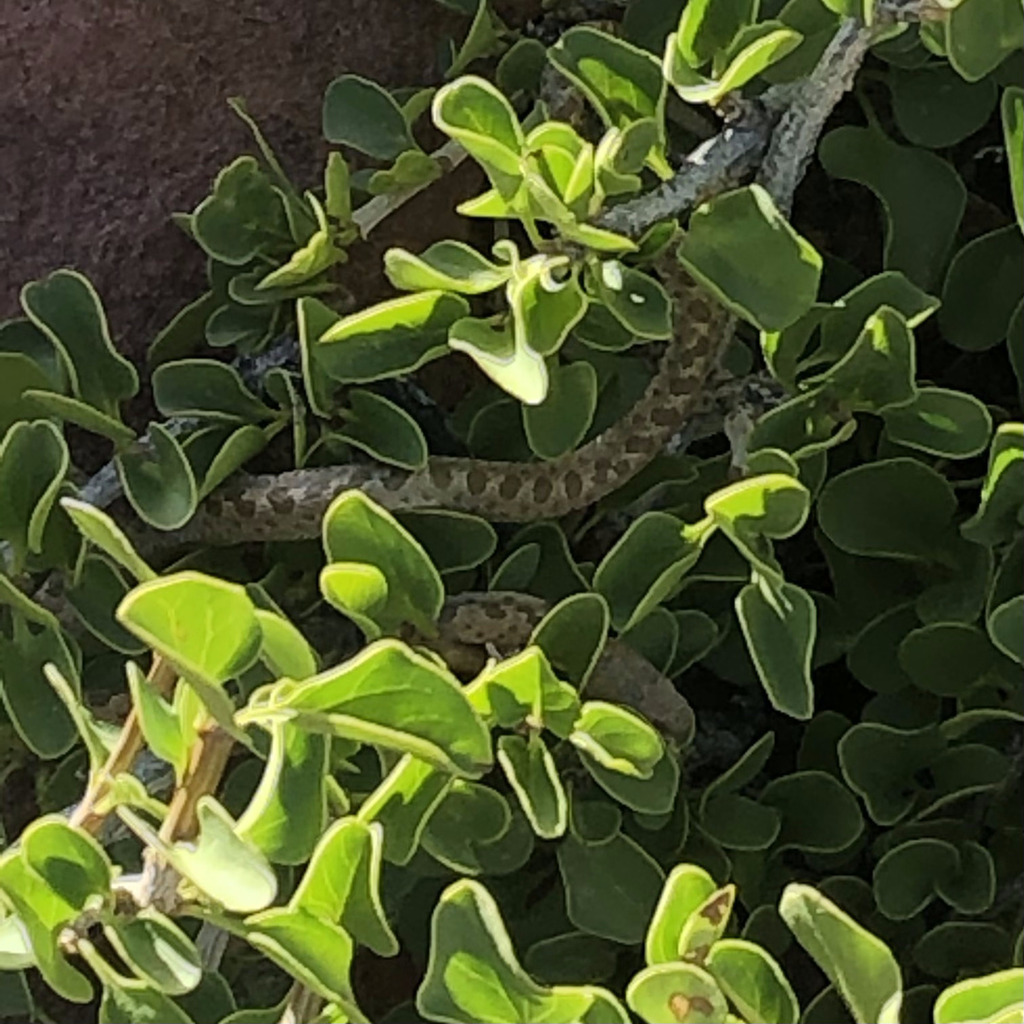
(c) Jared Shorma, some rights reserved (CC BY) · licence
Family: Colubridae · Class: Reptilia · Order: Squamata
Hypsiglena chlorophaea (Desert Nightsnake) is a California animal in the Colubridae family.
The Desert Nightsnake is a small, slender colubrid snake native to arid regions of western North America, including portions of California. Adults typically measure 300 to 400 mm (12 to 16 inches) in total length, with females generally larger than males. The dorsal coloration ranges from pale gray to light brown, with a series of darker brown or grayish blotches along the back and sides. The head is distinctly flattened and wider than the neck, with large eyes featuring vertical pupils adapted for nocturnal activity. A characteristic dark stripe extends from the eye to the corner of the mouth, and the belly is cream to pale yellow with small dark spots. In California, the Desert Nightsnake occurs primarily in the southeastern desert regions, including portions of the Sonoran and Mojave deserts. The species' range extends from Riverside, Imperial, and eastern San Bernardino counties, with scattered populations documented in suitable habitat throughout these areas. The California distribution represents the western edge of a broader range that includes Arizona, Nevada, Utah, New Mexico, and northwestern Mexico. This species inhabits arid scrublands, desert flats, rocky hillsides, and canyon bottoms at elevations ranging from below sea level to approximately 1,500 meters (4,900 feet). Desert Nightsnakes show strong associations with rocky substrates, including boulder fields, cliff faces, and areas with abundant rock crevices that provide shelter during daylight hours. The species also utilizes desert washes lined with palo verde, ironwood, and mesquite, as well as creosote bush scrub and cholla cactus communities. Artificial structures such as rock walls, debris piles, and abandoned buildings may also provide suitable habitat. Desert Nightsnakes are strictly nocturnal, emerging after sunset to hunt for prey. Their diet consists primarily of small lizards, particularly geckos, small snakes, and occasionally frogs and arthropods. The species employs a rear-fanged venom delivery system with mild toxins that help subdue small prey, though the venom poses no significant threat to humans. Mating occurs in spring, typically from March through May. Females are oviparous, depositing clutches of 2 to 9 eggs in summer, often in sandy soil beneath rocks or in rodent burrows. Eggs incubate for approximately 60 to 70 days, with hatchlings emerging in late summer measuring 150 to 180 mm (6 to 7 inches) in length. The Desert Nightsnake currently holds no special conservation status at federal or state levels and is considered secure throughout most of its range. However, localized populations may face pressure from habitat loss due to urban development, particularly in rapidly expanding desert communities. Off-road vehicle use in desert areas can degrade suitable rocky habitat and increase direct mortality. Climate change may affect the species through altered precipitation patterns and increased temperatures, potentially shifting the distribution of prey species and suitable microhabitats.
Classification
Class: Reptilia · Order: Squamata · Family: Colubridae
Frequently asked questions
How is Hypsiglena chlorophaea classified?
Hypsiglena chlorophaea belongs to class Reptilia, order Squamata, family Colubridae.
What family does Hypsiglena chlorophaea belong to?
Hypsiglena chlorophaea is in the Colubridae family.
What is Hypsiglena chlorophaea?
The Desert Nightsnake is a small, slender colubrid snake native to arid regions of western North America, including portions of California.
Is Hypsiglena chlorophaea found in California?
Yes. Hypsiglena chlorophaea is recorded in California in The California Species Project's catalogue.
Related species
Other California species in the same genus, family, or bioregion.
Data from The California Species Project — 14,000+ California species with verified data from CNPS, CDFW, USFWS, and more.