Hypsiglena ochrorhyncha
Coast Nightsnake
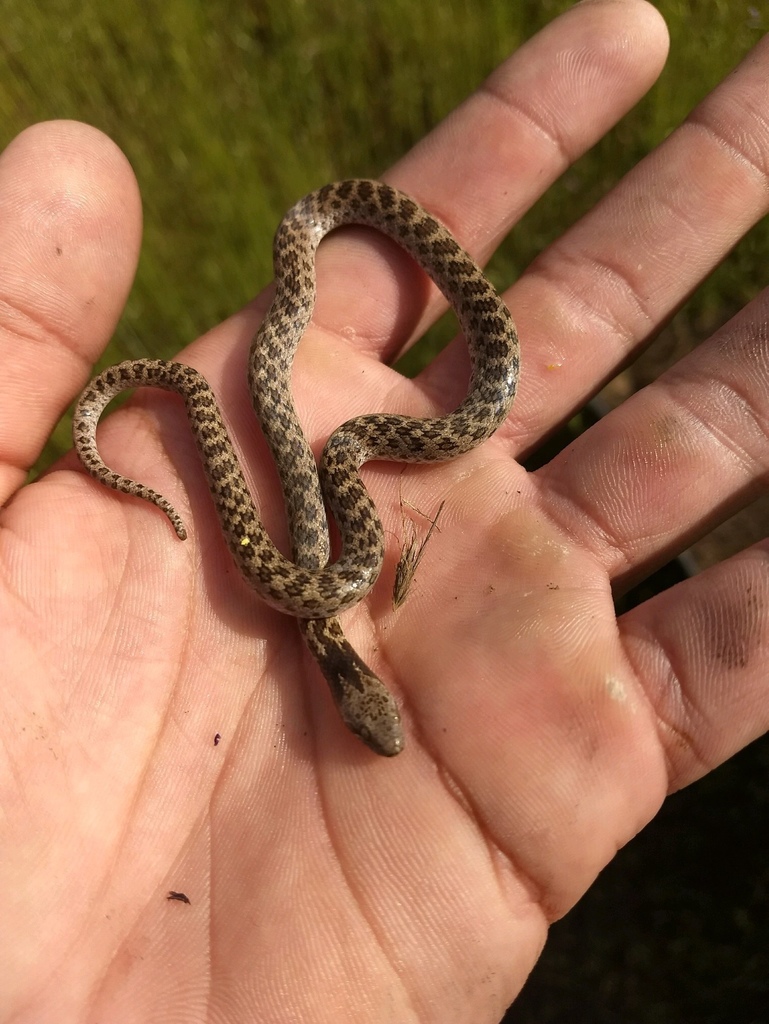
(c) Conner Cimmiyotti, some rights reserved (CC BY) · licence
Family: Colubridae · Class: Reptilia · Order: Squamata
Hypsiglena ochrorhyncha (Coast Nightsnake) is a California animal in the Colubridae family.
The Coast Nightsnake (Hypsiglena ochrorhyncha) is a small, slender colubrid snake endemic to western North America. Adults typically measure 305 to 406 mm (12 to 16 inches) in total length, with females generally larger than males. The dorsal surface is light gray to tan with dark brown or black blotches arranged in three rows along the body. The neck displays a distinctive dark collar or band, often broken at the midline. The ventral surface is cream to white, unmarked. The head is slightly flattened with large eyes featuring vertical pupils, an adaptation for nocturnal activity. Two to four enlarged posterior maxillary teeth deliver mild venom used to subdue prey. The species ranges along the Pacific Coast from Baja California, Mexico, northward through California to southern Oregon. In California, populations occur in coastal counties from San Diego north to Humboldt County, extending inland to the western slopes of the Sierra Nevada and southern Cascade Range. The species is found from sea level to elevations of approximately 2,135 meters (7,000 feet), with most populations below 1,500 meters. Coast Nightsnakes inhabit diverse habitats including coastal sage scrub, chaparral, oak woodlands, pine forests, and grasslands. They show preference for areas with rock outcrops, talus slopes, and loose soil suitable for burrowing. The species utilizes rodent burrows, rock crevices, and spaces beneath logs or vegetation for shelter during daylight hours. In coastal areas, they occupy dune systems and maritime chaparral communities. This species exhibits strictly nocturnal behavior, emerging after sunset to hunt for prey. The diet consists primarily of lizards, including geckos, skinks, and small snakes, along with occasional frogs and salamanders. Prey is subdued using rear-fanged venom delivery, though the venom poses no significant threat to humans. Mating occurs in spring, typically April through May. Females are oviparous, depositing clutches of 2 to 9 leathery eggs in loose soil or decomposing organic matter during summer months. Eggs incubate for 65 to 75 days, with hatchlings emerging in late summer measuring 152 to 178 mm (6 to 7 inches) in length. When threatened, Coast Nightsnakes may flatten their bodies, coil defensively, and release musk from cloacal glands. The Coast Nightsnake currently holds no special conservation status at federal or state levels and is not listed under the California Endangered Species Act. Populations appear stable across most of the species' range, though local declines may occur due to habitat loss from urban development, particularly in coastal Southern California. Fire suppression altering natural vegetation cycles and invasive plant species establishment represent potential long-term threats. The species' secretive nature and nocturnal habits make population monitoring challenging, but no significant range-wide conservation concerns have been identified.
Classification
Class: Reptilia · Order: Squamata · Family: Colubridae
Frequently asked questions
How is Hypsiglena ochrorhyncha classified?
Hypsiglena ochrorhyncha belongs to class Reptilia, order Squamata, family Colubridae.
What family does Hypsiglena ochrorhyncha belong to?
Hypsiglena ochrorhyncha is in the Colubridae family.
What is Hypsiglena ochrorhyncha?
The Coast Nightsnake (Hypsiglena ochrorhyncha) is a small, slender colubrid snake endemic to western North America.
Is Hypsiglena ochrorhyncha found in California?
Yes. Hypsiglena ochrorhyncha is recorded in California in The California Species Project's catalogue.
Related species
Other California species in the same genus, family, or bioregion.
Data from The California Species Project — 14,000+ California species with verified data from CNPS, CDFW, USFWS, and more.