Hypsopygia costalis
Clover Hayworm Moth
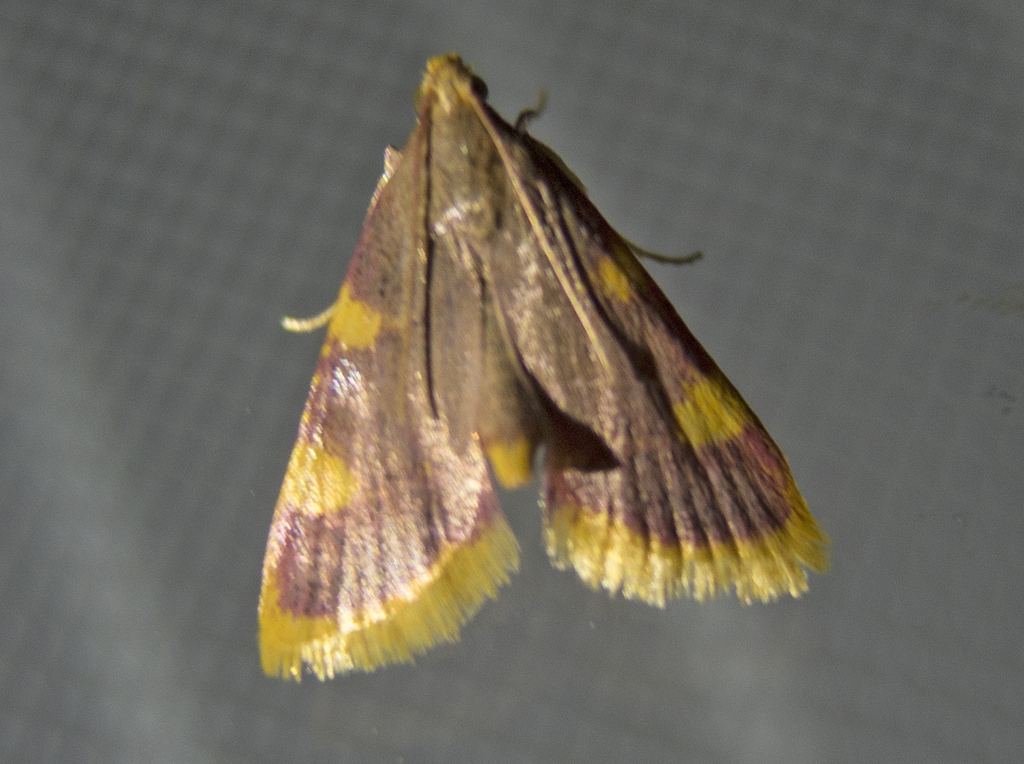
(c) katunchik, some rights reserved (CC BY) · licence
Family: Pyralidae · Class: Insecta · Order: Lepidoptera
Hypsopygia costalis (Clover Hayworm Moth) is a California animal in the Pyralidae family.
The Clover Hayworm Moth (Hypsopygia costalis) is a small pyralid moth with a wingspan typically measuring 18 to 25 mm (0.7 to 1.0 inches). The forewings are pale yellowish-brown to golden-brown with distinctive dark brown to blackish markings, including a prominent costa (leading edge) that gives the species its scientific name. The hindwings are lighter in coloration, typically pale yellow to whitish with darker marginal areas. At rest, the moth holds its wings in a triangular tent-like position characteristic of many pyralids. The antennae are thread-like in both sexes, and the palps are well-developed and project forward from the head. Historically, Hypsopygia costalis was distributed across much of North America, including California. The species range extends from southern Canada through the United States to northern Mexico. In California, records indicate the moth occurred in both coastal and inland regions, though specific county-level distribution data is limited. The species appears to have experienced range contractions in some areas, though comprehensive surveys are lacking. The Clover Hayworm Moth inhabits agricultural areas, grasslands, and disturbed habitats where its host plants are present. Adults are typically found in areas with abundant leguminous plants, particularly clover species (Trifolium spp.) and alfalfa (Medicago sativa). The species occurs from sea level to moderate elevations, generally below 1,500 meters (4,920 feet). Larvae develop in stored hay, dried clover, and other cured leguminous materials, making the species particularly associated with agricultural storage facilities and areas where hay is processed or stored. Adult moths are primarily nocturnal and are attracted to artificial lights. Flight period varies with latitude and local climate conditions, but typically extends from late spring through early fall, with multiple generations per year in warmer regions. Females deposit eggs on or near suitable larval food sources. Larvae feed as scavengers on dried plant material, particularly cured hay and stored legumes, earning the species its common name. The larval stage constructs silk-lined tunnels and galleries within the food substrate. Pupation occurs within a cocoon spun among the larval feeding material. The Clover Hayworm Moth is not currently listed under federal or California endangered species legislation. The species is not assigned conservation rankings by NatureServe or the International Union for Conservation of Nature, suggesting it is not considered globally threatened. However, like many agricultural pest species, population trends may be influenced by changes in farming practices, pesticide use, and habitat modification. The moth's association with stored agricultural products means populations can fluctuate significantly based on local agricultural activity and storage practices. In some regions, the species is considered a minor pest of stored hay and legume products, though economic damage is typically limited. Current population status and trends in California are poorly documented, and standardized monitoring programs for this species do not exist.
Classification
Class: Insecta · Order: Lepidoptera · Family: Pyralidae
Frequently asked questions
How is Hypsopygia costalis classified?
Hypsopygia costalis belongs to class Insecta, order Lepidoptera, family Pyralidae.
What family does Hypsopygia costalis belong to?
Hypsopygia costalis is in the Pyralidae family.
What is Hypsopygia costalis?
The Clover Hayworm Moth (Hypsopygia costalis) is a small pyralid moth with a wingspan typically measuring 18 to 25 mm (0.7 to 1.0 inches).
Is Hypsopygia costalis found in California?
Yes. Hypsopygia costalis is recorded in California in The California Species Project's catalogue.
Related species
Other California species in the same genus, family, or bioregion.
Data from The California Species Project — 14,000+ California species with verified data from CNPS, CDFW, USFWS, and more.