Hypsopygia phoezalis
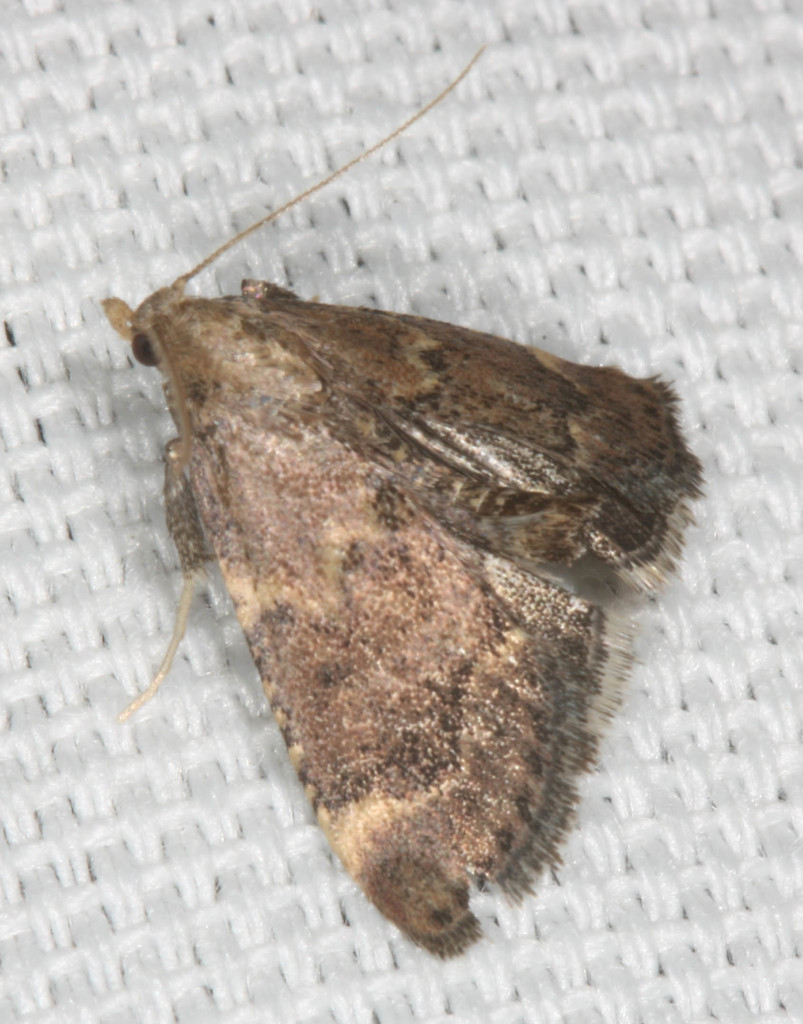
no rights reserved · CC0
Family: Pyralidae · Class: Insecta · Order: Lepidoptera
Hypsopygia phoezalis is a California animal in the Pyralidae family.
Hypsopygia phoezalis is a moth in the family Pyralidae, commonly known as snout moths or grass moths. This family encompasses over 6,000 species worldwide, with members typically characterized by elongated labial palps that project forward like a snout. Without access to detailed taxonomic literature or specimen records, specific morphological characteristics of H. phoezalis cannot be definitively described. Pyralidae moths generally exhibit cryptic coloration patterns that aid in camouflage, with wing spans typically ranging from 10-40 mm depending on the species. The geographic distribution of Hypsopygia phoezalis within California has not been well documented in accessible scientific literature. The genus Hypsopygia includes several North American species, but detailed range maps and occurrence data for individual species are often limited to specialized taxonomic publications and museum collections. California's diverse topography and climate zones support numerous pyralid species, from coastal areas to montane forests, but the specific habitats occupied by H. phoezalis require further documentation. Habitat requirements for Hypsopygia phoezalis are not well established in available sources. Pyralidae moths occupy diverse ecological niches, with larvae often feeding on grasses, sedges, or organic matter in soil and leaf litter. Some species are associated with wetland habitats, while others occur in dry grasslands or forest understory. The specific plant associations and microhabitat preferences of H. phoezalis would require detailed field studies and larval rearing to establish definitively. Life history information for Hypsopygia phoezalis is not readily available in standard references. Pyralidae moths typically undergo complete metamorphosis, with adults active during warmer months. Flight periods, mating behaviors, and developmental timing vary considerably among species in this diverse family. Some pyralids are attracted to lights at night, while others are crepuscular or have more restricted activity patterns. Larval feeding habits and overwintering strategies also show considerable variation within the family. The conservation status of Hypsopygia phoezalis has not been formally assessed. Many moth species, particularly those with limited distributions or specialized habitat requirements, may face threats from habitat loss, urbanization, and climate change. However, without basic distributional and ecological data, it is impossible to evaluate the conservation needs of this species. Comprehensive surveys and taxonomic work are needed to understand the status and distribution of many California moth species, including H. phoezalis. Scientific documentation for this species remains extremely limited. The information presented here reflects the general characteristics of the Pyralidae family. We welcome contributions of verified scientific data, photographs, or field observations to enhance this species account.
Classification
Class: Insecta · Order: Lepidoptera · Family: Pyralidae
Frequently asked questions
How is Hypsopygia phoezalis classified?
Hypsopygia phoezalis belongs to class Insecta, order Lepidoptera, family Pyralidae.
What family does Hypsopygia phoezalis belong to?
Hypsopygia phoezalis is in the Pyralidae family.
What is Hypsopygia phoezalis?
Hypsopygia phoezalis is a moth in the family Pyralidae, commonly known as snout moths or grass moths.
Is Hypsopygia phoezalis found in California?
Yes. Hypsopygia phoezalis is recorded in California in The California Species Project's catalogue.
Related species
Other California species in the same genus, family, or bioregion.
Data from The California Species Project — 14,000+ California species with verified data from CNPS, CDFW, USFWS, and more.