Hypsypops rubicundus
Garibaldi
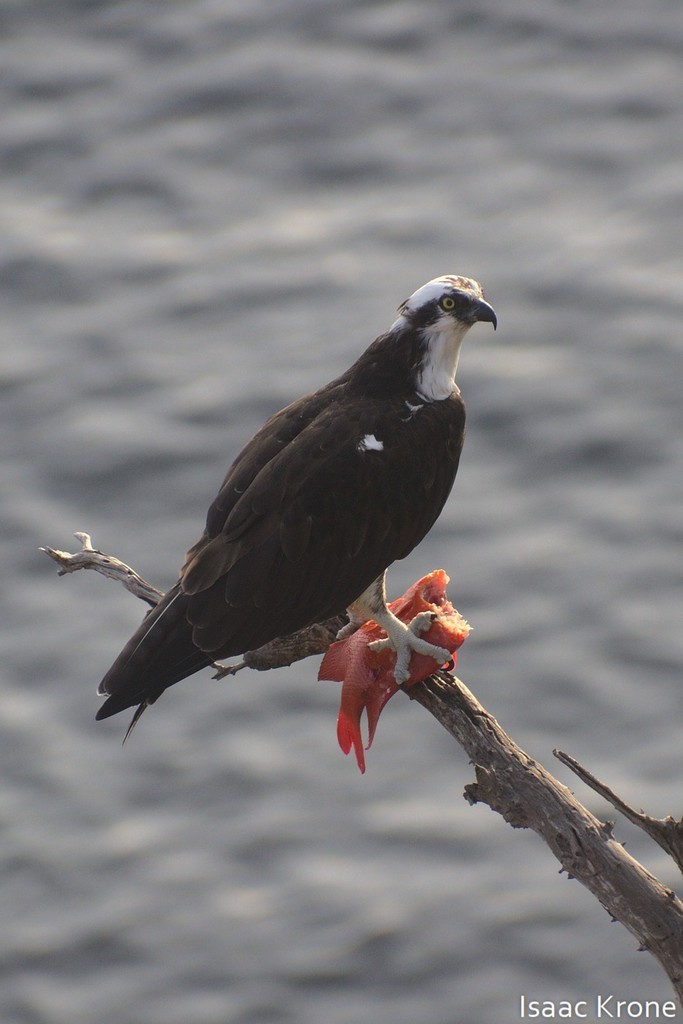
(c) Isaac Krone, some rights reserved (CC BY) · licence
Family: Pomacentridae · Class: Actinopterygii · Order: Perciformes
Hypsypops rubicundus (Garibaldi) is a California animal in the Pomacentridae family.
The garibaldi (Hypsypops rubicundus) is a vibrant orange marine fish and California's official state marine fish. Adults typically reach 30 to 36 cm (12 to 14 inches) in length, with a robust, laterally compressed body displaying brilliant orange coloration that intensifies with age. Juveniles exhibit bright blue spots scattered across their orange bodies, which gradually fade as they mature. The species possesses a deeply forked tail and continuous dorsal fin typical of the damselfish family. Garibaldi are endemic to the eastern Pacific, ranging from Monterey Bay, California, south to Baja California, Mexico. They are most abundant in the warmer waters of Southern California, particularly around the Channel Islands. The species maintains year-round populations throughout this range, with occasional northward dispersal during warm water events. This species exclusively inhabits rocky reefs and kelp forests in nearshore marine environments. Garibaldi typically occupy rocky reefs and kelp beds on exposed coastal shores and semi-exposed shallow bays, frequently close to the shoreline. They prefer depths from the intertidal zone to approximately 30 meters (100 feet), though they are most commonly observed in waters less than 20 meters deep. The species requires complex rocky habitat with abundant crevices and overhangs for shelter and nesting. Garibaldi are territorial and exhibit complex breeding behavior. Males establish and aggressively defend nesting territories on rocky surfaces, preparing algae-covered areas where females deposit their eggs. Breeding occurs from March through October, with peak activity during summer months. Males provide extensive parental care, guarding eggs for 19 to 21 days until hatching. Adults feed primarily on algae, small invertebrates, and bryozoans, while juveniles consume zooplankton and small crustaceans. The species can live over 17 years, reaching sexual maturity at approximately 5 to 6 years of age. Garibaldi are fully protected under California state law, making it illegal to take, possess, or sell them. This protection was established due to their popularity in the marine aquarium trade and their ecological importance as a flagship species for California's kelp forest ecosystems. While not federally listed, their protected status reflects recognition of their value as both an iconic California marine species and an important component of rocky reef communities. The species benefits from California's network of Marine Protected Areas, which provide no-take zones where populations can flourish undisturbed. Climate change and ocean warming present potential long-term challenges, as the species' distribution may shift in response to changing ocean conditions. Current populations appear stable within their protected range, though continued monitoring remains important for conservation planning.
Classification
Class: Actinopterygii · Order: Perciformes · Family: Pomacentridae
Frequently asked questions
How is Hypsypops rubicundus classified?
Hypsypops rubicundus belongs to class Actinopterygii, order Perciformes, family Pomacentridae.
What family does Hypsypops rubicundus belong to?
Hypsypops rubicundus is in the Pomacentridae family.
What is Hypsypops rubicundus?
The garibaldi (Hypsypops rubicundus) is a vibrant orange marine fish and California's official state marine fish.
Is Hypsypops rubicundus found in California?
Yes. Hypsypops rubicundus is recorded in California in The California Species Project's catalogue.
More California species
This species has no close relatives in our California data — here are other species to explore.
Data from The California Species Project — 14,000+ California species with verified data from CNPS, CDFW, USFWS, and more.