Hysterocarpus traski traski
Sacramento-San Joaquin tule perch
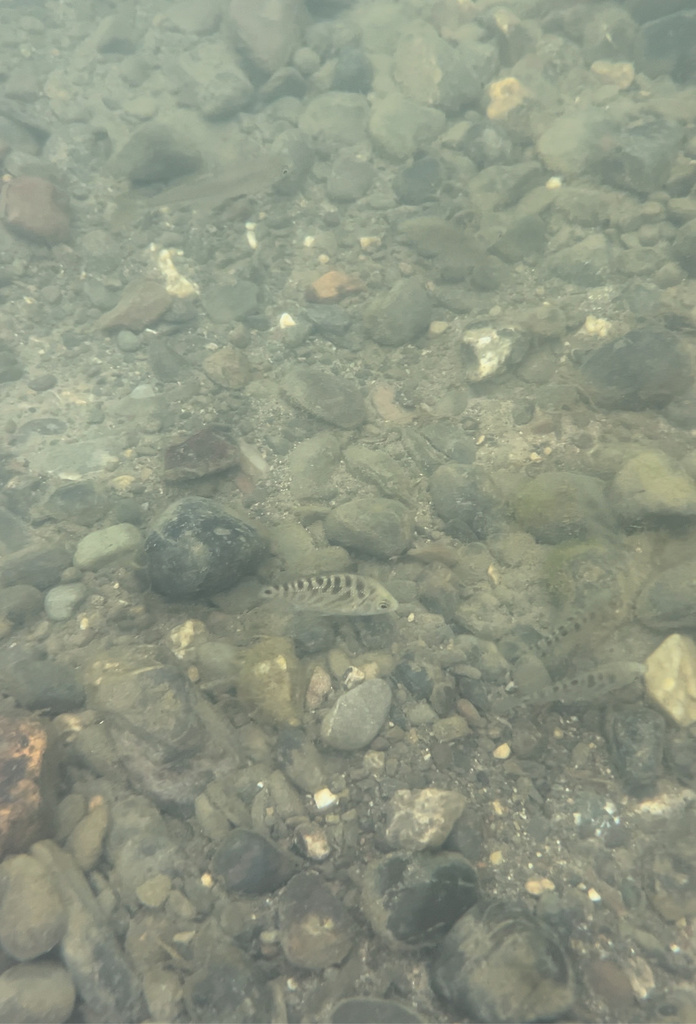
(c) Mike Heine, some rights reserved (CC BY) · licence
Family: Embiotocidae · Class: Actinopterygii · Order: Perciformes
Conservation status: G5T2T3 S2S3
Hysterocarpus traski traski (Sacramento-San Joaquin tule perch) is a California animal in the Embiotocidae family.
The Sacramento-San Joaquin tule perch (Hysterocarpus traski traski) is a subspecies of the tule perch and a member of the surfperch family Embiotocidae. This small freshwater fish typically reaches 76 to 102 mm (3.0 to 4.0 inches) in total length, with a compressed, oval-shaped body. The species displays a silvery coloration with darker vertical bars along the sides, and males develop more pronounced coloration during breeding season. The dorsal fin is continuous with 15 to 19 spines and 21 to 28 soft rays, while the anal fin contains 3 spines and 19 to 25 soft rays. Historically, this subspecies was endemic to the Sacramento-San Joaquin River Delta system and associated sloughs in California's Central Valley. The current range has contracted significantly from its historical distribution. According to the California Department of Fish and Wildlife, populations now persist in isolated locations within the Delta, primarily in areas with suitable habitat conditions and adequate water quality. The subspecies has been extirpated from much of its former range due to habitat modifications and water management practices. Sacramento-San Joaquin tule perch inhabit shallow, slow-moving or still freshwater environments including sloughs, backwaters, and vegetated areas of the Delta. The species requires areas with emergent and submerged aquatic vegetation, particularly tule (Scirpus species) marshes from which it derives its common name. These fish prefer waters with temperatures ranging from 10 to 25°C (50 to 77°F) and are typically found at depths less than 3 meters (10 feet). They demonstrate a strong association with structured habitat provided by aquatic plants, fallen logs, and root systems. As with other surfperch species, Sacramento-San Joaquin tule perch are viviparous, giving birth to live young rather than laying eggs. Mating occurs in late spring and early summer, with females carrying developing embryos for approximately 6 to 8 months. Females typically produce 4 to 20 young, which are born at lengths of 25 to 30 mm (1.0 to 1.2 inches). The species feeds primarily on small invertebrates including chironomid larvae, amphipods, copepods, and other zooplankton. Adults also consume algae and detritus, making them opportunistic omnivores within their ecosystem. The Sacramento-San Joaquin tule perch faces significant conservation challenges, reflected in its Global/State Rank of G5T2T3 S2S3, indicating the subspecies is imperiled to vulnerable in California. Primary threats include habitat loss and degradation from water diversions, channelization, and agricultural development throughout the Central Valley. Water quality degradation from agricultural runoff, urban pollution, and altered flow regimes further impacts remaining populations. Introduced species competition and predation pose additional pressures. The subspecies' limited distribution and small population size make it particularly vulnerable to environmental changes and catastrophic events. Conservation efforts focus on habitat restoration, water quality improvement, and monitoring of remaining populations to prevent further decline.
Classification
Class: Actinopterygii · Order: Perciformes · Family: Embiotocidae
Conservation status
G5T2T3 S2S3
Frequently asked questions
How is Hysterocarpus traski traski classified?
Hysterocarpus traski traski belongs to class Actinopterygii, order Perciformes, family Embiotocidae.
What family does Hysterocarpus traski traski belong to?
Hysterocarpus traski traski is in the Embiotocidae family.
Is Hysterocarpus traski traski protected or of conservation concern?
Hysterocarpus traski traski carries the following status: G5T2T3 S2S3.
What is Hysterocarpus traski traski?
The Sacramento-San Joaquin tule perch (Hysterocarpus traski traski) is a subspecies of the tule perch and a member of the surfperch family Embiotocidae.
Is Hysterocarpus traski traski found in California?
Yes. Hysterocarpus traski traski is recorded in California in The California Species Project's catalogue.
Related species
Other California species in the same genus, family, or bioregion.
Data from The California Species Project — 14,000+ California species with verified data from CNPS, CDFW, USFWS, and more.