Hysterocarpus traskii pomo
Russian River Tule Perch
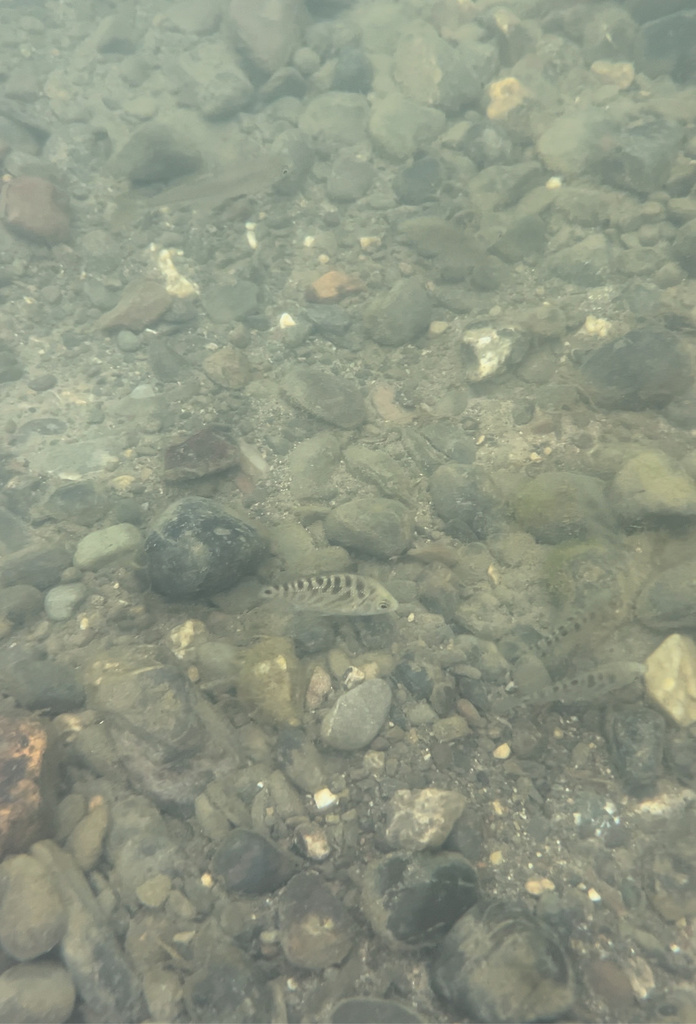
(c) Mike Heine, some rights reserved (CC BY) · licence
Family: Embiotocidae · Class: Actinopterygii · Order: Perciformes
Conservation status: G5T4 S4
Hysterocarpus traskii pomo (Russian River Tule Perch) is a California animal in the Embiotocidae family.
The Russian River tule perch is a subspecies of tule perch endemic to the Russian River drainage system in Northern California. This small freshwater fish belongs to the family Embiotocidae, the surfperches, and represents one of three recognized subspecies of Hysterocarpus traskii. As with all members of the surfperch family, Russian River tule perch are viviparous, giving birth to live young rather than laying eggs. Physically, Russian River tule perch are small, deep-bodied fish typically measuring 75 to 150 millimeters (3 to 6 inches) in total length. The body is laterally compressed with a relatively high back and small head. Coloration varies from silvery to olive-brown on the sides with darker vertical bars that may be faint or pronounced. The fins are generally clear to dusky, and breeding males may develop more intense coloration during spawning periods. The subspecies is restricted to the Russian River watershed in Sonoma and Mendocino counties, California. According to the California Department of Fish and Wildlife, this population is geographically isolated from other tule perch subspecies, having been separated for thousands of years. The Russian River system includes the mainstem river and its tributaries, extending from the headwaters in Mendocino County downstream through Sonoma County to the Pacific Ocean. Russian River tule perch inhabit slow-moving sections of rivers and streams, particularly areas with abundant aquatic vegetation. They prefer deeper pools and backwater areas with soft substrates and emergent or submerged vegetation. The species is typically found in water temperatures ranging from 10 to 24 degrees Celsius (50 to 75 degrees Fahrenheit) and can tolerate moderate levels of turbidity and seasonal flow variations. As omnivores, Russian River tule perch feed on small invertebrates, algae, detritus, and occasionally small fish. Their diet includes aquatic insects, crustaceans, and plant material. Reproduction occurs through viviparity, with females carrying developing embryos internally and giving birth to fully formed juveniles. Breeding typically occurs from late spring through early summer, with gestation lasting several months. Females may produce 5 to 20 young per reproductive cycle, depending on their size and age. The Russian River tule perch currently holds a Global/State Rank of G5T4 S4, indicating the subspecies is apparently secure but faces some conservation concerns. While not federally listed, the subspecies has experienced population pressures from habitat modification, water diversions, and competition with introduced species. The Russian River watershed has been significantly altered by agricultural development, urban growth, and water management practices. Dams and diversions have modified natural flow patterns, while introduced predators such as largemouth bass and channel catfish pose ongoing threats. Climate change may further stress populations through altered precipitation patterns and increased water temperatures. Conservation efforts focus on habitat restoration, flow management, and monitoring population trends to ensure the long-term persistence of this endemic subspecies.
Classification
Class: Actinopterygii · Order: Perciformes · Family: Embiotocidae
Conservation status
G5T4 S4
Frequently asked questions
How is Hysterocarpus traskii pomo classified?
Hysterocarpus traskii pomo belongs to class Actinopterygii, order Perciformes, family Embiotocidae.
What family does Hysterocarpus traskii pomo belong to?
Hysterocarpus traskii pomo is in the Embiotocidae family.
Is Hysterocarpus traskii pomo protected or of conservation concern?
Hysterocarpus traskii pomo carries the following status: G5T4 S4.
What is Hysterocarpus traskii pomo?
The Russian River tule perch is a subspecies of tule perch endemic to the Russian River drainage system in Northern California.
Is Hysterocarpus traskii pomo found in California?
Yes. Hysterocarpus traskii pomo is recorded in California in The California Species Project's catalogue.
Related species
Other California species in the same genus, family, or bioregion.
Data from The California Species Project — 14,000+ California species with verified data from CNPS, CDFW, USFWS, and more.