Icaricia monticola
Clemence's Blue
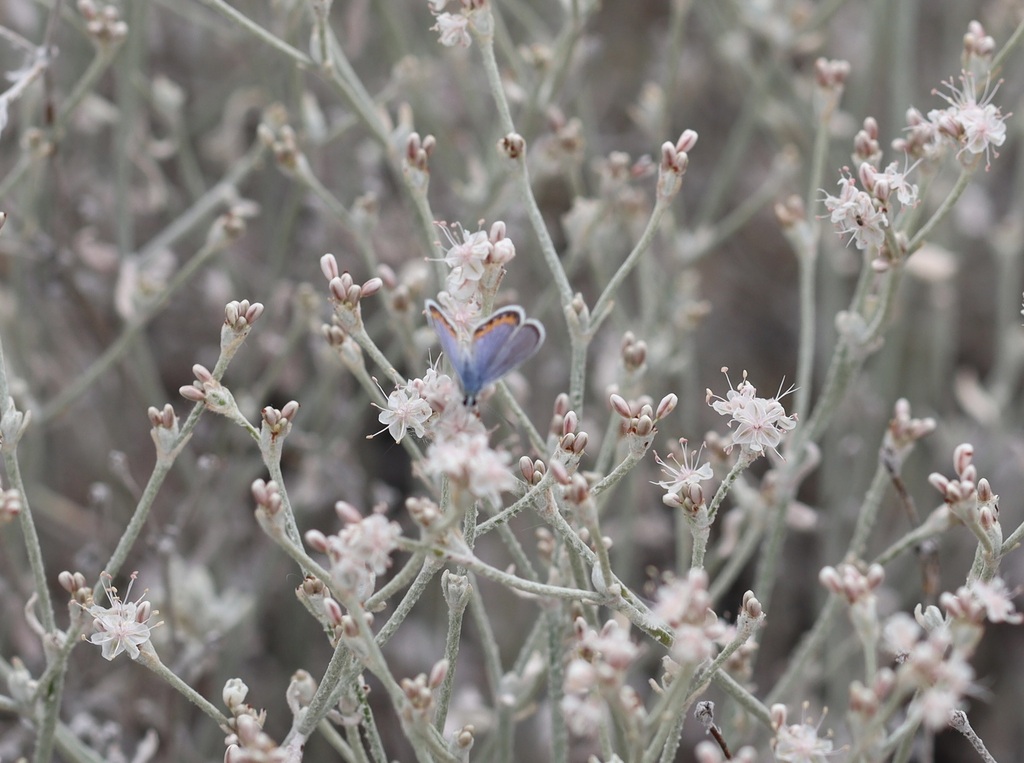
no rights reserved · CC0
Family: Lycaenidae · Class: Insecta · Order: Lepidoptera
Icaricia monticola (Clemence's Blue) is a California animal in the Lycaenidae family.
Clemence's Blue is a small butterfly in the family Lycaenidae, named after V. L. Clemence who contributed significantly to early taxonomic studies of North American blues. Adults typically measure 20-30 mm (0.8-1.2 inches) in wingspan. Males display the characteristic blue dorsal coloration typical of Icaricia species, while females are generally brown with blue scaling near the wing bases. The ventral wing surfaces are gray with small dark spots and white-ringed eyespots, providing effective camouflage when at rest. Icaricia monticola occurs in California, with documented populations in the Sierra Nevada mountains. Historical records indicate the species has been found in Tulare County, including observations at Sherman Pass Road near Bald Mountain at 8,000 feet elevation (Lepidopterists' Society 1993). The species appears to have a montane distribution, as suggested by its scientific name 'monticola' meaning 'mountain-dwelling.' Current distribution data remains limited, and comprehensive surveys are needed to establish the full extent of its California range. This butterfly inhabits montane environments, typically found at elevations between 6,000-8,000 feet based on available records. Clemence's Blue appears to prefer mountain slopes and higher elevation habitats within the Sierra Nevada ecosystem. The species likely requires specific microclimatic conditions associated with montane environments, including appropriate temperature regimes and seasonal moisture patterns that support its host plants and life cycle requirements. Like other members of the genus Icaricia, Clemence's Blue likely feeds on plants in the pea family (Fabaceae), though specific host plant relationships have not been well documented in the literature. The species probably has a single generation per year, typical of high-elevation blues, with adults flying during summer months when conditions are favorable. Larvae likely overwinter in diapause, emerging as adults the following season. Males are presumed to establish territories and engage in courtship flights, while females seek appropriate host plants for egg-laying. The conservation status of Icaricia monticola has not been formally assessed by federal or state agencies. The species lacks federal or California state listing status as of December 2025. However, the apparently limited distribution within California's montane regions suggests potential vulnerability to habitat changes. Climate change poses particular concerns for high-elevation species, as warming temperatures may force populations to higher elevations where suitable habitat becomes increasingly limited. Mountain ecosystems face additional pressures from recreational activities, fire management practices, and potential changes in precipitation patterns that could affect host plant communities. The limited scientific documentation of this species' ecology, distribution, and population trends represents a significant knowledge gap that hampers effective conservation planning. Systematic surveys are needed to determine current population status and habitat requirements throughout its California range.
Classification
Class: Insecta · Order: Lepidoptera · Family: Lycaenidae
Frequently asked questions
How is Icaricia monticola classified?
Icaricia monticola belongs to class Insecta, order Lepidoptera, family Lycaenidae.
What family does Icaricia monticola belong to?
Icaricia monticola is in the Lycaenidae family.
What is Icaricia monticola?
Clemence's Blue is a small butterfly in the family Lycaenidae, named after V.
Is Icaricia monticola found in California?
Yes. Icaricia monticola is recorded in California in The California Species Project's catalogue.
Related species
Other California species in the same genus, family, or bioregion.
Data from The California Species Project — 14,000+ California species with verified data from CNPS, CDFW, USFWS, and more.