Icaricia (Plebejus) shasta charlestonensis
Mount Charleston blue butterfly
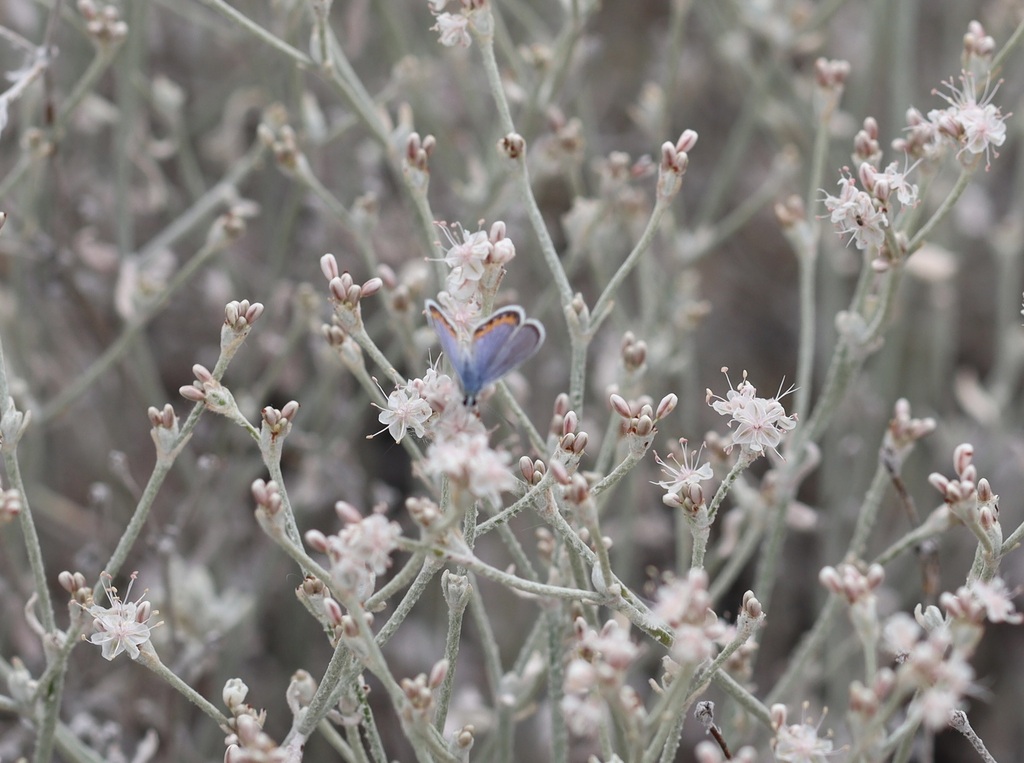
no rights reserved · CC0
Family: Lycaenidae · Class: Insecta · Order: Lepidoptera
Conservation status: Endangered
Icaricia (Plebejus) shasta charlestonensis (Mount Charleston blue butterfly) is a California animal in the Lycaenidae family.
The Mount Charleston blue butterfly (Icaricia (Plebejus) shasta charlestonensis) is a small lycaenid butterfly endemic to the Spring Mountains of Clark County, Nevada. Males typically display bright blue dorsal wing surfaces with narrow black borders, while females exhibit brown wings with blue scaling near the wing bases. The underwings are grayish-white with distinctive black spots and orange submarginal crescents. Adults have a wingspan of approximately 22-28 mm (0.9-1.1 inches). This subspecies occurs exclusively in the Spring Mountains of Clark County, Nevada, representing one of the most geographically restricted butterfly taxa in North America (USFWS 2023). According to NatureServe, the species is known from an estimated six element occurrences within this limited range. The Mount Charleston blue butterfly inhabits only high-elevation sites within the Charleston Peak area of the Spring Mountains. The species occupies open areas between mixed coniferous forest zones and alpine areas, typically at elevations above 2,100 meters (6,900 feet). These montane habitats are characterized by sparse vegetation, rocky outcrops, and seasonal snowmelt areas. The butterfly requires specific microclimatic conditions found in these transitional zones between forest and alpine environments. Adults are active during a brief flight period, typically from late June through August, coinciding with snowmelt and the blooming period of their host plants. The species exhibits strong site fidelity, with adults remaining close to breeding areas. Males engage in territorial behavior, perching on prominent rocks or vegetation to intercept passing females. The Mount Charleston blue butterfly can be difficult to observe even during appropriate survey periods, as individuals may be present in suitable habitat but remain undetected during repeated visits. The U.S. Fish and Wildlife Service listed the Mount Charleston blue butterfly as endangered on August 4, 2011, due to its extremely limited range and multiple threats to its survival. The agency designated critical habitat for the species in 2015, encompassing approximately 1,148 acres within the Spring Mountains. Primary threats include climate change effects on high-elevation habitats, recreational activities that disturb breeding areas, invasive plant species, and the species' inherently small population size and restricted range. The subspecies' dependence on a narrow elevation band makes it particularly vulnerable to upward shifts in suitable habitat zones due to warming temperatures. Recovery efforts focus on habitat protection, threat mitigation, and population monitoring within the designated critical habitat areas. The species' recovery depends on maintaining the specific environmental conditions required for its survival in the Spring Mountains ecosystem. Conservation challenges include the subspecies' naturally low detectability and the need for long-term climate adaptation strategies to address ongoing environmental changes affecting high-elevation habitats.
Classification
Class: Insecta · Order: Lepidoptera · Family: Lycaenidae
Conservation status
Endangered
Frequently asked questions
How is Icaricia (Plebejus) shasta charlestonensis classified?
Icaricia (Plebejus) shasta charlestonensis belongs to class Insecta, order Lepidoptera, family Lycaenidae.
What family does Icaricia (Plebejus) shasta charlestonensis belong to?
Icaricia (Plebejus) shasta charlestonensis is in the Lycaenidae family.
Is Icaricia (Plebejus) shasta charlestonensis protected or of conservation concern?
Icaricia (Plebejus) shasta charlestonensis carries the following status: Endangered.
What is Icaricia (Plebejus) shasta charlestonensis?
The Mount Charleston blue butterfly (Icaricia (Plebejus) shasta charlestonensis) is a small lycaenid butterfly endemic to the Spring Mountains of Clark County, Nevada.
Is Icaricia (Plebejus) shasta charlestonensis found in California?
Yes. Icaricia (Plebejus) shasta charlestonensis is recorded in California in The California Species Project's catalogue.
Related species
Other California species in the same genus, family, or bioregion.
Data from The California Species Project — 14,000+ California species with verified data from CNPS, CDFW, USFWS, and more.