Icaricia saepiolus albomontanus
White Mountains Saepiolus Blue Butterfly
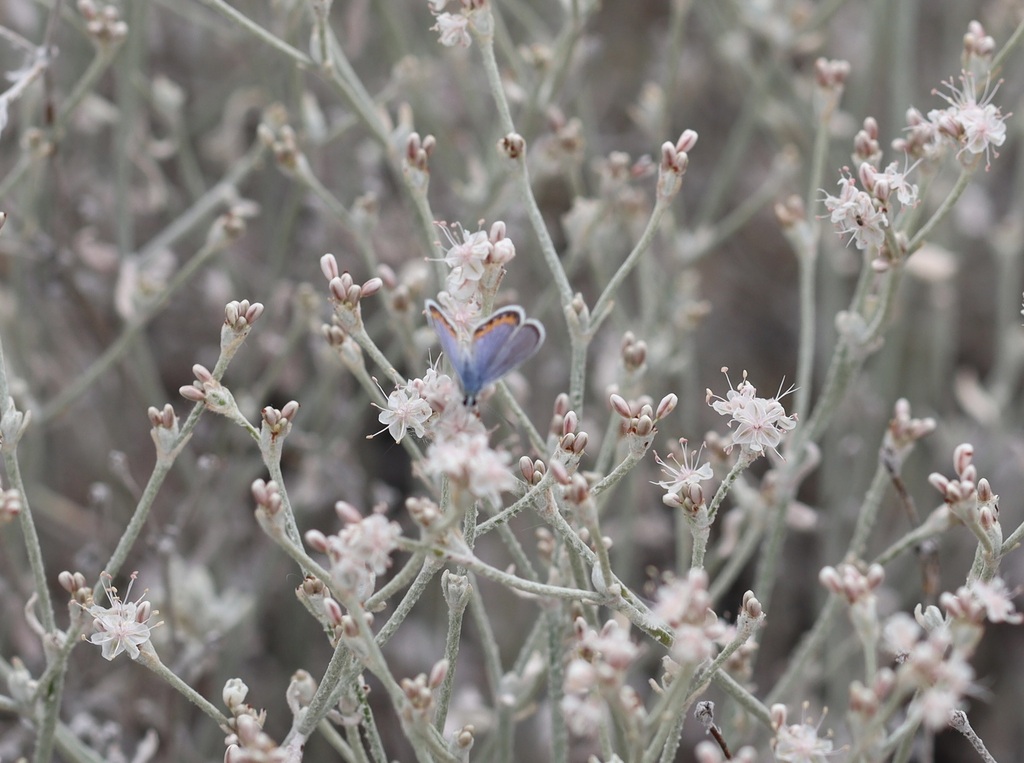
no rights reserved · CC0
Family: Lycaenidae · Class: Insecta · Order: Lepidoptera
Conservation status: G5T2 S1
Icaricia saepiolus albomontanus (White Mountains Saepiolus Blue Butterfly) is a California animal in the Lycaenidae family.
The White Mountains Saepiolus Blue Butterfly is a subspecies of the widespread Saepiolus Blue, representing an isolated mountain population that differs from other populations in minor wing characteristics. This small lycaenid butterfly exhibits the typical blue coloration of males with brownish females, though specific morphological details distinguishing this subspecies from the nominal form have not been thoroughly documented in available literature. This subspecies is endemic to the White Mountains of California, representing one of several isolated mountain populations of Icaricia saepiolus that have diverged from the more widespread northern and montane forms. The White Mountains population occurs at high elevations in this desert mountain range along the California-Nevada border, primarily in Mono and Inyo counties. This represents the southernmost extension of the species' range in California. The habitat requirements for this subspecies have not been well documented, though related populations of I. saepiolus typically inhabit montane meadows, forest clearings, and alpine areas where their host plants occur. In the White Mountains, the subspecies likely occupies suitable microhabitats within the pinyon-juniper woodland and subalpine zones, potentially at elevations between 2,400 and 3,400 meters (8,000 and 11,000 feet), though specific elevation ranges for this population require verification. Like other members of the genus Icaricia, this subspecies likely has a close association with leguminous host plants, though the specific plants utilized by the White Mountains population have not been definitively identified. The broader species complex feeds on various lupines (Lupinus species) and other legumes, with larvae typically developing within the seed pods or flower heads. Adults probably fly during the summer months, with timing dependent on elevation and seasonal weather patterns in the high desert environment. The White Mountains Saepiolus Blue Butterfly carries a global rank of G5T2, indicating that while the full species is secure globally, this particular subspecies is imperiled with a high risk of extinction. The state rank of S1 reflects its critically imperiled status in California, where it faces significant conservation concerns. The subspecies appears to exist as a small, isolated population vulnerable to environmental fluctuations, habitat degradation, and climate change impacts typical of high-elevation specialists. Primary threats likely include habitat modification, climate change effects on montane ecosystems, and the inherent vulnerability associated with small, isolated populations. The White Mountains' position as a desert mountain range makes this subspecies particularly susceptible to warming temperatures and altered precipitation patterns that could shift suitable habitat upslope beyond available terrain. Detailed ecological studies of this subspecies remain limited. The information presented here synthesizes available taxonomic and conservation status data. Enhanced research on population size, specific habitat requirements, host plant relationships, and life history parameters would greatly benefit conservation planning for this rare California endemic butterfly subspecies.
Classification
Class: Insecta · Order: Lepidoptera · Family: Lycaenidae
Conservation status
G5T2 S1
Frequently asked questions
How is Icaricia saepiolus albomontanus classified?
Icaricia saepiolus albomontanus belongs to class Insecta, order Lepidoptera, family Lycaenidae.
What family does Icaricia saepiolus albomontanus belong to?
Icaricia saepiolus albomontanus is in the Lycaenidae family.
Is Icaricia saepiolus albomontanus protected or of conservation concern?
Icaricia saepiolus albomontanus carries the following status: G5T2 S1.
What is Icaricia saepiolus albomontanus?
The White Mountains Saepiolus Blue Butterfly is a subspecies of the widespread Saepiolus Blue, representing an isolated mountain population that differs from other populations in minor wing characteristics.
Is Icaricia saepiolus albomontanus found in California?
Yes. Icaricia saepiolus albomontanus is recorded in California in The California Species Project's catalogue.
Related species
Other California species in the same genus, family, or bioregion.
Data from The California Species Project — 14,000+ California species with verified data from CNPS, CDFW, USFWS, and more.