Icaricia saepiolus aureolus
San Gabriel Mountains Blue Butterfly
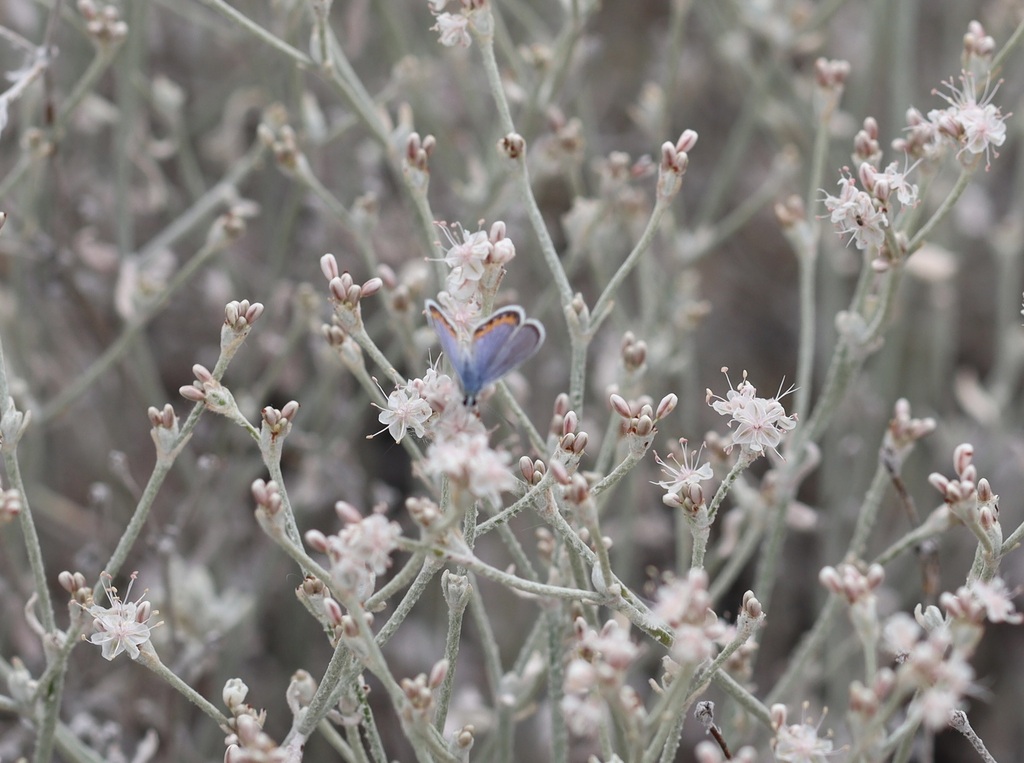
no rights reserved · CC0
Family: Lycaenidae · Class: Insecta · Order: Lepidoptera
Conservation status: G5T1 S1
Icaricia saepiolus aureolus (San Gabriel Mountains Blue Butterfly) is a California animal in the Lycaenidae family.
The San Gabriel Mountains Blue Butterfly (Icaricia saepiolus aureolus) is a subspecies of the Greenish Blue butterfly endemic to the San Gabriel Mountains of southern California. This small lycaenid butterfly represents one of the most geographically restricted butterfly subspecies in North America. Males display blue dorsal wing surfaces with narrow dark borders, while females are typically brown with orange marginal spots on the hindwings. The undersides of both sexes are grayish-white with small dark spots and orange crescents along the wing margins. Historically, this subspecies was known from wet meadow habitats in the Big Pine Recreation Area within the San Gabriel Mountains. The species had an extremely limited distribution, with only two known occurrences documented in the scientific literature (NatureServe). The subspecies was restricted to high-elevation montane meadows that provided the specific microhabitat conditions required for its survival and reproduction. The San Gabriel Mountains Blue inhabited wet meadows characterized by permanent or seasonal moisture, supporting the native plant communities upon which both adults and larvae depended. These meadows occurred at elevations typical of the montane zone in the San Gabriel Mountains, where snowmelt and seasonal precipitation created the saturated soil conditions necessary for the subspecies' host plants and nectar sources. Like other members of the genus Icaricia, this subspecies likely had a univoltine life cycle, with adults emerging during the summer months when meadow wildflowers were in bloom. Larvae probably fed on native leguminous plants common in montane meadow environments, though specific host plant relationships for this subspecies have not been definitively documented. Adults would have obtained nectar from various meadow wildflowers, contributing to pollination networks within these specialized ecosystems. The San Gabriel Mountains Blue Butterfly carries a conservation ranking of G5T1 S1, indicating it is critically imperiled. The subspecies faces an extremely high risk of extinction due to its restricted range and severe habitat modifications. According to available documentation, the U.S. Forest Service drained the wet meadows that constituted the subspecies' primary habitat (Butterflies and Moths of North America). This habitat destruction eliminated the hydrological conditions essential for maintaining the plant communities and microclimate that supported the butterfly population. The current status of this subspecies remains uncertain, with no confirmed recent observations. The drainage of its meadow habitat represents a clear example of how infrastructure decisions can have catastrophic consequences for endemic species with narrow habitat requirements. The loss of these wet meadow systems has likely eliminated not only the San Gabriel Mountains Blue but also other specialized invertebrates and plants that depended on these unique montane wetland environments. Recovery would require restoration of hydrological processes and native plant communities in suitable San Gabriel Mountains locations, though the feasibility of such efforts remains unclear given the extent of habitat modification.
Classification
Class: Insecta · Order: Lepidoptera · Family: Lycaenidae
Conservation status
G5T1 S1
Frequently asked questions
How is Icaricia saepiolus aureolus classified?
Icaricia saepiolus aureolus belongs to class Insecta, order Lepidoptera, family Lycaenidae.
What family does Icaricia saepiolus aureolus belong to?
Icaricia saepiolus aureolus is in the Lycaenidae family.
Is Icaricia saepiolus aureolus protected or of conservation concern?
Icaricia saepiolus aureolus carries the following status: G5T1 S1.
What is Icaricia saepiolus aureolus?
The San Gabriel Mountains Blue Butterfly (Icaricia saepiolus aureolus) is a subspecies of the Greenish Blue butterfly endemic to the San Gabriel Mountains of southern California.
Is Icaricia saepiolus aureolus found in California?
Yes. Icaricia saepiolus aureolus is recorded in California in The California Species Project's catalogue.
Related species
Other California species in the same genus, family, or bioregion.
Data from The California Species Project — 14,000+ California species with verified data from CNPS, CDFW, USFWS, and more.