Icterus cucullatus
Hooded Oriole
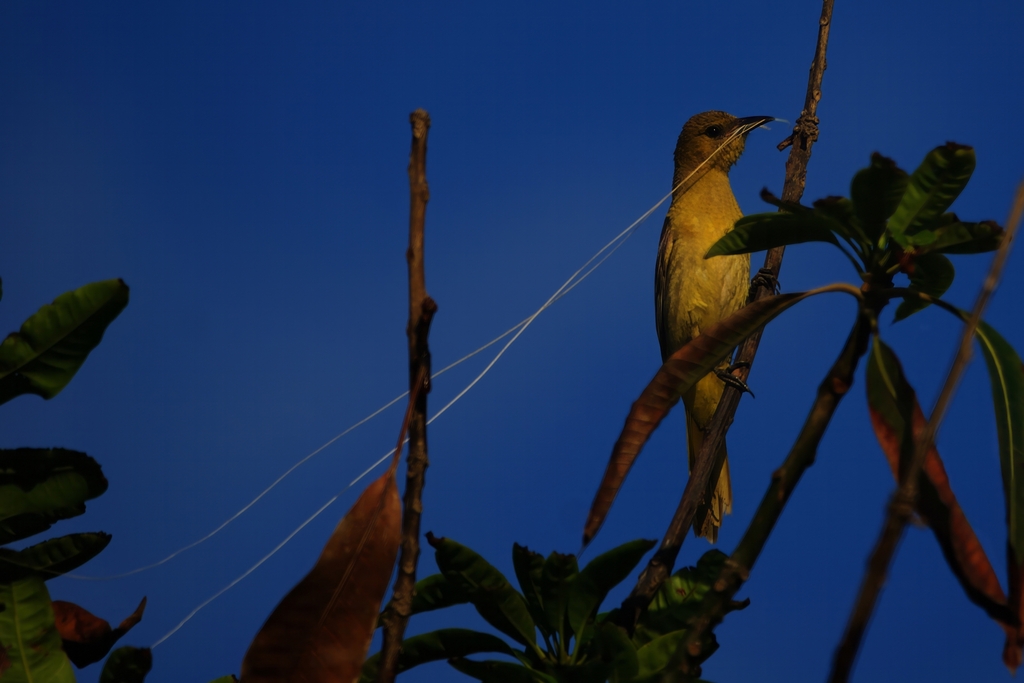
(c) Bill Levine, some rights reserved (CC BY) · licence
Family: Icteridae · Class: Aves · Order: Passeriformes
Icterus cucullatus (Hooded Oriole) is a California animal in the Icteridae family.
The Hooded Oriole is a medium-sized songbird measuring 19-22 cm (7.5-8.7 inches) in length with a wingspan of 23-27 cm (9-10.5 inches). Adult males during breeding season display bright orange-yellow plumage with a distinctive black hood extending from the face through the throat, black wings with white wing bars, and a black tail. The bill is long, slender, and slightly curved, adapted for nectar feeding. Adult females and juveniles are olive-yellow above with pale yellow underparts, lacking the male's distinctive black markings. Non-breeding males resemble females but retain some black on the throat and face. In California, Hooded Orioles breed throughout the state's lowland and foothill regions, from the Central Valley south through the coastal plains and inland valleys. They are permanent residents in southern California but migratory in northern populations, with birds departing for wintering grounds in Mexico from August through October. The species' California range extends from sea level to approximately 600 meters (2,000 feet) elevation, though they occasionally occur higher in suitable habitat. Hooded Orioles inhabit riparian woodlands, oak savannas, urban parks, suburban neighborhoods with mature trees, and desert oases. They show strong preference for areas with palm trees, particularly fan palms, where they construct their distinctive hanging nests. The species also utilizes cottonwoods, sycamores, eucalyptus, and fruit trees. In desert regions, they concentrate around date palm groves and other irrigated areas with tall trees. The diet consists of insects, spiders, nectar, and fruit. Hooded Orioles are important pollinators of various plants, using their specialized bills to probe flowers for nectar. They frequently visit hummingbird feeders and flowering plants in residential areas. Breeding occurs from March through July, with peak activity in April and May. Females construct intricate hanging basket nests woven from plant fibers and suspended from branch tips, typically 3-15 meters (10-50 feet) above ground. Clutch size ranges from 3-5 eggs, which are incubated for 12-14 days. Young fledge after 12-14 days but remain dependent on parents for several additional weeks. Hooded Orioles are not federally or state listed and are considered stable throughout most of their California range. According to the North American Breeding Bird Survey, populations have remained relatively stable over the past several decades, though some regional declines have been documented in certain areas. The species has actually benefited from human development in some regions due to increased availability of ornamental palm trees and flowering plants in urban and suburban environments. Primary conservation concerns include habitat loss from development, removal of mature trees, and potential impacts from pesticide use in agricultural areas. Climate change may affect the timing of migration and breeding relative to food availability, though the species' dietary flexibility and use of human-modified habitats provide some resilience to environmental changes.
Classification
Class: Aves · Order: Passeriformes · Family: Icteridae
Frequently asked questions
How is Icterus cucullatus classified?
Icterus cucullatus belongs to class Aves, order Passeriformes, family Icteridae.
What family does Icterus cucullatus belong to?
Icterus cucullatus is in the Icteridae family.
What is Icterus cucullatus?
The Hooded Oriole is a medium-sized songbird measuring 19-22 cm (7.5-8.7 inches) in length with a wingspan of 23-27 cm (9-10.5 inches).
Is Icterus cucullatus found in California?
Yes. Icterus cucullatus is recorded in California in The California Species Project's catalogue.
Related species
Other California species in the same genus, family, or bioregion.
Data from The California Species Project — 14,000+ California species with verified data from CNPS, CDFW, USFWS, and more.